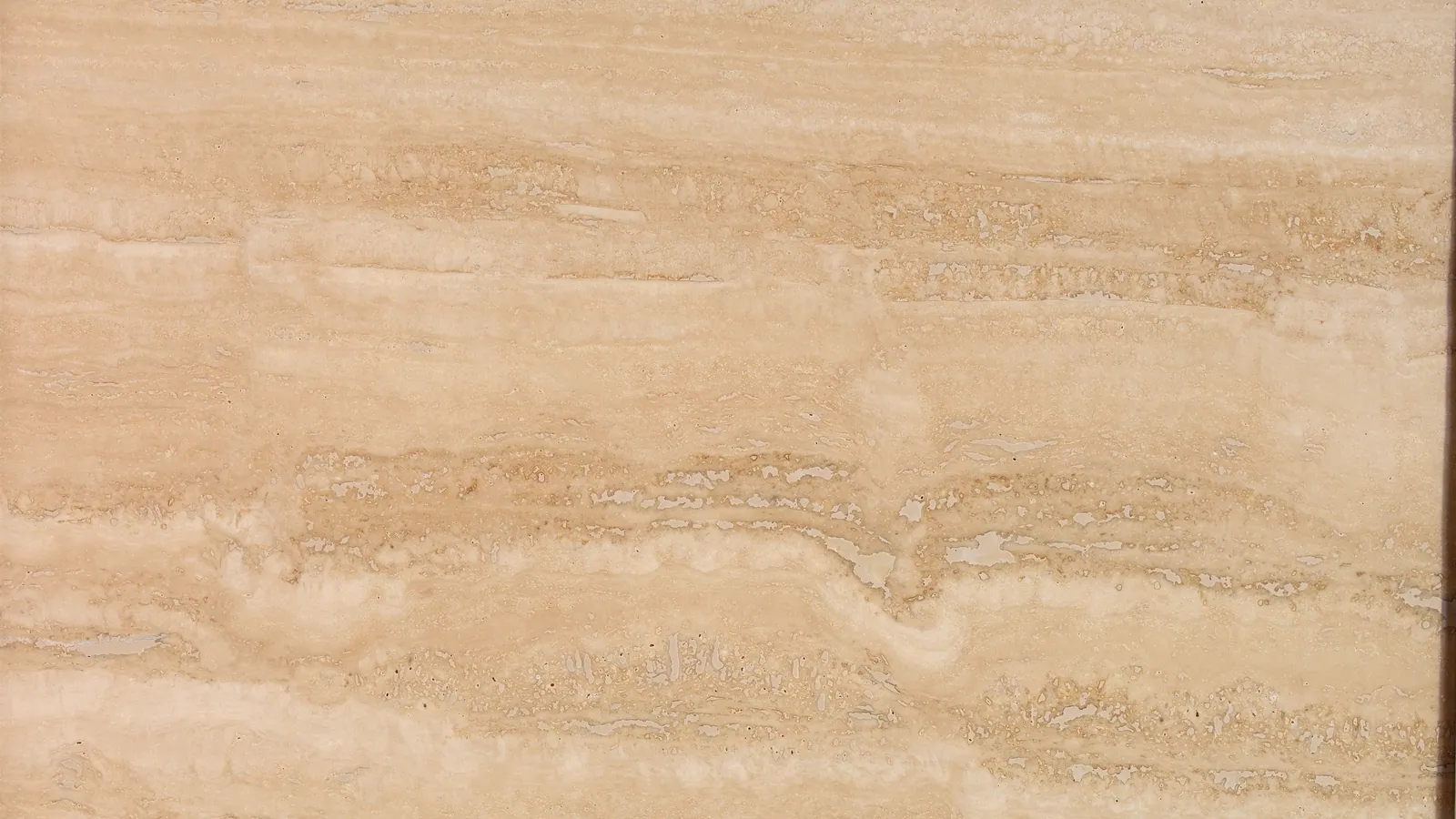
Bespoke travertine worktops and surfaces
Banded, warm and quietly textural: travertine for bespoke worktops, vanities, dining, coffee and side tables and cladding, supplied and coordinated for projects across London.
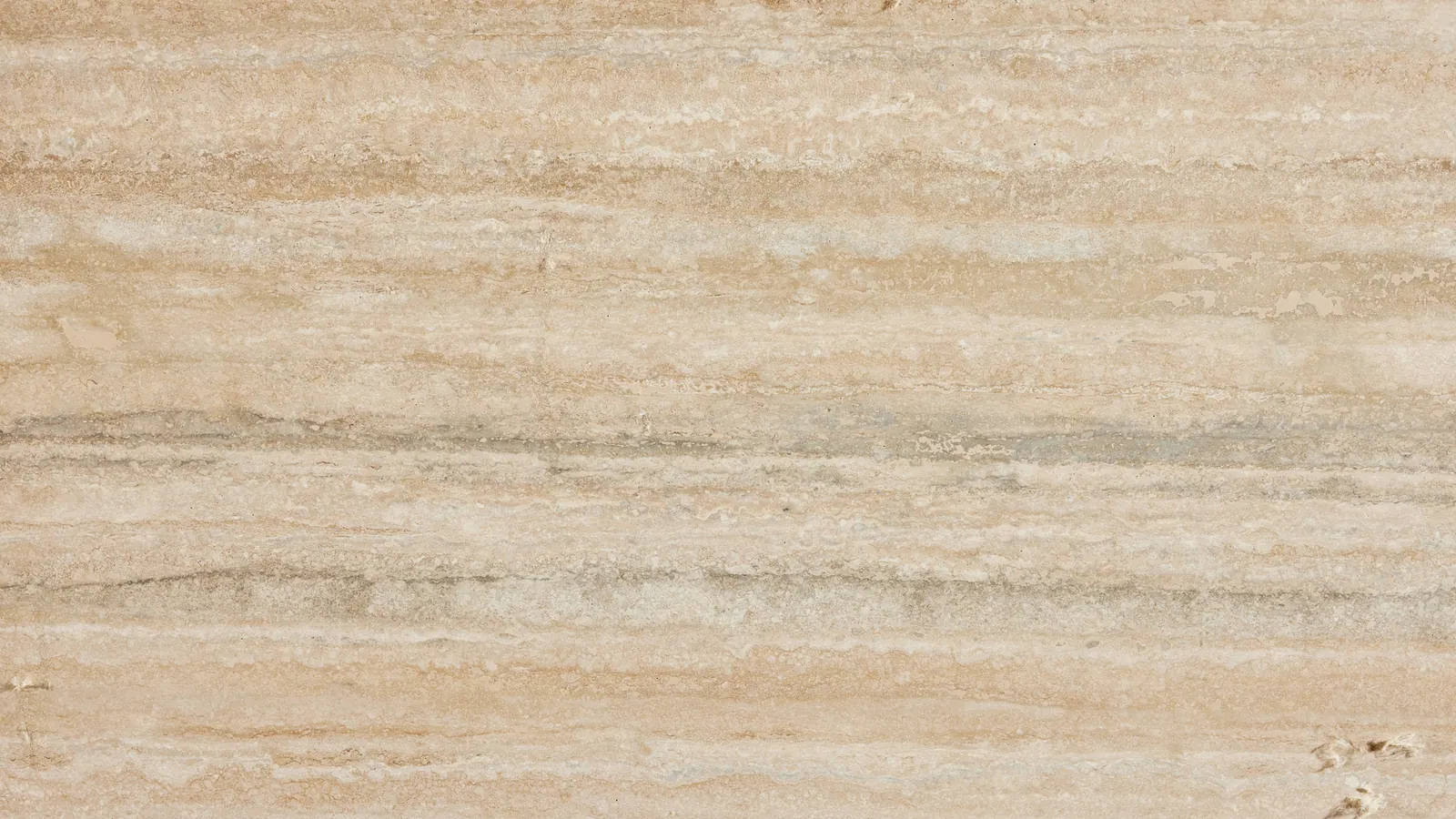
Travertine is a limestone laid down in layers by mineral-rich water. That is where its long, soft banding comes from, and the small natural pits and hollows that run through it. Cut along the layers, a slab shows straight, linear bands, which is called vein cut. Cut across them, it shows a soft, cloudy pattern, which is called cross cut. Colours run from ivory, cream and sand through gold and walnut to silver-grey and red, and the library below is grouped by colour so you can start from the room.
In bespoke furniture and joinery, travertine is used for dining, coffee, side and console table tops, bar and reception counters, bathroom vanities and shower walls, fireplace surrounds and hearths, and wall cladding where the banding runs unbroken from one panel to the next. We produce the timber, metal or upholstered bases it sits on, so the stone and the piece are resolved together.
It is a softer, more porous stone than granite, and it reacts to acids. The pits are normally filled and the face honed flat, and the stone is sealed. Choose it where a gentle patina is part of the appeal. Where the surface will be scrubbed, scorched and splashed every day, granite or quartzite will be calmer, and marble is the nearer alternative if you want veining rather than banding.
Travertine in the library
Filter by colour, finish and thickness, or search by name or code. Select a slab to see it larger and to request it. Not sure about a finish? Finishes explained.
Where travertine works best
Travertine earns its place where warmth and texture matter and the surface is treated with care. These are the uses we are asked about most.
In the home
- Bathroom vanities and shower walls. Filled and honed, sealed, it is soft underfoot and forgiving of water. Avoid acidic cleaners.
- Dining, coffee and console tops. A stone top on a timber or metal base, finished to the edge profile you choose.
- Fireplace surrounds and hearths. Heat is rarely the problem, and the stone ages well here.
- Kitchen islands and worktops. Possible, with eyes open: expect etching and patina, and choose a filled and honed finish.
In hospitality and workplaces
- Bar and reception counters. Large, visible surfaces where the banding is the feature.
- Table tops for restaurants. Filled and honed, sealed, with a realistic view of etching.
- Wall cladding and feature panels. Vein cut slabs laid so the bands run continuously across a wall.
- Plinths, columns and thresholds. Small areas where a few slabs go a long way.
Travertine dining, coffee and side tables
A travertine dining table or coffee table brings warmth that cooler stones do not. The top is cut from a slab agreed with you and set on a base made by our partners and coordinated by us: timber, metal or upholstered. Weight, fixings and tolerances are resolved together, so the stone and the base arrive as one piece. Side tables, consoles and bar tops follow the same method.
See stone supply, templating, cutting and fitting for the base options and what to decide, and table top thickness, overhang and span for how thickness and overhang affect a top.
Travertine tops we supply
- Dining tables, rectangular, oval or round
- Coffee tables, single slab or nested
- Side tables and consoles
- Bar tops and vanity tops
What to expect
Travertine etches under acids such as lemon, wine and some cleaners, and it is softer than granite or quartzite. A filled, honed, sealed top is the usual choice for a dining table. Whether the banding runs along the table or across it is planned before cutting, and the exact slab is agreed with you first.
Finishes and edge profiles
Filled and honed is matt and soft, quieter in a room, and the more forgiving finish for surfaces that will be used. Polished deepens the colour and shows etching most. Brushed and unfilled finishes add texture that hides marks but holds dirt. The natural stone finishes sheet shows each one drawn as a swatch.
Edges are chosen for the look and for use: eased, pencil, bevel, bullnose and ogee profiles, a mitred apron that makes a 20 mm slab read as a thick top, or a waterfall end that carries the banding down. The edge profiles sheet compares them, and the thickness, overhang and support sheet explains what a given thickness can span.
Travertine names can mislead, because the same stone is sold under several trade names and a name often describes the cut as much as the stone. Words such as vein cut, cross cut, classico and romano say how the slab was cut and how it looks. Types of natural stone for interiors helps you read a specification.
What travertine will not do
Travertine is a lovely thing to live with, provided you know what it is. These limits are worth deciding on before you choose a slab.
Etching, staining and pits
Travertine is calcium carbonate, so acids such as lemon juice, wine, vinegar and many cleaning products dull the surface, leaving marks called etching. Sealing slows staining but does not stop etching. Filled and honed finishes hide it far better than polished.
The natural pits are normally filled, but a filler can age differently from the stone. Open pits collect dirt. Read sealing, staining and etching of stone before you choose.
Softness, weight and variation
- Travertine scratches more easily than granite or quartzite, and thin or unsupported edges can chip.
- A 20 mm slab weighs roughly 50 kg per square metre, so islands, long spans and wall panels need a supporting structure designed for it.
- Banding and colour vary across a slab and between slabs, and vein cut and cross cut look quite different. Many travertines are supplied filled or resin-treated, so tell us if that matters.
- Joints are planned, not hidden: slabs are limited in size, and long runs need a seam.
If you want a harder surface, see quartzite or granite. For veining rather than banding, see marble.
From selection to fitting
Slab selection
We shortlist from the library with you and, where the project justifies it, arrange slab viewing and approval before anything is cut.
Templating
Tops are templated on site once the supporting structure is in position, so the stone fits the room as built.
Cutting and edges
Cutting, cut-outs, drainage grooves and edge profiles are made to your detail, with veining planned across joints.
Fitting
Delivery to site and fitting, coordinated with the other trades so the stone arrives when the structure is ready.
Joinery coordination
We produce the joinery the stone sits on, so weight, fixing and tolerances are resolved together.
Questions about travertine
Is travertine suitable for a kitchen worktop?
It can be, if you accept that it will etch and patinate, and that the filled pits need looking after. A filled and honed finish, sealed and cared for, is the more forgiving choice. If you want a surface that stays as installed, granite or quartzite is the better route.
Is travertine a good choice for a dining table or coffee table?
It is a warm and beautiful one, with a caveat: travertine is soft and reacts to acids, so a dining table will etch and patinate with use. Many households welcome that. A filled, honed, sealed finish is more forgiving than polished. See stone supply, templating, cutting and fitting.
What is the difference between vein cut and cross cut?
Vein cut slabs are cut along the layers of the stone and show long, straight bands. Cross cut slabs are cut across the layers and show a soft, cloudy pattern. Both are travertine, and which one suits depends on whether you want line or calm.
What does filled mean?
Travertine has natural pits and hollows. Filled means they are packed with a filler and the face is honed flat, which gives a smooth, usable surface. Unfilled leaves them open, which suits cladding and floors where texture is wanted. Over time a filler can wear differently from the stone.
Which finish should I choose?
Filled and honed for anything used daily. Polished for the deepest colour on walls and surfaces that are treated gently. Brushed or unfilled for texture. If you are unsure, ask us and look at a sample.
Will my slab look like the photograph?
Photographs show the surface of a slab as it is listed, but travertine varies within a slab and between slabs. We agree the exact slab with you before cutting, and arrange viewing where the project justifies it.
Is travertine suitable for a bathroom?
Yes, for vanities and shower walls, sealed and cleaned with a neutral cleaner. Acidic cleaners will etch it, and unfilled pits can hold soap and dirt, so a filled finish is the easier choice.
Do you sell travertine by the slab, or supply and fit it?
We coordinate supply, templating, cutting and fitting through our partners, and we produce the joinery and furniture the stone sits on. Availability is subject to confirmation, and the stock shown is a recent snapshot, refreshed weekly.
What is bookmatching? Two slabs, one mirrored pattern
Bookmatching is where two consecutive slabs, cut one after the other from the same block, are opened like the pages of a book, so the pattern mirrors across the joint. The same idea with four slabs makes a diamond or butterfly pattern. A slip match simply repeats the slabs in the same direction, with no mirroring.
Vein-cut travertine, with its parallel bands, mirrors into a calm, rhythmic pattern, and cross-cut travertine gives a softer, cloudier match.
The slabs are numbered in the order they came off the block and laid out together, so the pattern can be checked before anything is cut. They can also be turned a quarter turn, which changes whether the veining runs across or up the finished piece. A real book-match needs consecutive slabs, so it is subject to availability, and we agree it with you slab by slab.
To see the effect before you decide, open any stone in the library, choose Preview bookmatch, and try the four layouts and the rotate button. It mirrors one photograph, so it is a guide to the look and not a guarantee of the match. Read more in our sheet on approving a sample slab and a book-match.
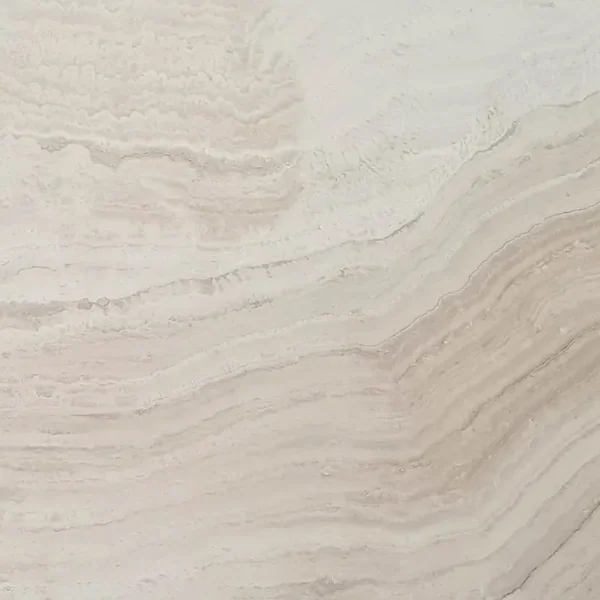
Travertine Classico Vein Cut
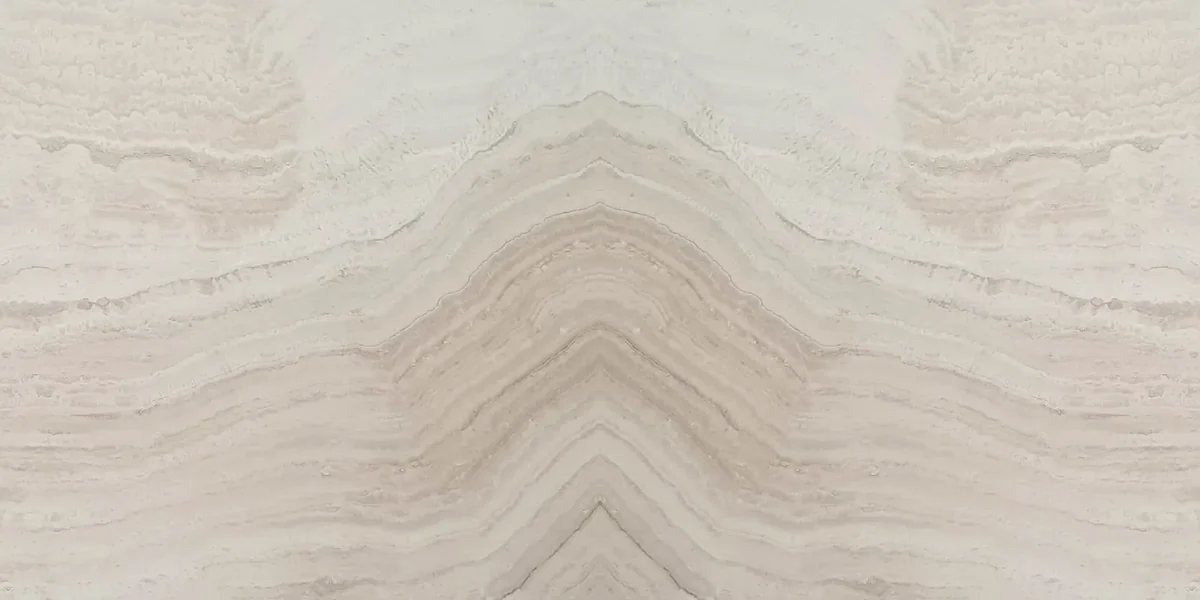
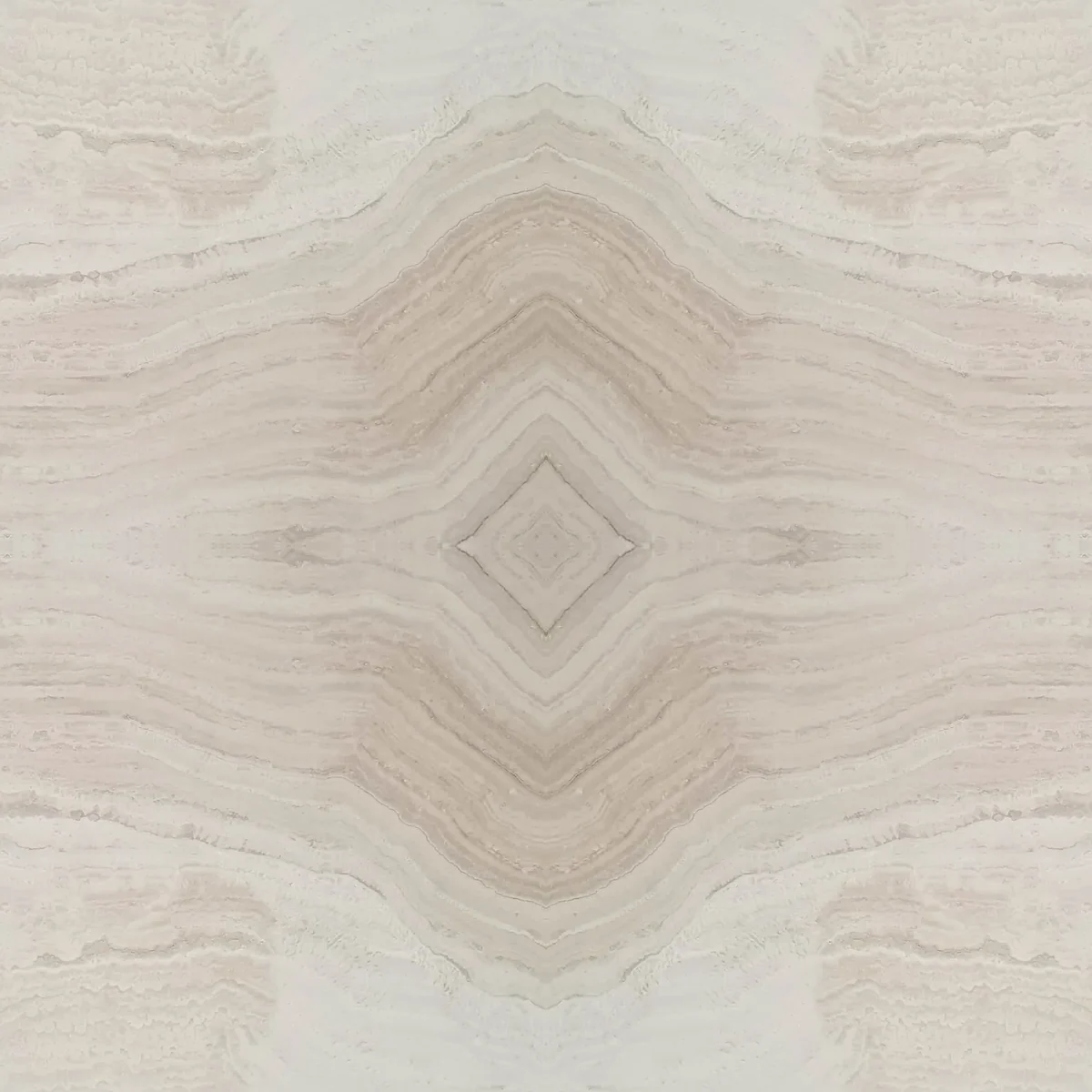
Drawn to the same scale: a book-match covers twice the width of one piece, and a four-way match twice the width and twice the height.
Travertine finishes: filled, honed, polished and the rest
Travertine is full of natural pits, so the first question is whether they are filled. The second is the surface: honed, polished or textured. In plain terms: filled and honed is the usual choice for a surface that will be used, and unfilled or textured finishes suit walls and floors where a rustic look is the point.
Filled and honed
Looks and feels: the pits are filled and the face is ground flat and matt. Smooth, calm and softly warm.
Suits: dining and coffee tables, vanities, worktops used gently, floors and cladding. It is our usual suggestion for travertine that will be used.
Unfilled and honed
Looks and feels: the natural pits and hollows are left open, so the surface is textured and visibly stone.
Suits: wall cladding, feature walls and floors where the rustic character is wanted.
Polished
Looks and feels: a gloss that deepens the colour and sharpens the banding.
Suits: wall cladding, dry bathroom walls, and table tops that will be treated gently.
Brushed
Looks and feels: lightly rippled with a low sheen and an aged, tactile feel.
Suits: worktops, floors and cladding where you want travertine with a worn, softened look.
Rough
Looks and feels: a coarse, textured face, for a natural, unrefined look.
Suits: feature walls and external floors. Seldom used for a table top or worktop.
Also seen
Tumbled or antiqued travertine is worn to a soft-edged, aged look, and suits period schemes, hearths and floors. Sandblasted is a fine pitted matt. Names vary between makers, so ask what was actually done to the stone and look at a sample.
Whatever the finish, travertine will etch if acids reach it and will record its use. Sealing slows staining but does not stop etching. The colour of a finish on your own slab will differ from a photograph, so judge it from the actual stone. Read sealing, staining and etching of stone and the full technical sheet on natural stone finishes.
Read more
- Sealing, staining and etching of stone
- Natural stone finishes reference sheet
- Edge profiles for stone and solid-surface tops
- Stone worktop thickness, overhang and support
- Stone sample, slab and book-match approval
- Ten common stone specification mistakes
- Types of natural stone for interiors
- Stone and marble in interiors
- Marble, granite, quartzite and travertine compared
Have a scheme you’d like to build?
Tell us about the project, the room and the stone you have in mind. We will confirm availability and come back to you.