Cube Collection
The simplest end-grain floor
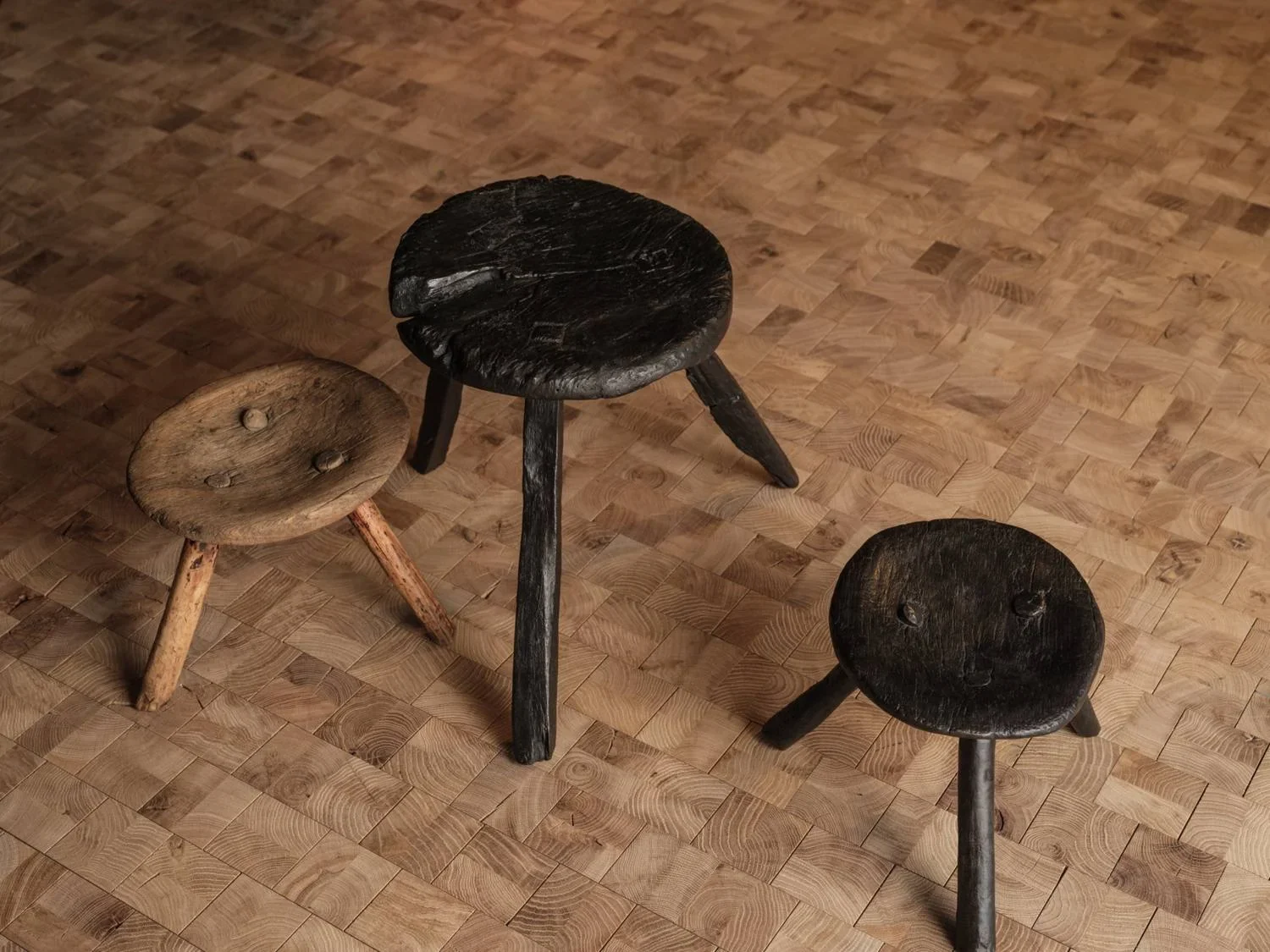
Cube is the simplest end-grain floor: square blocks of European oak laid side by side on an open, regular grid. It keeps what makes end grain valued, a hard surface, depth of figure and a calm acoustic, and it is made entirely from solid offcuts the maker would otherwise set aside.
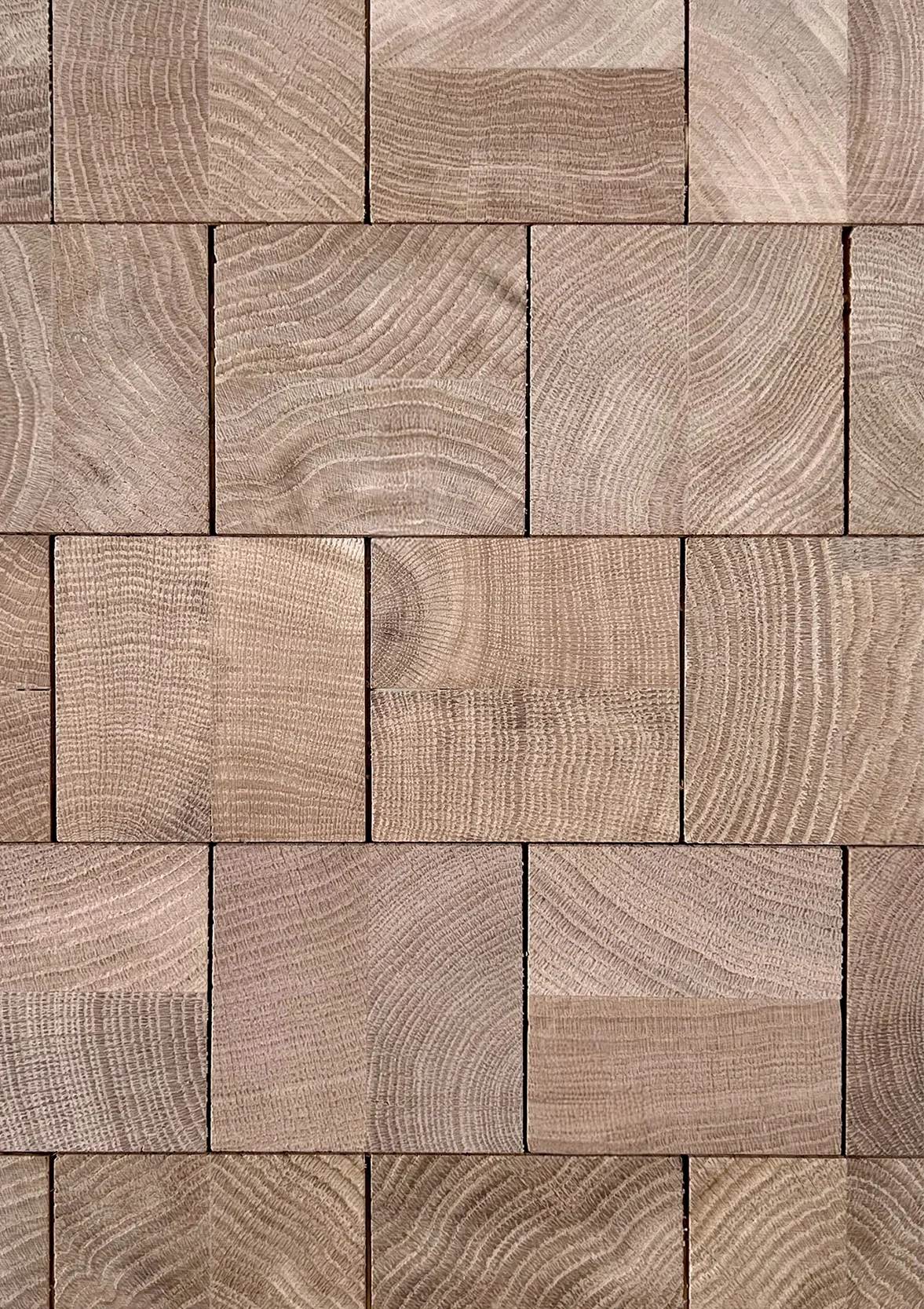
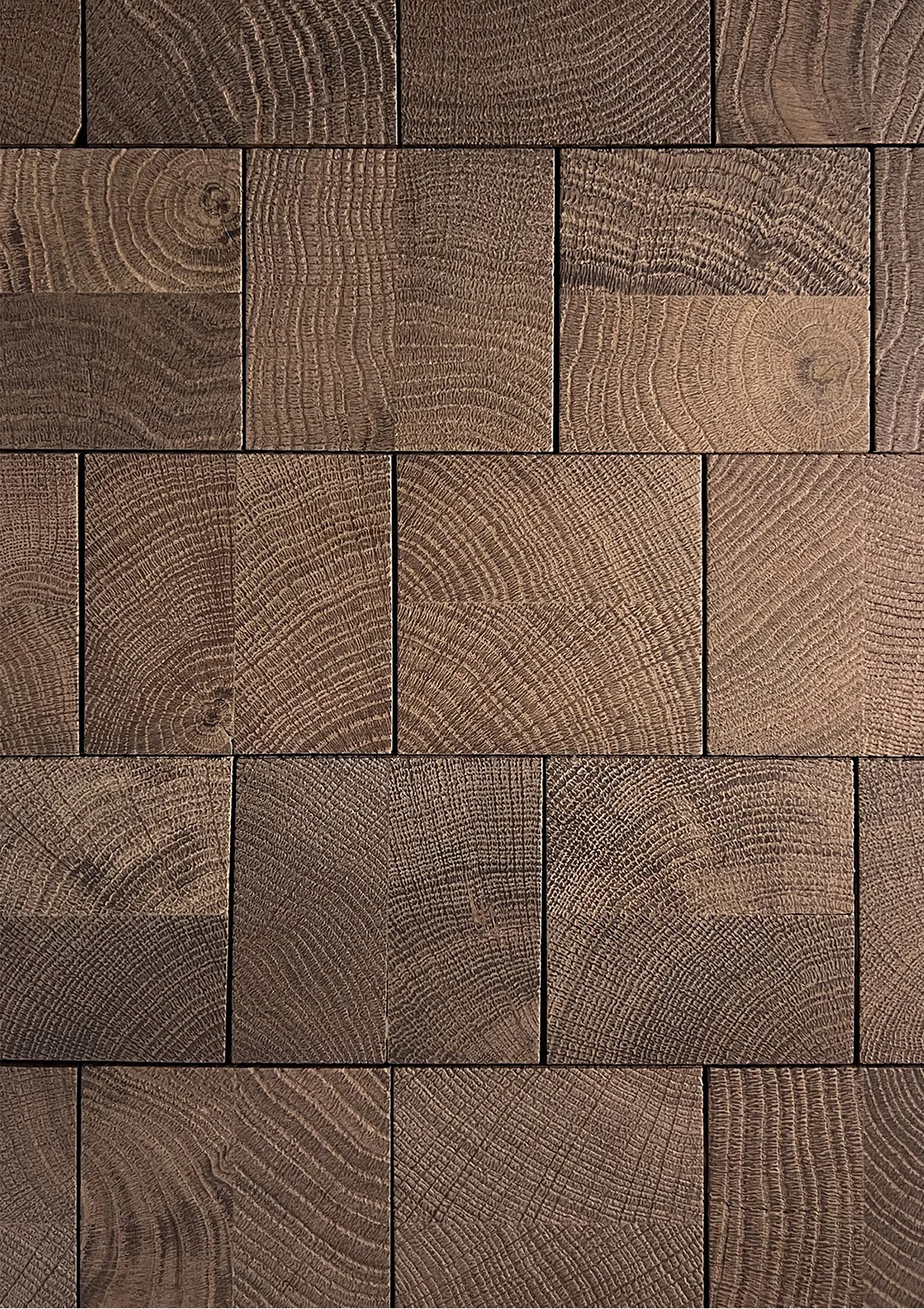
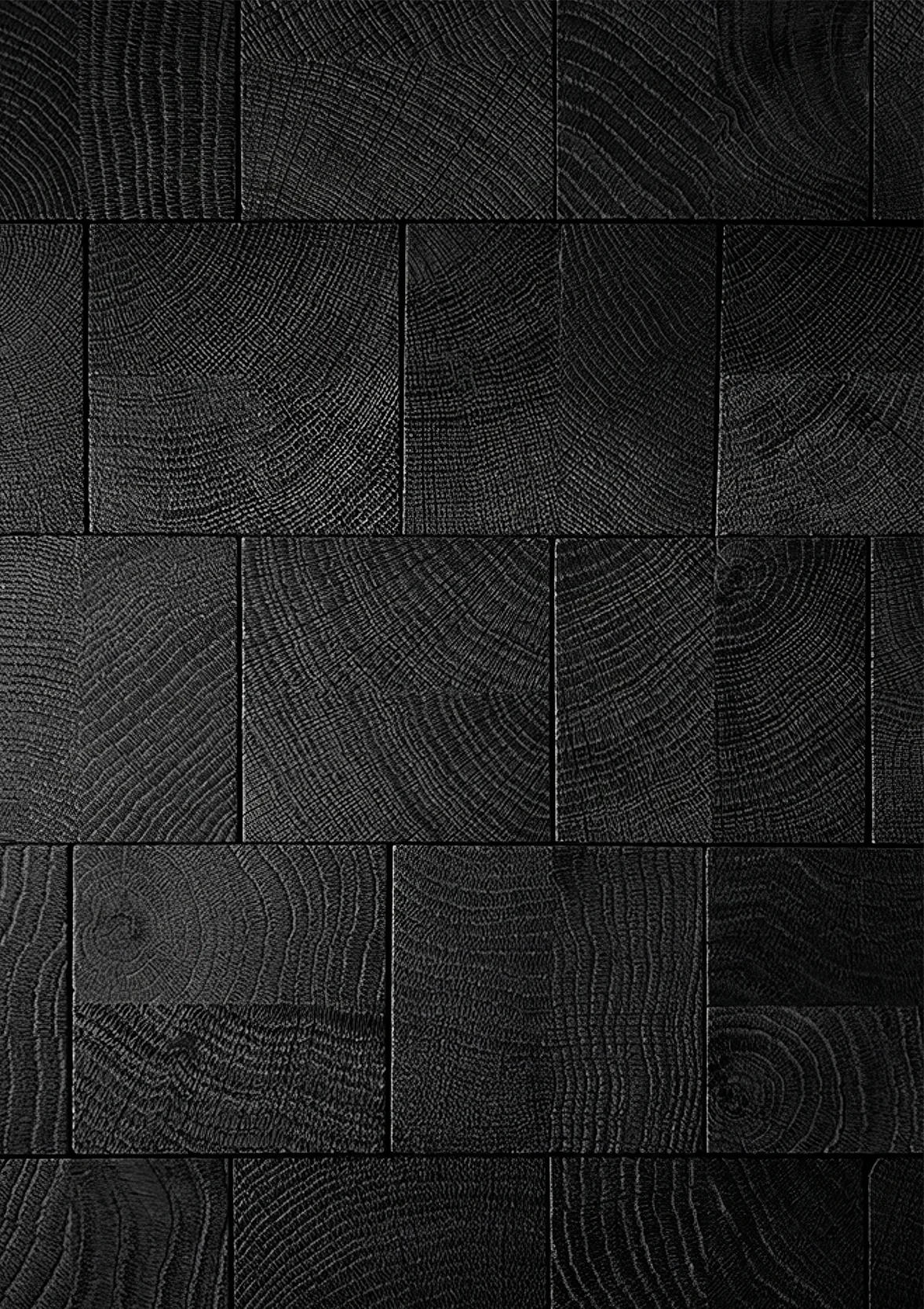
Because the grid is plain, the grain does the work. Each block shows its own rings and rays, and no two squares are alike, so the surface reads as a quiet, even texture from across a room and as a field of small, individual landscapes close up.
Cube comes in natural, smoked and black finishes on a birch plywood base. The maker rates it usage class 34, for very heavy commercial traffic, and it suits residential, hospitality and retail interiors. Samples of each finish can be prepared so that weight and grain are judged in the room.
Collection details
| Material | End-grain European oak, from solid offcuts |
| Construction | 10 mm birch plywood base with a 6 mm oak top layer |
| Format | Square blocks laid on an open, regular grid |
| Finishes | Natural / Smoked / Black. No stain is used |
| Application | Usage class 34, for very heavy commercial traffic |
| Fire rating | Cfl-s1, as stated by the maker |
| Joints | Under 1 mm, with optional filling in brown or black |
| Companion boards | Plain boards in the same finish for adjoining rooms and transitions, confirmed with the maker |
| Certification | FSC and PEFC, as declared by the maker |
| Underfloor heating | Confirmed with the maker for each project |
| Made by | Our workshop network, for Make Bespoke Studio |
A grid of solid offcuts
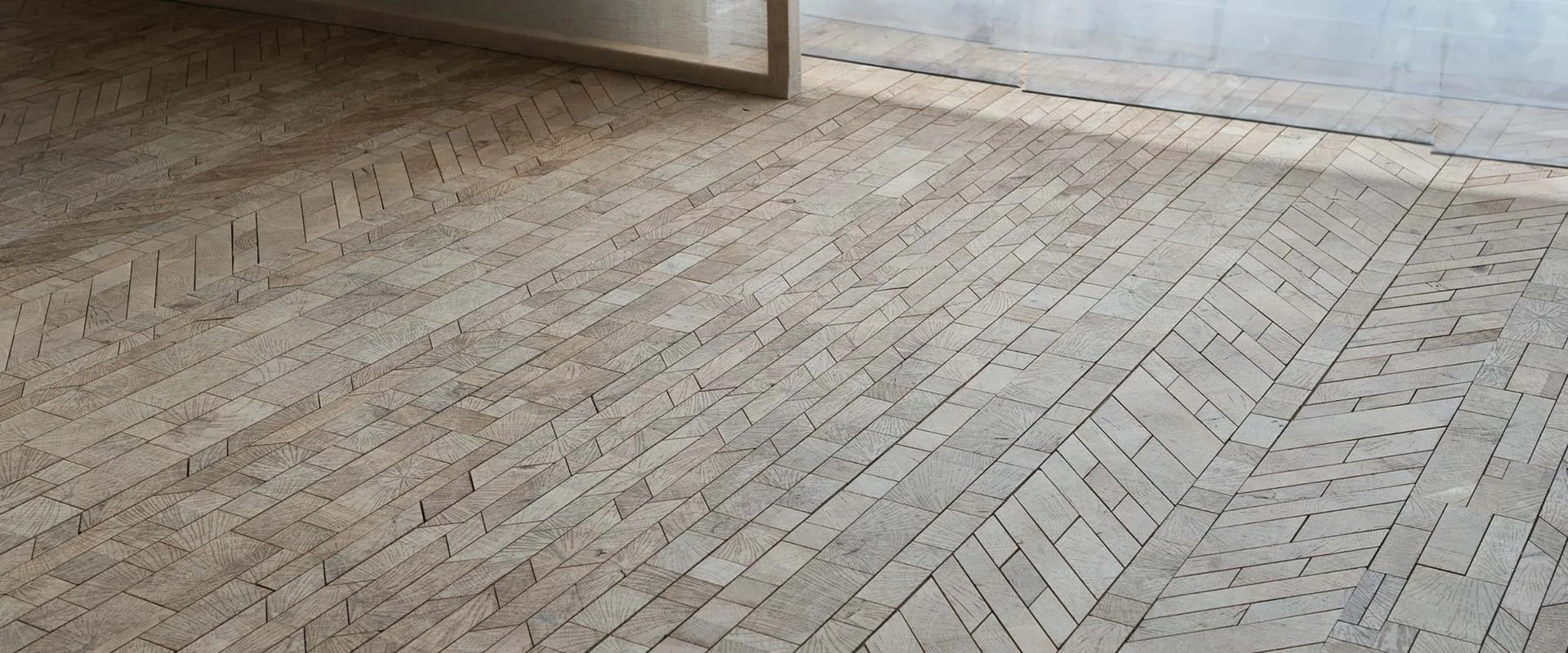
Cube is built from timber that other work leaves behind. The blocks are cut from solid offcuts of European oak that the maker would otherwise set aside, and each is set end grain up in a regular grid. It puts end grain to work without asking for a large, perfect board, and the plain grid keeps the pattern out of the way of the material.
The effect depends on the oak. Each block is cut across the trunk, so every one carries a different set of rings and rays. At standing height the floor reads as a calm, even surface. Close up it is a field of small individual landscapes.
End-grain oak, and why it lasts
In end-grain oak the cut end of the fibre, not its side, takes the wear. It is the orientation once chosen for workshop and factory floors because it wears far more slowly than a flat-sawn plank, and the maker points to its acoustic calm.
Finishes
- Natural: oak with a textured surface that catches the light.
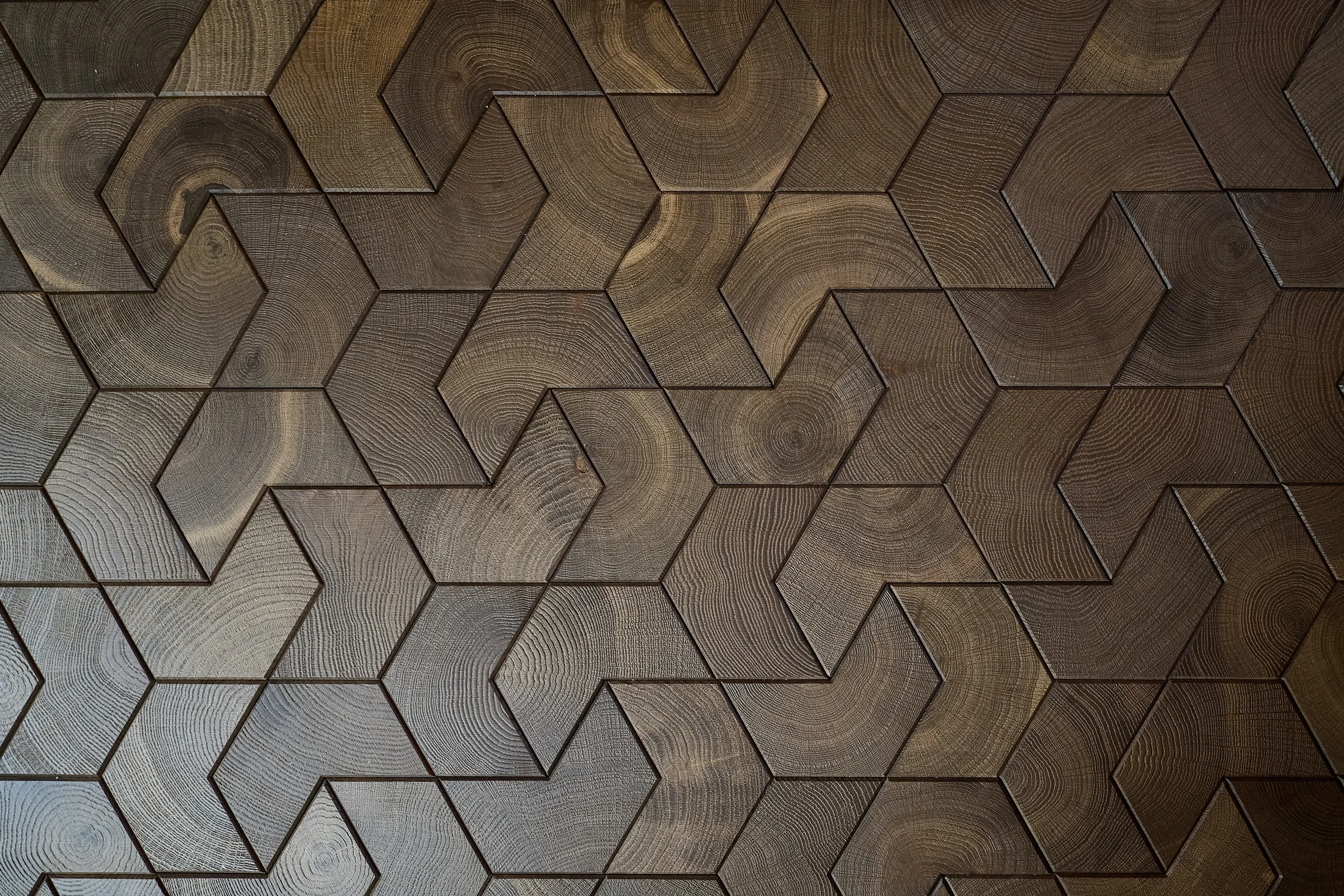
- Smoked: oak smoked through its full depth, so the colour runs through the block and shows natural brown tones, not a surface stain.
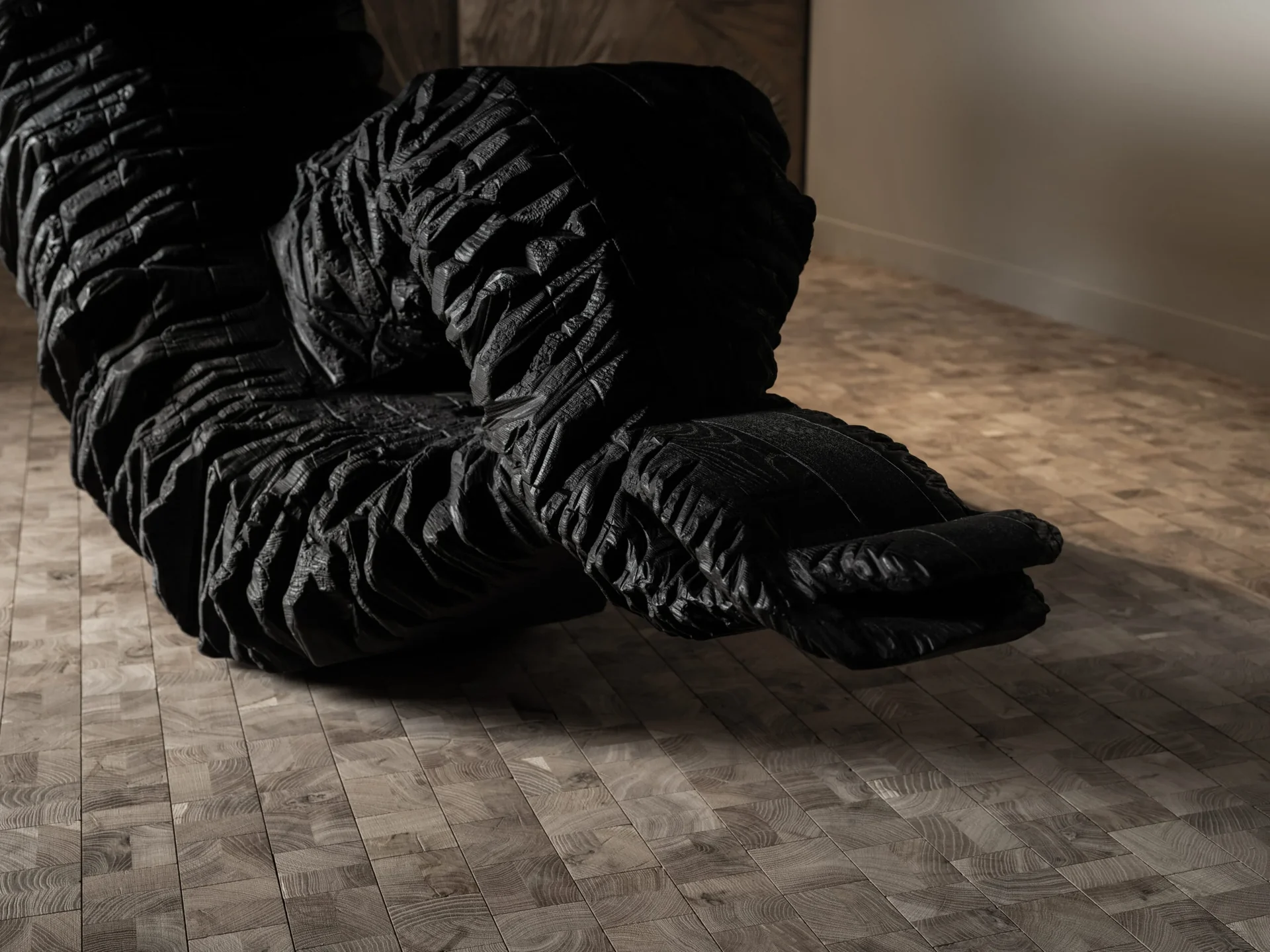
- Black: based on the Japanese shou sugi ban technique of charring, which gives a black with real surface texture. The hardened surface is sealed like the others.
No stain is used in any of the three. Each is sealed with a two-component invisible varnish, which gives a high resistance, the maker says, and all three carry the same usage class and fire rating. For how varnish, oil, brushing and smoking compare, see our guide to wood floor finishes.
Construction and joints
Each tile has a 6 mm oak top layer on a 10 mm birch plywood base. Joints are under 1 mm and can be filled in brown or black, or left as they fall. The maker rates the surface usage class 34 and gives a fire class of Cfl-s1, which is why Cube is specified for hospitality and retail floors as well as private rooms.
Where Cube is used
- Residential: private rooms where a quiet, tactile floor is wanted.
- Hospitality: spaces where acoustic calm and a hard-wearing surface both count.
- Retail and showrooms: floors that let the objects on them stand out.
Installation
As with any timber floor, the units should be acclimatised to the room before fitting, and the subfloor should be flat, dry and sound, with the fixing method following the maker’s installation instructions. A grid shows every misalignment, so the setting out matters, and it is agreed on the plan with the contractor before any unit is fixed. Whether the floor can run over underfloor heating is confirmed with the maker for each project. Our guide to wood flooring installation sets out what a good specification includes.
Care and maintenance
Care guidance is handed over with the floor. As a general rule a varnished end-grain surface is swept or vacuumed to keep grit off and wiped with a barely damp mop; follow the maker’s instructions for cleaners, and use felt pads under furniture.
Common questions
What is Cube?
End-grain oak flooring in its simplest form: square blocks of European oak laid side by side on an open, regular grid, on a birch plywood base. It is made from solid offcuts the maker would otherwise set aside.
Which finishes does Cube come in?
Natural, smoked and black. Smoked is oak smoked through its full depth, black is charred in the shou sugi ban tradition, and no stain is used. All three are sealed with a two-component invisible varnish.
Is it hard-wearing enough for a busy floor?
The maker rates it usage class 34, for very heavy commercial traffic, with a stated fire rating of Cfl-s1. End grain is the orientation traditionally chosen for floors under constant use.
Can Cube be used over underfloor heating?
It depends on the substrate, the heating system and the project, so it is confirmed with the maker for each project before specification.
Is it certified?
The maker declares the collection FSC and PEFC certified. Certification and documentation depend on the batch, so ask for them to be confirmed against your specification.
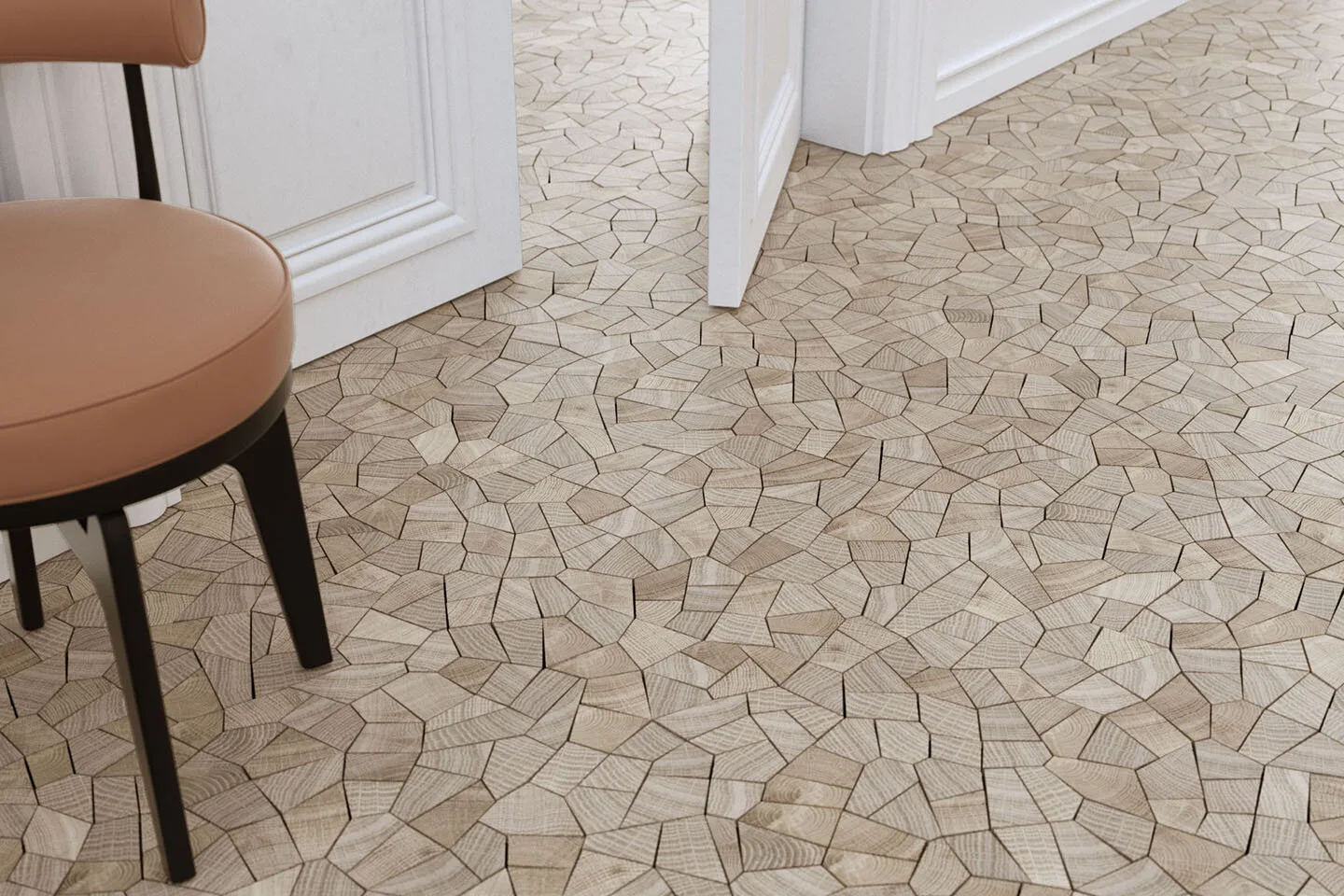
For a one-component end-grain chevron, see the Élément collection, and for an end-grain mosaic with no visible repeat, Opus.