Fluted Wood Panels
Milled oak and walnut panelling in three profiles, solid or engineered, for feature walls, cabinetry and bespoke joinery.
Fluted wood panels are sheets of timber milled with a repeating profile of ridges and grooves. The pattern gives an interior vertical rhythm and shadow: the surface reads differently in morning light and in the evening, and differently as you walk past it. It is architectural detail without the weight of carved or applied mouldings.
We work with three profiles, soft reed, deep flute and square channel, in oak and walnut, each in two constructions. Natural panels are solid timber. Engineered panels are a multi-laminar construction in the same species. Every sheet is 3050 x 1200 mm and 5 mm thick as standard, a full-height panel that covers a wall with few joints. They sit between our solid wood and wood veneer pages for a reason: the natural panels are solid timber, and the engineered panels give a more consistent, veneer-like surface.
The panels suit feature walls, cabinetry, furniture and bespoke joinery, in residential and commercial interiors. We specify them through our workshop network, cut and finished to your scheme, so the panelling and the joinery around it match.
Samples are available on request. Natural timber varies from sheet to sheet, and a close view of a fluted surface says little about the finished wall, so we always put a sample in your hands in the profile, species and finish you intend to use.
Soft reed
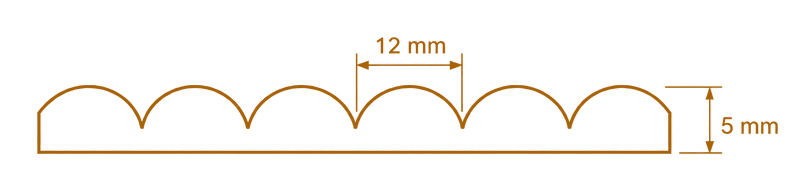
A reeded profile with a soft, rounded form. It adds gentle texture and architectural detail to a surface without a hard shadow line, the quietest of the three profiles. The section drawing marks 12 mm.
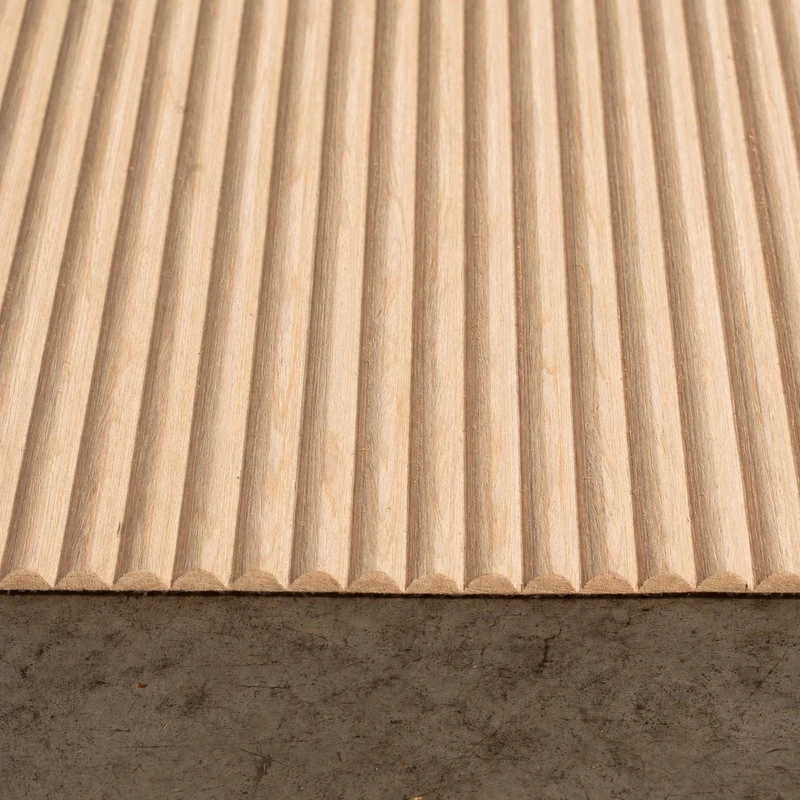 01 / 04Engineered Oak
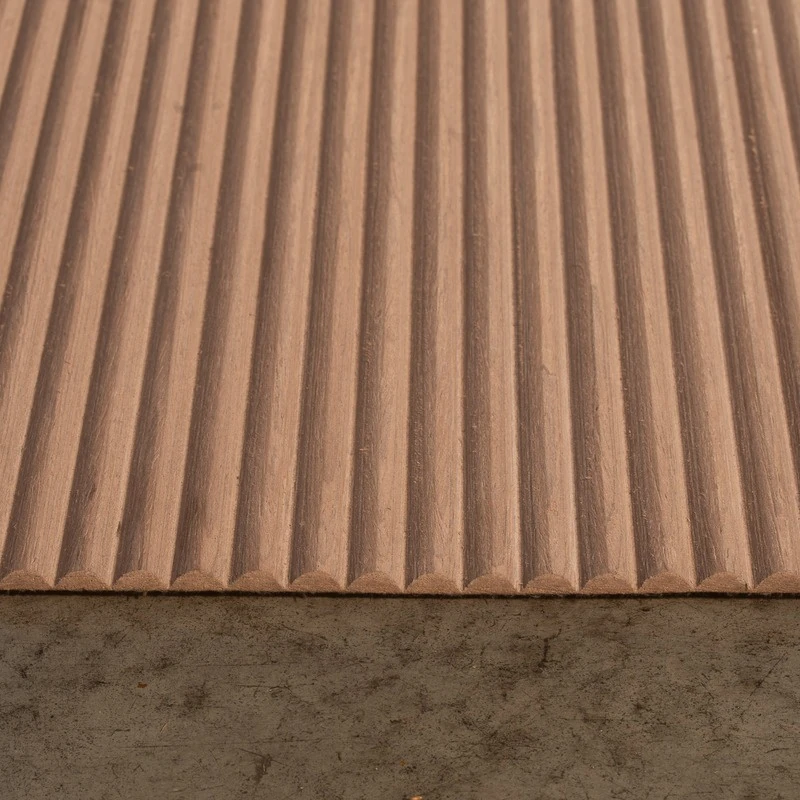 02 / 04Engineered Walnut
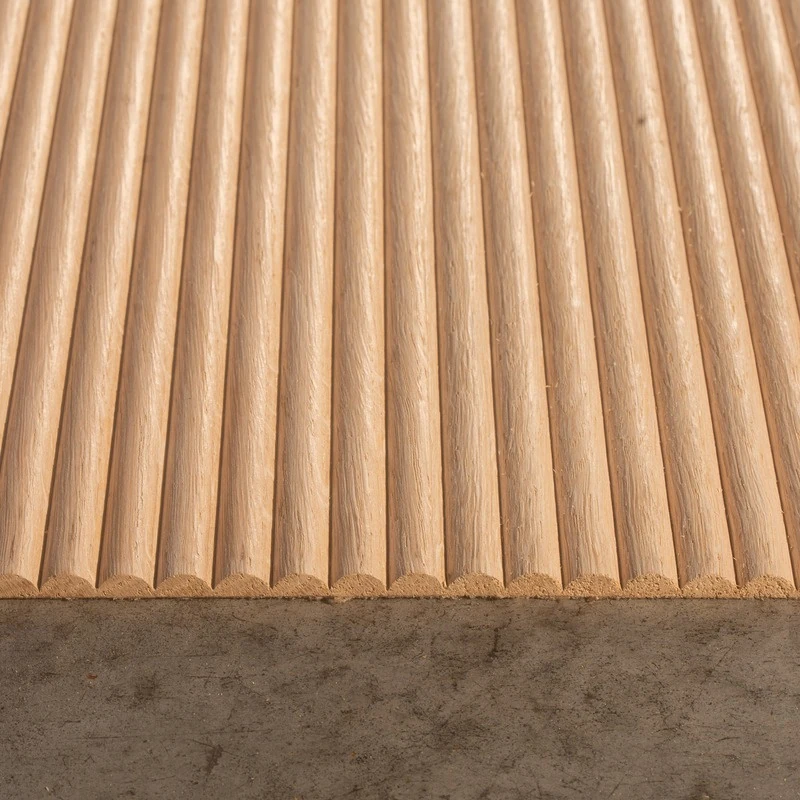 03 / 04Natural Oak
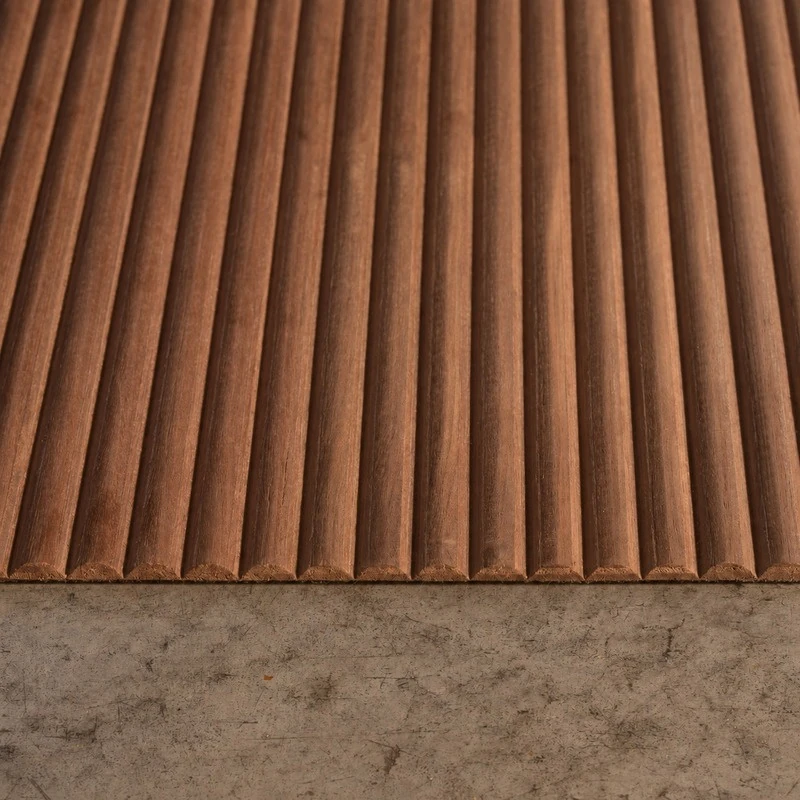 04 / 04Natural Walnut
Deep flute
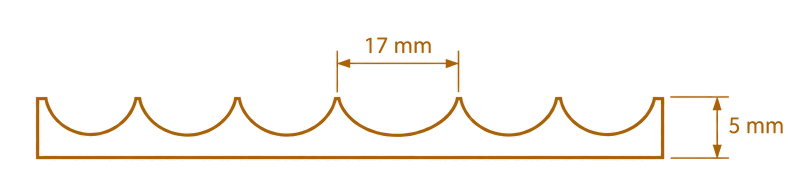
A more pronounced flute with deeper grooves, which creates a stronger sense of depth and texture across the surface. This is the profile to choose when the wall itself is the feature. The section drawing marks 17 mm.
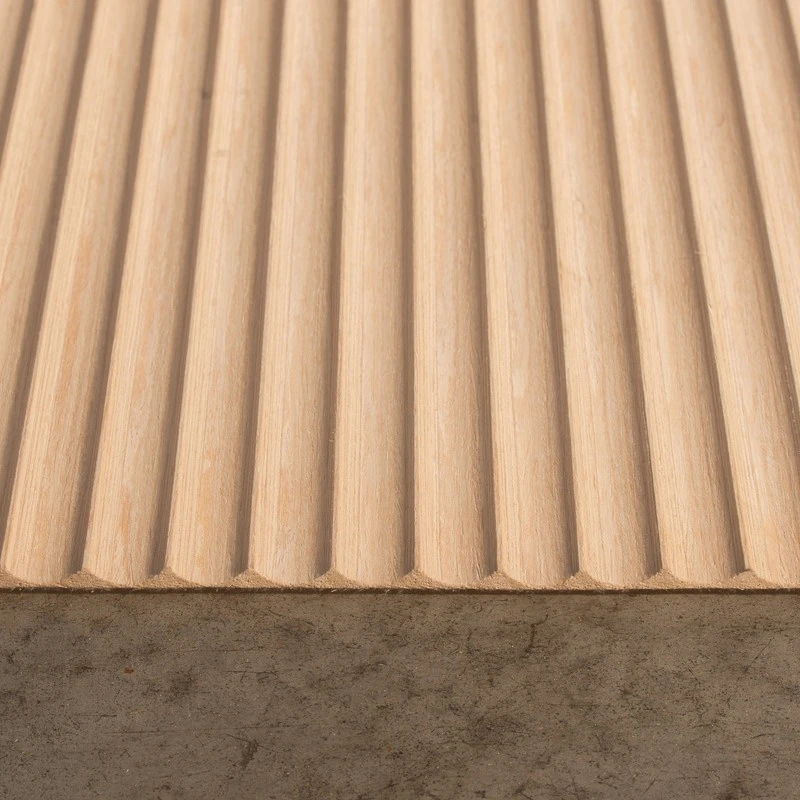 01 / 04Engineered Oak
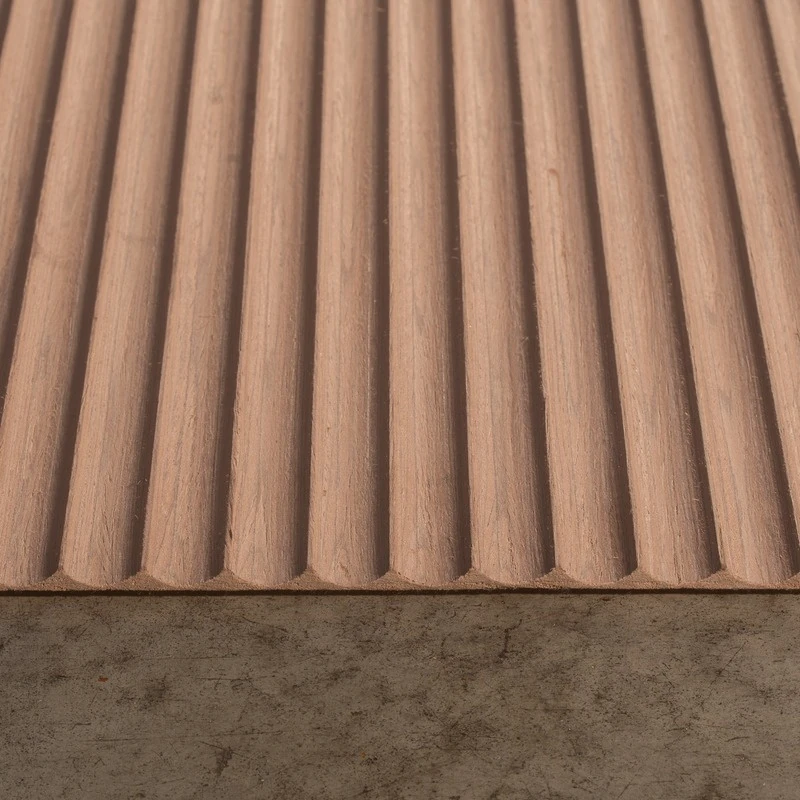 02 / 04Engineered Walnut
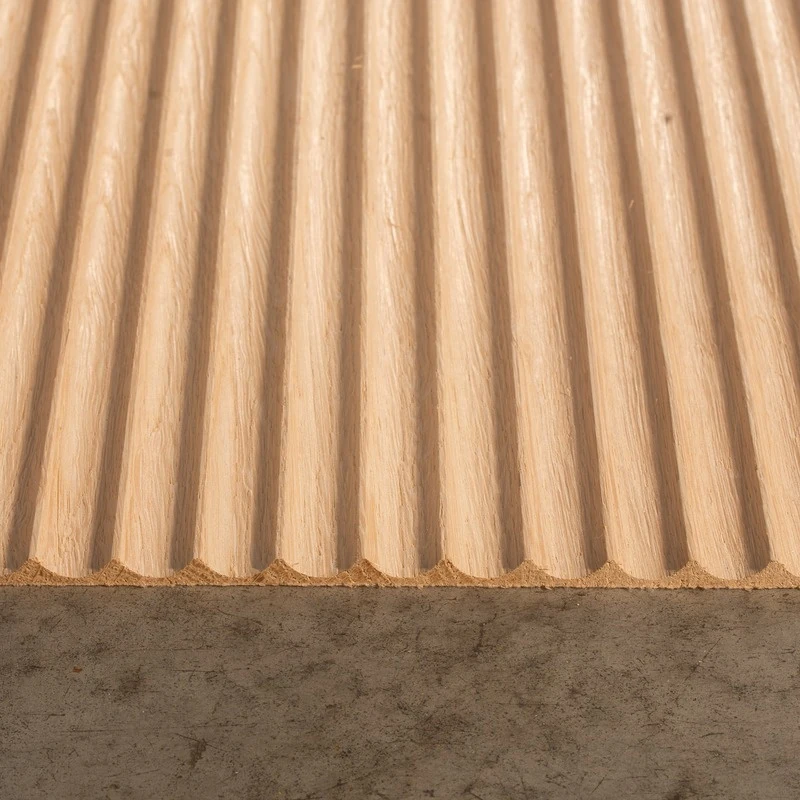 03 / 04Natural Oak
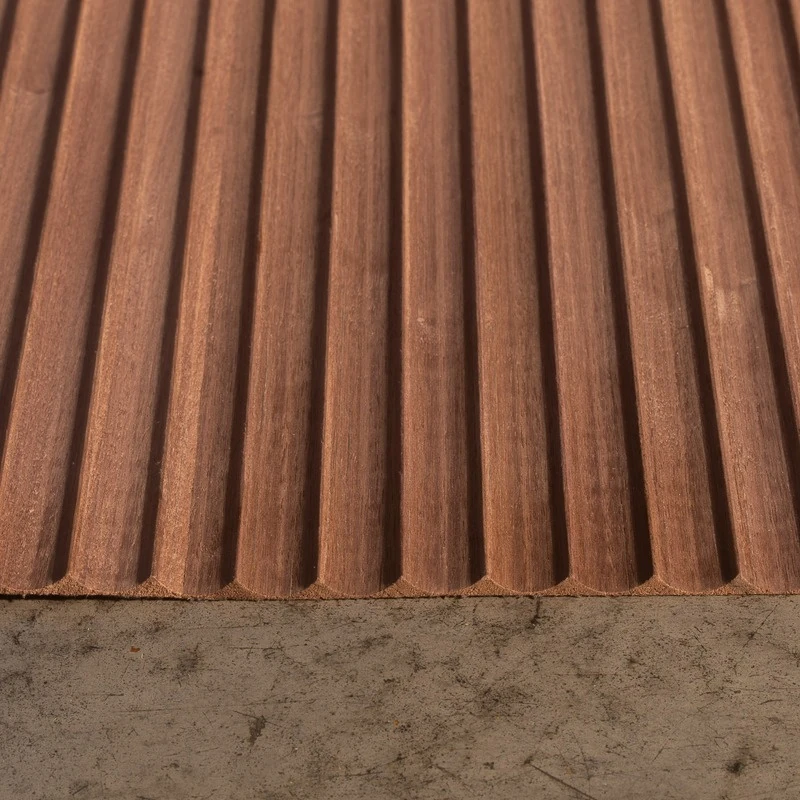 04 / 04Natural Walnut
Square channel
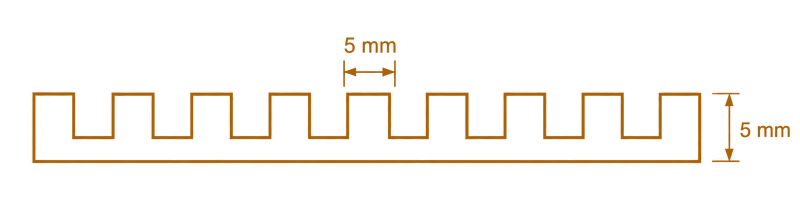
A crisp, linear profile of narrow, evenly spaced square-cut channels, for a clean and contemporary architectural look. Closest in feel to a slatted wall, in a single flat sheet. The section drawing marks 5 mm.
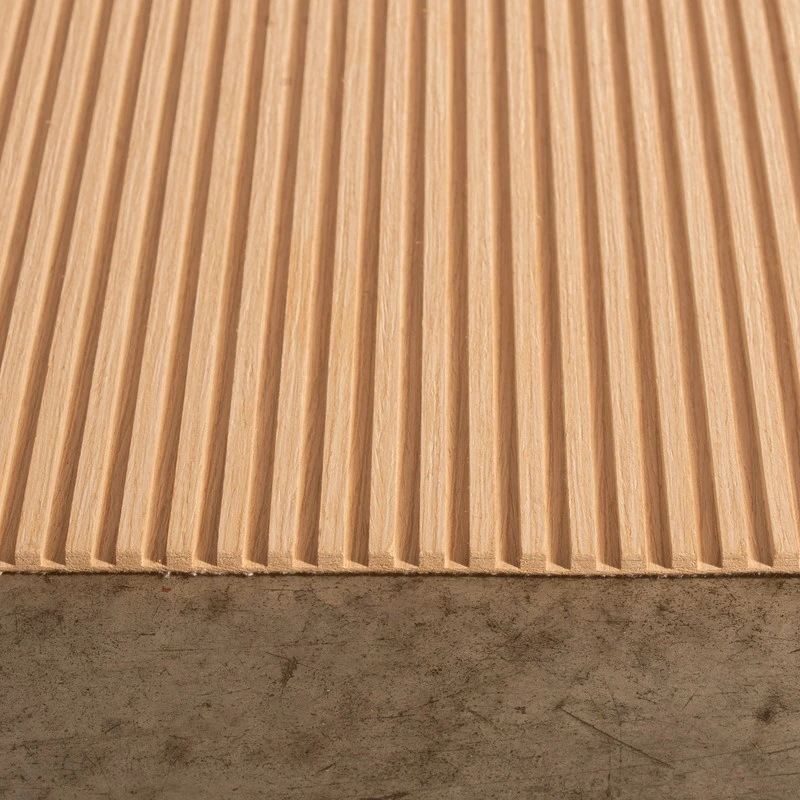 01 / 04Engineered Oak
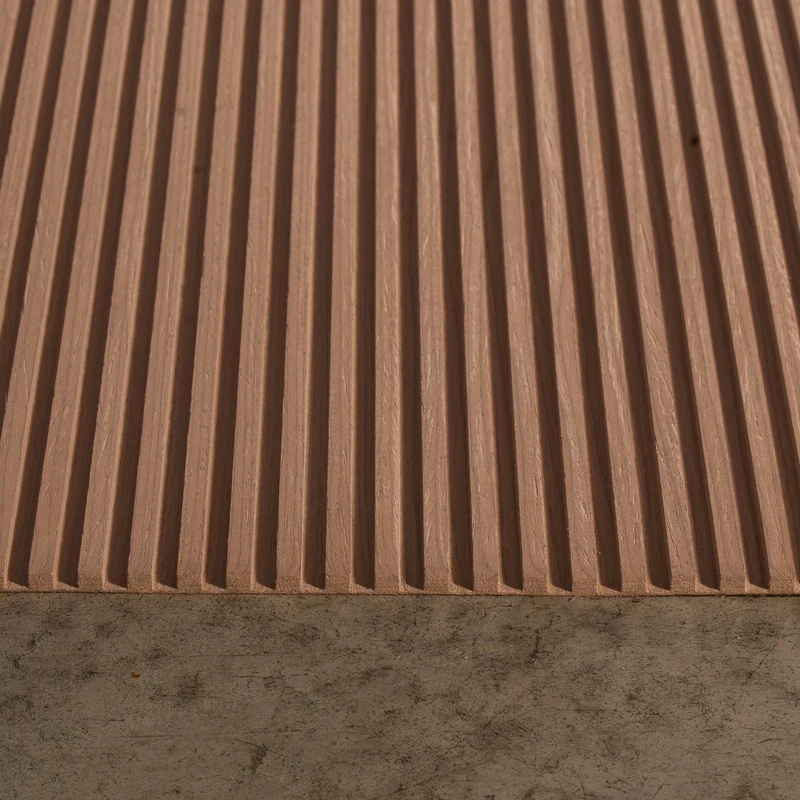 02 / 04Engineered Walnut
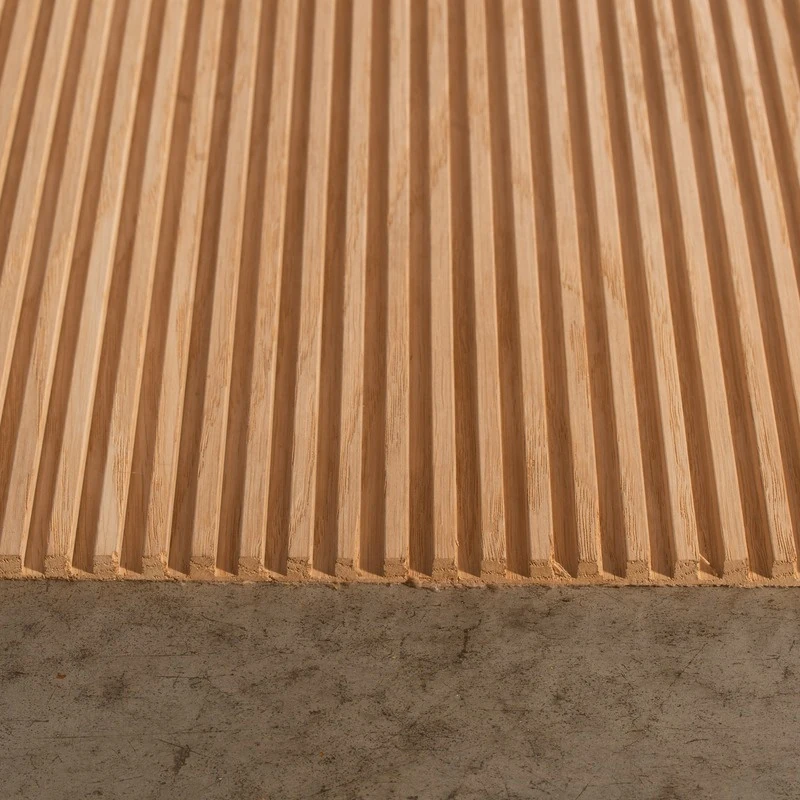 03 / 04Natural Oak
 04 / 04Natural Walnut
Natural or engineered?
Natural panels are solid oak or solid walnut, milled 5 mm thick. They show the timber as it is, with colour variation from sheet to sheet, and small knots can occur naturally. Choose natural where that character is the point.
Engineered panels are a multi-laminar construction in oak or walnut. They give the grain and colour of the species with a consistent, high-quality finish, and are the sensible choice for large projects where the panels need to read as one wall. They come in 3.5 mm, 5 mm and 8.5 mm thicknesses. Natural panels are available in 5 mm only.
For how solid timber and veneered construction differ more generally, see solid wood and wood veneer.
Sizes and thicknesses
Every profile is supplied as a 3050 x 1200 mm sheet, 5 mm thick as standard. Engineered panels are also available in 3.5 mm and 8.5 mm.
| Profile | Section dimension | Natural | Engineered | Sheet |
|---|---|---|---|---|
| Soft reed | 12 mm | Solid oak or walnut, 5 mm | Multi-laminar oak or walnut, 3.5, 5 or 8.5 mm | 3050 x 1200 mm |
| Deep flute | 17 mm | Solid oak or walnut, 5 mm | Multi-laminar oak or walnut, 3.5, 5 or 8.5 mm | 3050 x 1200 mm |
| Square channel | 5 mm | Solid oak or walnut, 5 mm | Multi-laminar oak or walnut, 3.5, 5 or 8.5 mm | 3050 x 1200 mm |
Three sections
The drawings show each profile in cross-section, with the dimension marked on the section. Each sheet is 5 mm thick.
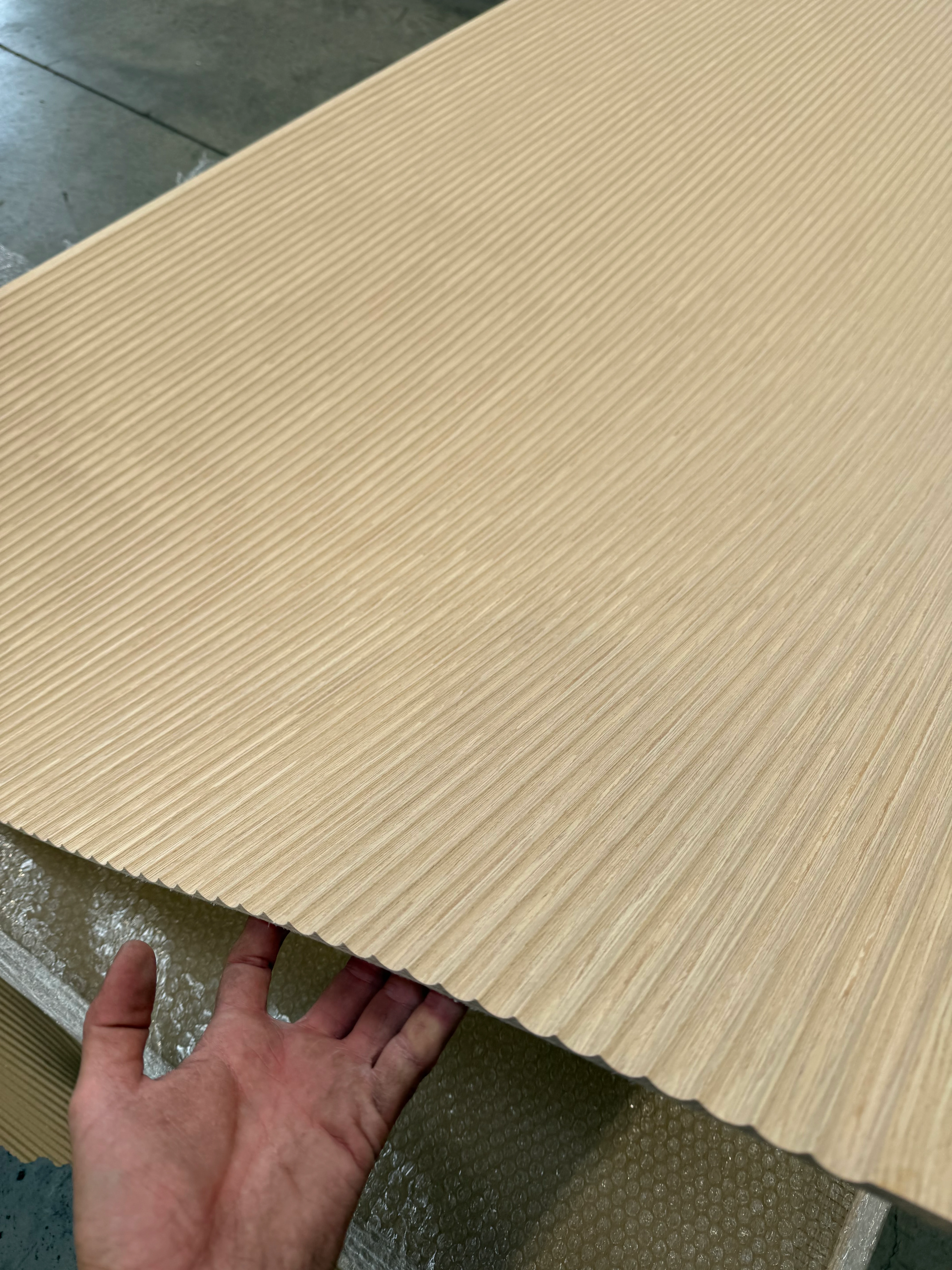
At the sheet
At 5 mm the sheets are light, and in the hand they flex. Whether a profile will follow a curve is a conversation to have with us at the design stage, before the substrate is set out.
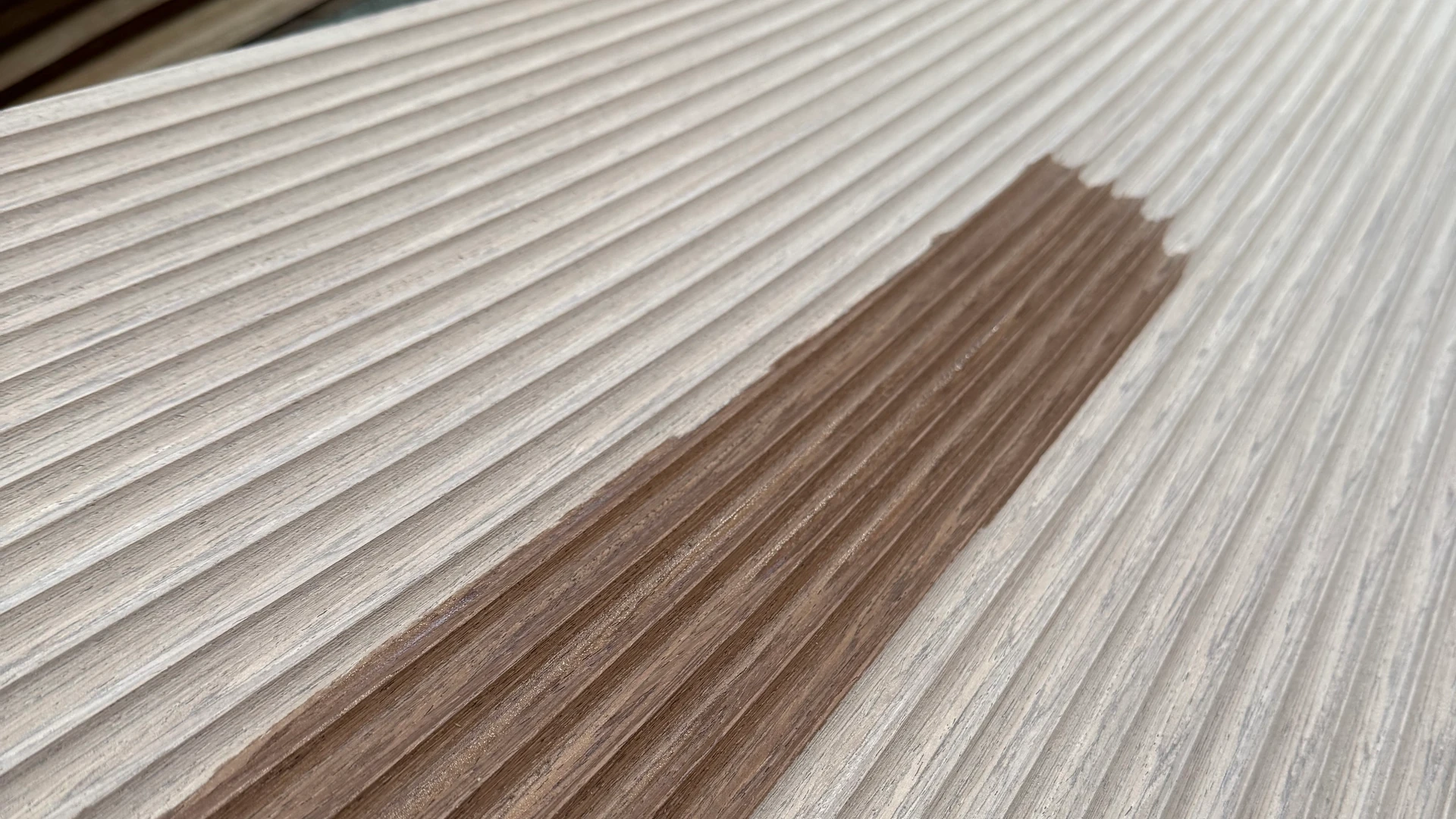
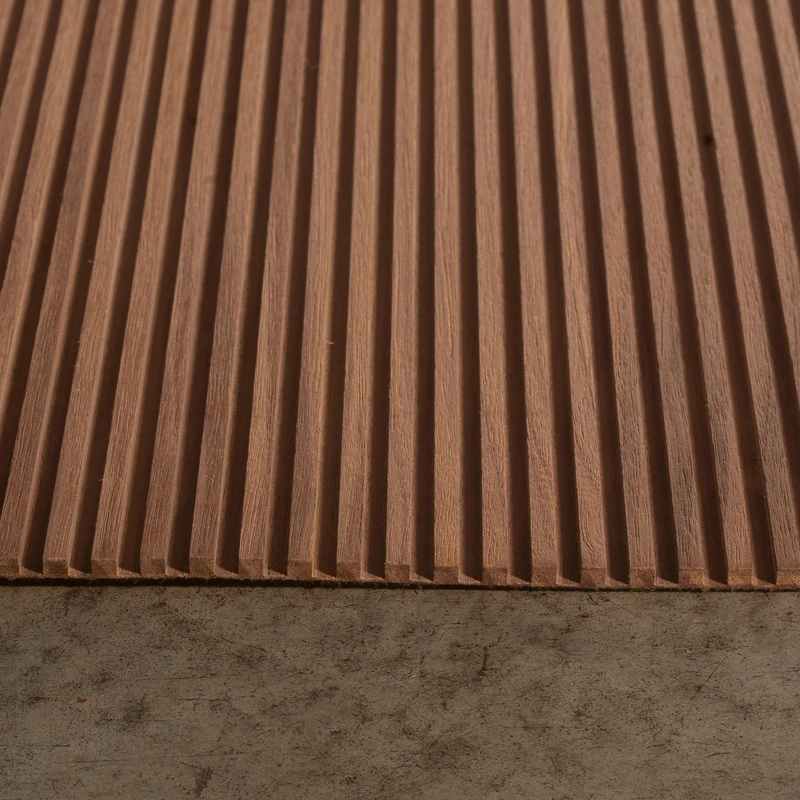
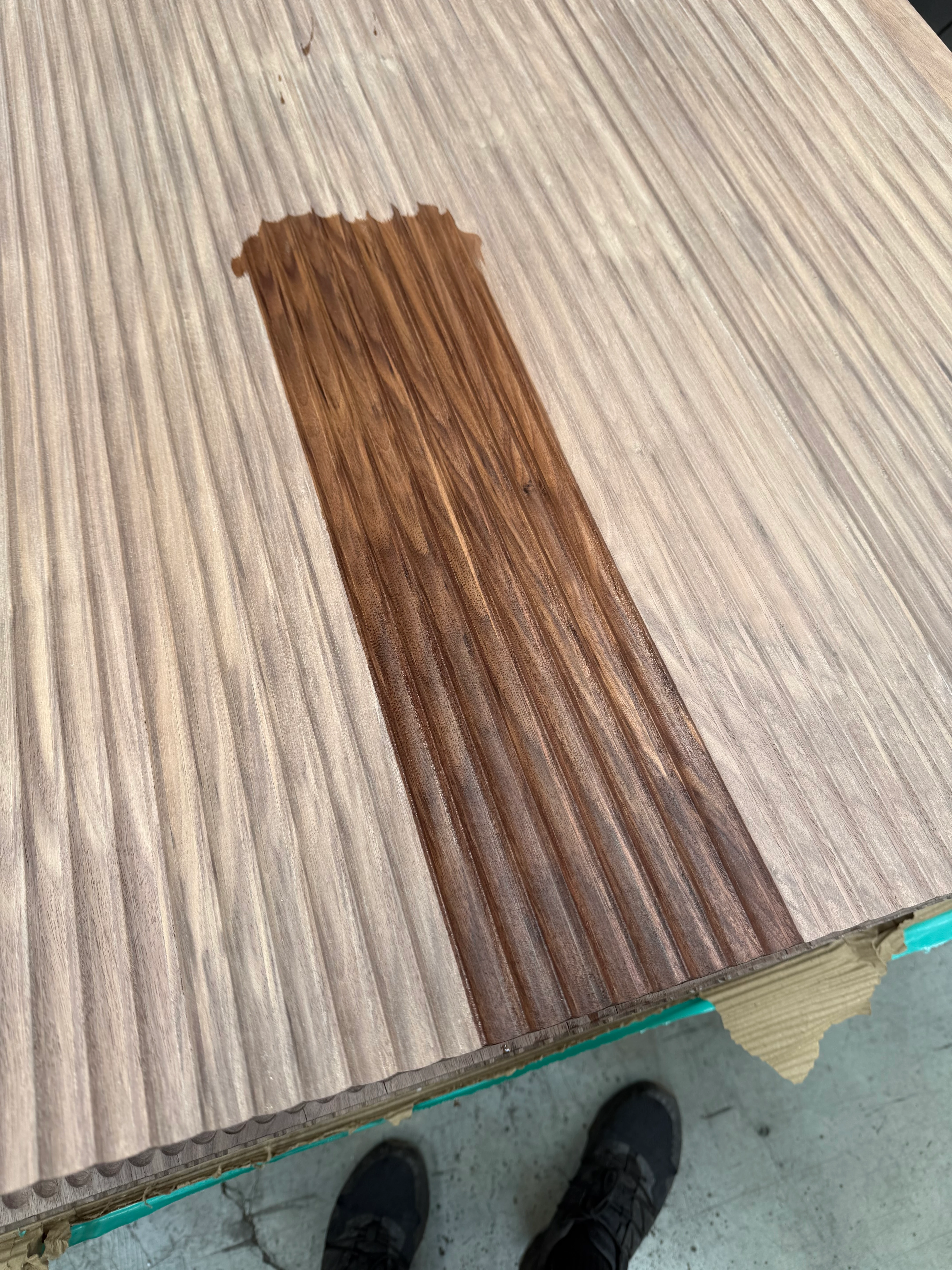
The darker patch on the walnut sheet is a finish sample. It shows how a coating deepens the colour of the timber, and how the grooves take it differently from the crests, which is why we sample finishes on the actual panel.
Where we use them
Fluted panels work wherever a surface needs depth without ornament. Common uses:
- Feature walls and panelling: full-height runs, alcoves and room backdrops. See our wall panelling.
- Cabinetry: door and drawer fronts, wardrobes and fitted storage within our joinery.
- Furniture: sideboards, headboards and case pieces, within our furniture.
- Commercial interiors: reception, bar and counter fronts, in hospitality and workplace schemes.
How we work with them
We specify, cut and finish fluted panels through our workshop network, to the sheet size above or cut to your setting out. We plan the layout so joins fall where they are least visible and the flutes run true across the wall, and we detail corners, returns and edges so the pattern carries cleanly round the room.
Oak and walnut are available in both constructions, so a scheme can mix a natural feature wall with engineered panels elsewhere and keep the two in the same species.
Are the panels solid wood?
The natural oak and walnut panels are solid timber, 5 mm thick. The engineered panels are a multi-laminar construction in the same species, available in 3.5 mm, 5 mm and 8.5 mm.
What size is a panel?
Every profile is supplied as a 3050 x 1200 mm sheet. We can cut to your setting out.
Will the panels match across a wall?
Engineered panels are more consistent in colour and grain, which suits large projects. Natural panels show colour variation and small knots from sheet to sheet, so we select and sequence sheets for a single wall by eye.
Can I see a sample first?
Yes. Samples are part of our sampling service, and we recommend seeing the profile, species and finish you intend to use before you specify.
.webp)