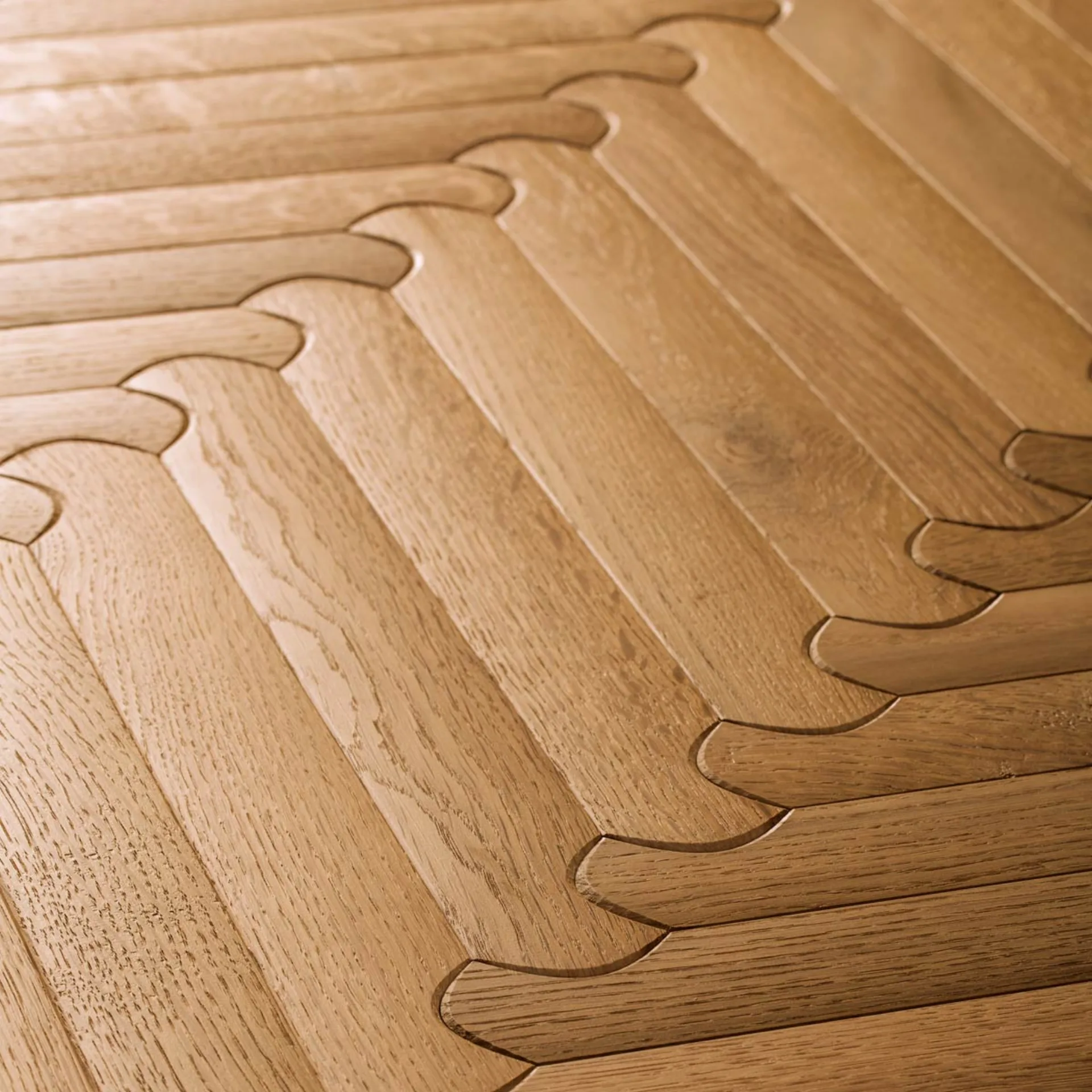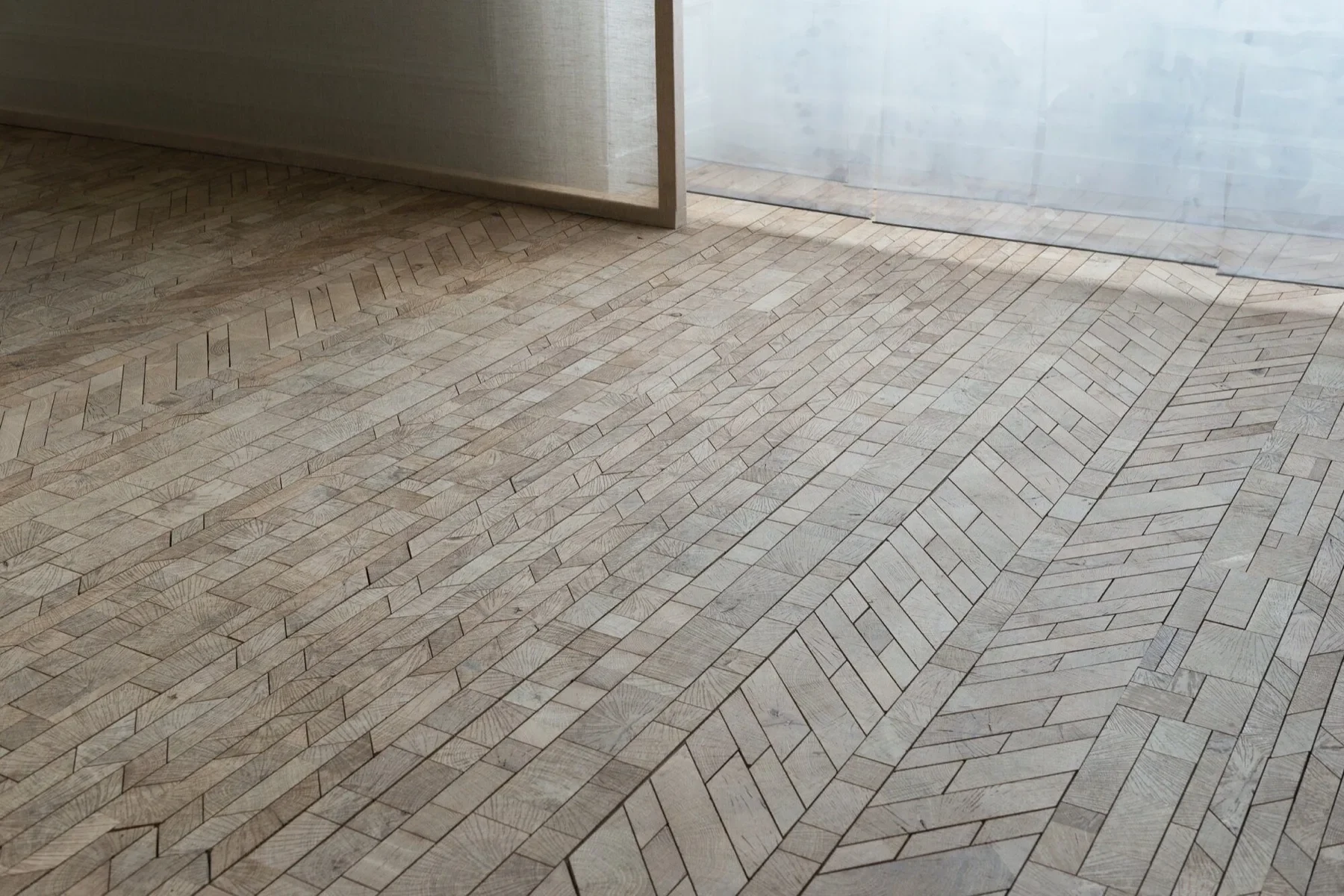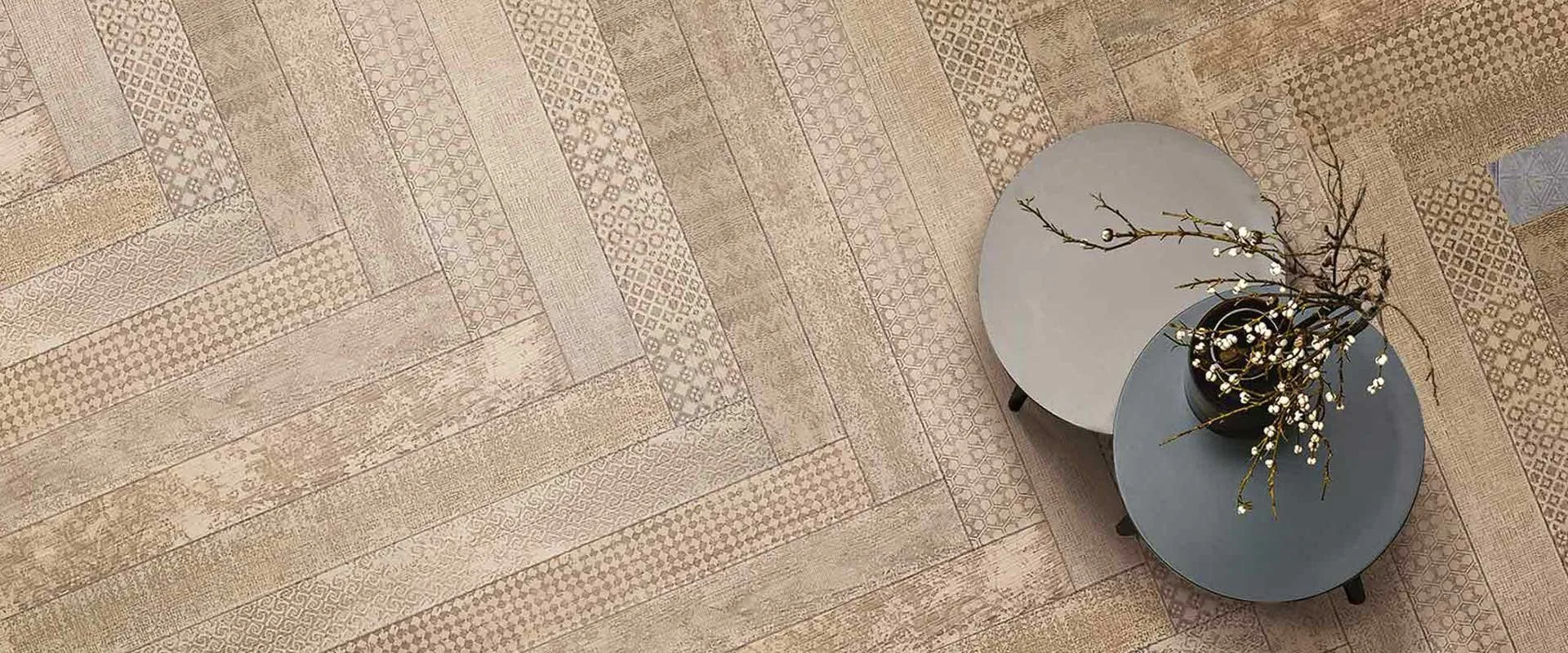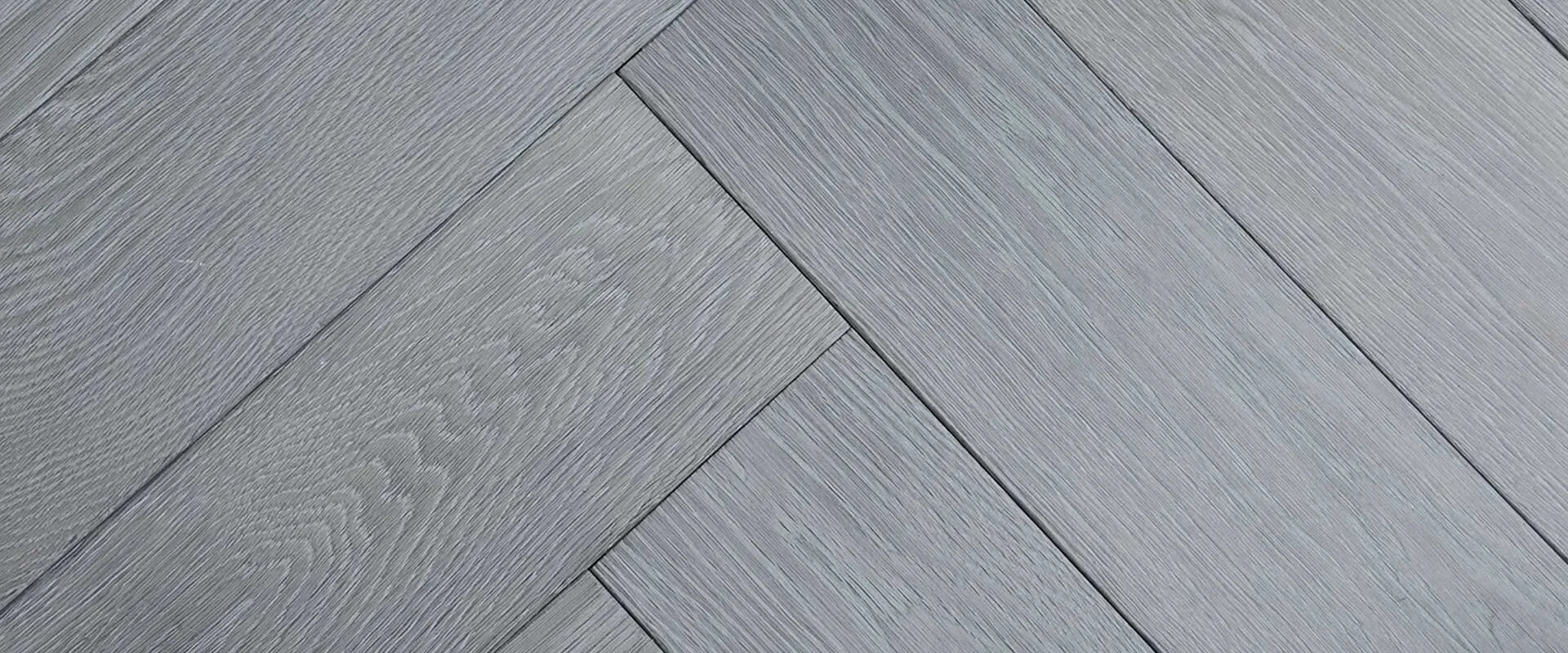
A wood floor’s surface is three decisions: the colour of the timber, the texture of its face and the finish that protects it. They are made separately and they interact, which is why a sample in the room tells you more than any description.
Run a hand over a brushed, oiled oak floor and you feel the grain like a relief map. Run it over a smooth, lacquered one and it is as even as a tabletop. Both are oak. The difference lies in the surface, and it shapes how the floor looks in the evening, how it wears and what it asks of you every year.
This guide takes the three decisions in order, then compares oil and lacquer, and sets out what each of our collections offers. Where a figure is quoted, it comes from a maker’s guide and is attributed as such.
Colour: how oak is coloured
Oak is rich in tannins, which is what makes it so responsive to colour. There are four broad routes, and the route changes how the floor looks and how it ages.
- Surface colour: a pigmented oil or stain is applied to the board, and the pigment settles into the softer spring growth of the grain. It gives precise, repeatable control over tone, and it is how most pale and mid shades are set. An opaque colour laid over a brushed board leaves the grain showing as texture only.
- Bleaching: the colour is taken out of the oak, and the open grain is then lightly pigmented for pale, translucent tones.
- Reactive colouring: the colour is made by a reaction with the oak’s own tannins. In fuming, the boards are exposed to ammonia in a sealed chamber, which darkens the oak from honey to deep brown. Smoking is a related process, and makers use the two terms a little differently, so judge the result on a sample. Because the colour forms inside the fibre, it reads with more depth than a surface stain, and it is the route to the greys, the darker browns and the deepest tones.
- Heat treatment: a controlled cycle of heat deepens and settles the tone of the timber through its depth. Makers also use it to improve stability, and it draws colour from within the wood, so the grain stays legible. Ask the maker how heat-treated oak ages.
Colour is judged most reliably in the room itself, because light, wall colour and the size of the space all move it. A pale shade can feel cool in a north-facing room and warm in afternoon sun. Colour on a screen is only a guide, so every floor is confirmed on a physical sample.
All oak changes with time. Light European oak oxidises slowly and mellows toward warmer, amber tones, and some other timbers darken faster. Moving rugs now and then evens out the difference between covered and uncovered areas, and curtains or UV screens in the sunniest windows slow the change.
Texture: how the surface feels
Texture is made by taking material off the face of the board. It changes the feel underfoot and how well the floor hides wear.
- Smooth: planed or sanded flat, the cleanest and most uniform surface.
- Light brushing: a single pass with nylon brushes leaves the grain faintly open and the surface smooth underfoot.
- Medium brushing: steel brushes run along the grain take out the soft springwood, so colour and oil settle into the valleys.
- Heavy brushing: repeated steel brushing makes a deep, strongly tactile relief.
- Hand-planed: a blade drawn across each board leaves shallow scallops and a hand-made feel.
- Saw-marked: the circular marks of the mill saw are left in the face, for a raw surface.
- Aged: boards are tumbled and worn at the edges to give an aged, reclaimed look.
Brushing lifts the grain slightly, so the floor feels less flat underfoot and hides everyday marks. It can be added to an oil or to a lacquer.
The edge belongs to the texture too. A square edge gives a seamless, continuous surface and suits pale, minimal rooms and parquet. A micro-bevel, which one maker describes as a chamfer of about a millimetre, defines each board without trapping dirt, and it tolerates a slightly uneven subfloor. A deeper or hand-cut bevel makes each plank read as joinery. A modern engineered board is usually stable enough not to need a bevel, so where one is cut it is for looks, and it should be avoided where an unbroken expanse is wanted. Biscuit takes the idea furthest, with a rounded, bevelled edge and a slight bombé across the face.
Finish: oil and lacquer
The finish protects the timber, and it is as much a decision about upkeep as about looks. The two main families differ in where the protection sits: in the wood, or on it.
| Natural oil | Lacquer | |
|---|---|---|
| Protection | Soaks into the timber and protects it from within, leaving the surface open | Forms a hard, sealed film on the surface |
| Look and feel | Matt and tactile, close to bare wood, with a soft patina that develops with use | Smooth and even, from matt through satin to gloss |
| Spills and traffic | Good with prompt wiping; standing liquids can mark | The most resistant to spills and heavy traffic |
| Upkeep | A maintenance oil now and then to refresh the surface; makers suggest anything from once a year to every two to four years, depending on the product and the traffic | Cleaning only; no recoating in normal use |
| Repair | Worn areas can be touched in locally, without sanding the whole floor | A scratch is sanded and recoated, so repair is harder to hide |
| Suits | Living rooms, bedrooms, studies and period interiors, wherever patina is welcome | Kitchens, hallways, lettings and busy commercial rooms |
Neither is better in itself. The real question is whether you want a floor that is easy to live with or a floor you look after. Oil rewards a little attention and ages gracefully. Lacquer asks for none and stays as it was laid.
There are variants. UV-cured finishes are hardened under ultraviolet light at the factory, so the floor arrives fully cured. Water-based finishes dry clear and keep oak close to its original colour, where oil-based products warm it slightly. Traditional wax gives a soft, pasty surface that marks easily and is hard to maintain, which is why it has largely given way to modern oils.
Sheen is measured in gloss units (GU) with a meter that reads the light reflected at an angle of 60°. The lower the number, the more matt the surface. One maker’s guide gives 4 GU for its matt lacquer, 8 GU for a satin and about 18 GU for a semi-gloss, so that maker’s glossiest finish is still restrained.
Two health points belong on the specification. Modern UV-cured lacquers have no solvents to evaporate into the room, and low-emission adhesives and finishes are worth asking about. Ask for the emissions test data, including the formaldehyde class (E1 is the usual European class) and, for the French market, the VOC label, on which A+ is the best rating.
What our collections offer
- Classics: twelve shades in oak, as plank or parquet, with a natural oil or a UV-lacquer finish and a brushed texture as an option.
- Forêt: end-grain oak in natural, smoked, black and fumed finishes, with an oil finish that can be refreshed in place.
- Opus: end-grain oak mosaic in natural, smoked and black among its finishes, sealed with a close-pored oil.
- Désir: heritage finishes with a soft heat-treatment, in two oak tones.
- Biscuit: a natural finish on engineered oak with a rounded, bevelled edge.
- Slide: modular oak panels in four colourways.
- Undici: oak parquet with decoration laser-engraved into the grain.
Stain and sheen can be adjusted on sample where a closer match to joinery is needed. To compare shades laid in a room, as plank or herringbone, use the floor visualiser.
Looking after the finish
Grit is what wears a finish. Mats at the entrances and a regular sweep or vacuum do most of the work, then a barely damp mop with a cleaner made for the finish. Felt pads under furniture and prompt attention to spills keep any floor looking settled for years. Oiled floors take an occasional maintenance oil in the busiest areas, which evens the surface and refreshes the colour. Lacquered floors are cleaned rather than fed. If the floor is over underfloor heating, read our guide to wood flooring over underfloor heating as well, because a heated house is a dry house.
For the wider picture of pattern, construction and care, see our guide to wood flooring.
Questions we are asked
Is oil or lacquer better for wood flooring?
Neither is better in itself. Oil gives a matt, natural surface that can be refreshed and repaired in places, and it asks for a little care over the years. Lacquer gives a harder, sealed surface that asks for almost none, and is better where spills and heavy traffic are expected. Choose by the room and by how much attention you want to give the floor.
What is smoked or fumed oak?
Oak that has been darkened by a reaction with its own tannins, not by a surface stain. In fuming the boards are exposed to ammonia in a sealed chamber; smoking is a related process, and makers use the two terms a little differently, so judge the result on a sample. Because the colour forms inside the fibre, it reads with more depth than a pigment, from honey tones through to deep brown and beyond.
What does brushed oak mean?
A brushed board has had the soft springwood taken out of its face with brushes, which leaves the harder grain standing slightly proud. The surface feels more textured underfoot, and colour and oil settle into the valleys. Brushing is graded from light, with nylon brushes, to heavy, with repeated steel brushing, and it helps hide everyday marks.
Will my oak floor change colour?
Yes, gradually. Light European oak oxidises slowly and mellows toward warmer, amber tones, and some other timbers darken faster. Moving rugs now and then evens out the difference between covered and uncovered areas, and curtains or UV screens in the sunniest windows slow the change.
Can a lacquered floor be repaired?
Yes, but not invisibly in one spot. Because the lacquer is a film, a scratch is sanded and recoated, and the repair is easier to see than a touch-in on an oiled floor. Lacquered floors are chosen for how rarely they need attention.
How often does an oiled floor need re-oiling?
It depends on traffic and on the product. Makers suggest anything from once a year to every two to four years, and a busy hallway needs it sooner than a bedroom. The sign is a floor that looks drier in some areas than others, and the answer is a maintenance oil applied with a mop, not sanding.