.webp)
Metalwork · Steel
Steel fabricators in London
Mild steel, stainless and Corten, fabricated and finished for furniture, staircases and architectural metalwork.
Mild steel, stainless and Corten, fabricated and finished for furniture, staircases and architectural metalwork.
Make Bespoke Studio produces bespoke steel fabrication for interior designers, architects and procurement teams in London and internationally. The work is specified and project-managed from our London studio at Chelsea Harbour, fabricated and finished in our Sussex metal workshop, and installed on site by the same team.
If you are looking for steel fabricators in London for work that is seen and touched, such as a staircase, a balustrade, a screen, a table base or a bar front, this page sets out the steels we work in, the finishes available and where each one is used.
Every commission starts with CAD and shop drawings, and a finish sample is agreed before any steel is cut. Where a piece carries structural load, it is fabricated to the engineer's details and building-regulation tolerances.
.webp)
Steel is not one material. The right choice depends on where the piece will stand, how it will be finished and how much it has to carry. We fabricate in three families, set side by side below.
A specifier's reference. The right steel depends on the environment, the finish and what the piece has to do.
| Steel | What it is | Best suited to | Typical finishes |
|---|---|---|---|
| Mild steel | Carbon steel: strong, easily welded and economical. It takes almost any finish, but needs a coating or treatment to protect it from corrosion. | Staircases, balustrades, screens, furniture frames and bases, shopfitting, hidden substrates | Blackened, powder-coated, hand-patinated, liquid metal sprayed |
| Stainless steel, grade 304 | Corrosion-resistant and hygienic. The usual choice for interior work. | Furniture frames and bases, kitchen and bar surfaces, hospitality fittings, handrails | Brushed, satin, polished, mirror, PVD colour, powder-coated |
| Stainless steel, grade 316 | Contains molybdenum, which improves resistance to salt and chlorides. | Exterior, coastal and marine work | Brushed, satin, polished, PVD colour |
| Corten weathering steel | Forms a stable oxidised surface of its own, so it needs no paint or coating. | Exterior cladding, garden furniture, feature screens | Natural weathered patina |
Brass, bronze, copper and aluminium are covered on our metalwork page.
Both are austenitic stainless steels and look the same once finished. The difference is in the chemistry: 316 contains molybdenum, which resists chlorides, so we specify it outdoors, near the coast and in marine settings. For most interior work, 304 is the sensible choice.
Mild steel is the workhorse of architectural fabrication because it is strong, weldable and takes any colour or finish. Its weakness is rust, so the finish does the protecting: a blackened, powder-coated or sealed surface for interior pieces, and a full coating system for anything exposed to weather.
Corten develops a stable layer of oxidation over time and then stops, which is why it is used for exterior cladding, garden furniture and feature screens without paint. While the surface is developing, rainwater run-off can mark adjacent stone or paving, so the detail around the base needs thought.
.webp)
The workshop cuts, forms and joins steel in several ways, chosen for each component by material, gauge and tolerance.
After welding, every joint is ground flush and worked through progressive abrasive stages before any finish is applied, and sub-assemblies are dry-fitted on the workshop floor first. Our guides to MIG and TIG welding and sheet metal fabrication for interiors go further into the processes.
Steel can be taken from a raw, rolled look to a mirror polish or a deep colour. Each finish suits particular steels and particular uses.
| Finish | Works on | Look | Notes |
|---|---|---|---|
| Brushed or satin | Stainless steel | A fine directional grain with a soft sheen | A calm, practical finish for furniture frames, handrails and kitchen surfaces. |
| Polished or mirror | Stainless steel | Fully reflective | Buffed through successive abrasives to the specified level. It shows fingerprints, so it suits pieces that are looked at more than handled. |
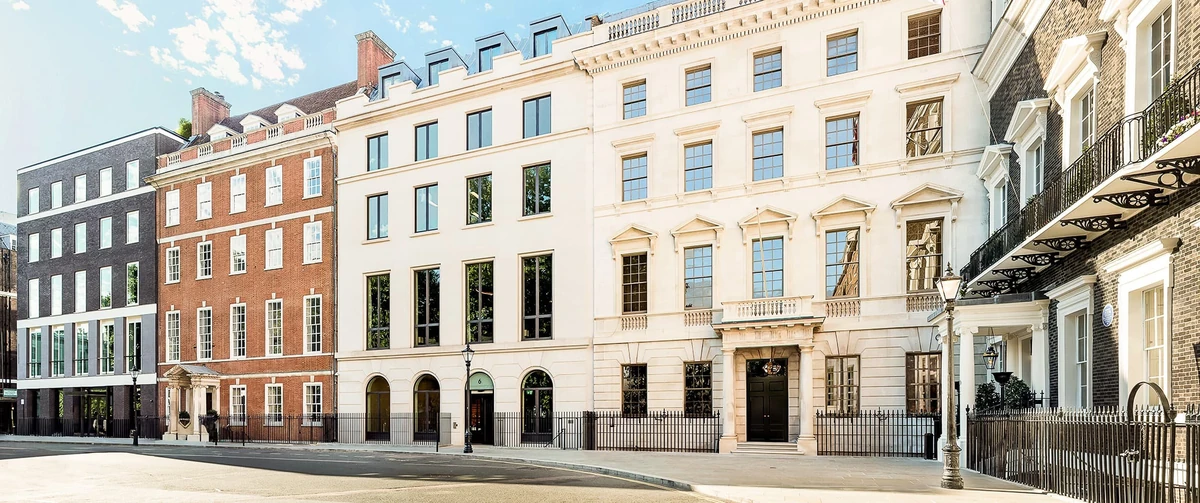
| Blackened | Mild steel | A dark, even surface, from steel grey to near black | Used for reception desks, frames and detailing, as in the blackened-steel reception detailing at St James's Square. |
| Hand-patinated | Mild steel, brass, bronze, copper | Developed by chemical and manual processes, so each piece differs | Colour and depth are developed on a sample first, then matched across the piece. |
| Powder-coated | Mild and stainless steel | Any RAL colour | A durable, even colour. A practical choice for mild steel that has to resist wear. |
| Liquid metal | Mild steel and other substrates | A sprayed metal coating | Applied by artisanal specialists. |
| PVD colour | Stainless steel | A coloured metal layer, such as brass or bronze tones | Bonded to the steel at the molecular level and applied off-site. Harder than chrome and resistant to scratching and tarnish, which is why it was specified for the handrails at 77 London. |
| Natural weathering | Corten steel | A warm orange-brown patina | No coating needed. |
A finish sample is agreed before fabrication starts, ideally viewed in the light of the project itself. More on bespoke metal finishes and PVD steel finishes.
Steel gives furniture its structure and its lines. We fabricate:
Steel is often paired with stone, timber or glass, such as a polished frame under a stone slab or a blackened base below a timber top. Our guide to bespoke metalwork shows how these pieces are specified.
Interior work is typically in mild or stainless steel, and exterior elements are specified in Corten or 316 stainless. Assemblies are welded or bolted, engineered to building-regulation tolerances and built from CAD models and shop drawings.
Discrete steel furniture pieces typically run 10 to 14 weeks from approved drawings to installation. Architectural packages such as staircases, balustrades and cladding run 14 to 20 weeks depending on complexity, and specialist finishes such as high-build PVD or hand-patination add time. The programme is agreed at brief stage; our lead times guide sets out the full picture.
Make Bespoke Studio specifies and project-manages bespoke steel fabrication for London and international projects from its studio at Chelsea Harbour. The steel is fabricated and finished in our Sussex metal workshop and installed on site by the same team.
Finished, visible steelwork for interiors and architecture: furniture frames and bases, staircases, balustrades, screens, cladding panels, feature walls and shopfitting. Where a piece carries structural load, it is fabricated to the engineer's details and building-regulation tolerances.
Our work is the finished layer that people see and touch. For the primary structural frame of a building, a structural steelwork contractor appointed on the main contract is the usual route, and we coordinate with them where our work connects to the structure.
Both are austenitic stainless steels. Grade 316 contains molybdenum, which gives it better resistance to chlorides and salt, so we specify it outdoors, near the coast and in marine settings. Grade 304 suits most interior work.
Grade 316 stainless steel or Corten weathering steel. Corten forms its own stable oxidised surface and needs no paint, although run-off can mark adjacent stone or paving while it develops. Mild steel can be used outdoors only with a full protective coating system.
Yes. Mild steel can be blackened, hand-patinated, powder-coated to any RAL colour or sprayed with liquid metal. Stainless steel can be brushed, satin, polished, powder-coated or PVD-coated in colour. A finish sample is agreed before fabrication starts.
Yes. We work from your drawings or develop the design from a concept, then issue CAD and shop drawings for approval before fabrication begins.
Discrete steel furniture pieces typically run 10 to 14 weeks from approved drawings to installation. Architectural packages such as staircases, balustrades and cladding run 14 to 20 weeks depending on complexity, and specialist finishes such as high-build PVD or hand-patination add time. The programme is agreed at brief stage.
-1200w.webp)
.webp)