The most durable furniture materials are dense hardwoods such as oak and ash, hard stones such as quartzite, stainless steel and brass, catalysed lacquer, full-grain leather and performance fabrics. But durability is not one property. A material that resists wear can still stain, and one that resists water can still scratch, so the right choice depends on what the piece has to survive.
Ask what the most durable material for furniture is and the honest answer is: against what? A restaurant table faces cleaning chemicals, spilled drinks and hot plates. A sofa faces friction and sunlight. An outdoor table faces rain, frost and UV. No material wins on every count, which is why good furniture combines them: a hard top on a stable base, a tough finish over a sound timber, a performance fabric over dense foam.
This guide sets out the main ways furniture fails, how the common materials compare, and how to choose for the room, the use and the budget. It draws on how we specify materials for hospitality and residential projects across our bespoke furniture and joinery ranges. Figures are a guide, and the specification for your piece always takes precedence.
What “durable” means
Furniture rarely fails for one reason. These are the six that matter, and a good specification names the ones that apply:
- Wear: abrasion and scuffing from daily use, which decides the fabric, the finish and the surface.
- Impact: dents and chips, which decide the hardness of the timber or stone and the edge detail.
- Moisture: swelling, staining and mould, which decide the core, the seal and the finish.
- Heat and chemicals: rings, etching and softening, which decide the top, the lacquer and the sealer.
- Light: fading and yellowing, which decide dyes, leathers, lacquers and fabrics.
- Movement: warping and joints opening as timber takes up and loses moisture, which decide the construction.
Durability also includes repair. A surface that can be re-oiled, re-polished or re-sprayed will outlast one that cannot, and a piece built for repair is a better long-term purchase than one that merely resists damage for the first few years.
Durable furniture materials at a glance
| Material | Strong at | Weaker at | Where it earns its place |
|---|---|---|---|
| Solid hardwood | Impact and wear; can be sanded back and refinished | Moves with humidity; softer species dent | Dining tables, chairs and frames |
| Wood veneer on a stable core | Staying flat across large panels, with a real timber surface | Cannot be sanded back as often as solid timber | Cabinetry, wall panelling and large tops |
| Quartzite | Hardness, heat and scratches | Needs sealing against stains; heavy | Table tops, bar tops and worktops |
| Marble and softer stones | Beauty, and ageing gracefully | Etches with acids and stains unless sealed | Tops where a patina is welcome |
| Terrazzo | Hard wear; can be repaired and re-polished | Weight | Tables, tops and floors |
| Stainless steel with a PVD finish | Corrosion, scratches and hygiene | Fingerprints on a mirror polish | Bar fronts, bases and hospitality furniture |
| Brass and bronze | Repairable; age into a patina | Tarnish unless lacquered or deliberately patinated | Table tops, hardware and inlay |
| Catalysed lacquer | The hardest sprayed film; water and chemical resistance | Shows a dent in the board beneath it | Bar tops, restaurant tables and cabinetry |
| Full-grain leather | Ageing well; can be conditioned and repaired | Sun and some liquids | Seating and desk tops |
| Performance fabric | Abrasion and stains | Hand-feel is firmer than a natural cloth | Hospitality and family seating |
Wood: hardwood, veneer and engineered boards
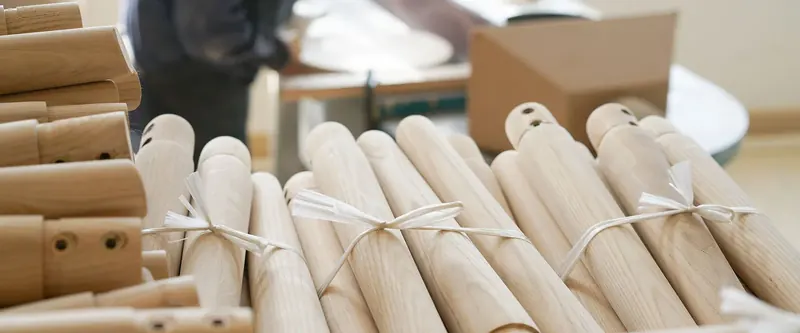
Solid hardwood is the benchmark for furniture that has to take knocks. Its hardness is measured on the Janka scale, which records the force needed to press a steel ball into the surface, and the dense temperate hardwoods used for furniture sit towards the top of the range. The table gives rounded values; hardness varies by species and by tree.
| Timber | Approximate hardness (Janka, lbf) | In use |
|---|---|---|
| Hard maple | 1,450 | Very hard and pale; resists dents |
| Ash | 1,300 | Tough and springy; used for chairs and frames |
| Beech | 1,300 | Hard and close-grained |
| Oak | 1,100–1,350 | The benchmark for tables and joinery; the range runs from European to American |
| Iroko | 1,250 | Dense and stable; suits damp and outdoor use |
| Teak | About 1,100 | Naturally oily, so a classic outdoor timber |
| American walnut | About 1,000 | Slightly softer, very stable, and ages beautifully |
| Cherry | About 950 | Softer, and darkens with light |
| Softwoods such as pine | About 400–900 | Dent easily, and rarely used for hard-working furniture |
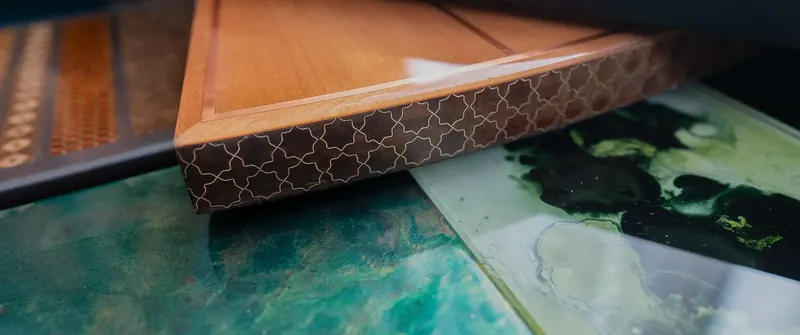
Hardness is only part of the story. Timber moves across the grain as humidity changes, which is why a wide solid top is built up from several boards, and why large panels, cabinetry and wall panelling are usually veneered onto a stable core. A veneer is real timber, sliced thin and laid on a board that stays flat, so the surface is natural and the panel stays true. The trade-off is that a veneer cannot be sanded back as many times as solid timber, so the finish and the edge detail are chosen for the wear the piece will see. Choosing between species is covered in our guide to wood species for bespoke furniture, and the exotic veneers page shows what is available.
Engineered boards such as MDF are flat and steady through the seasons, which makes them the right base for a sprayed lacquer, and moisture-resistant grades suit damp rooms. The timber itself is only as durable as the way it is joined: see the joints that make furniture last, and our woodwork facility for how that is built.
Stone and hard mineral surfaces
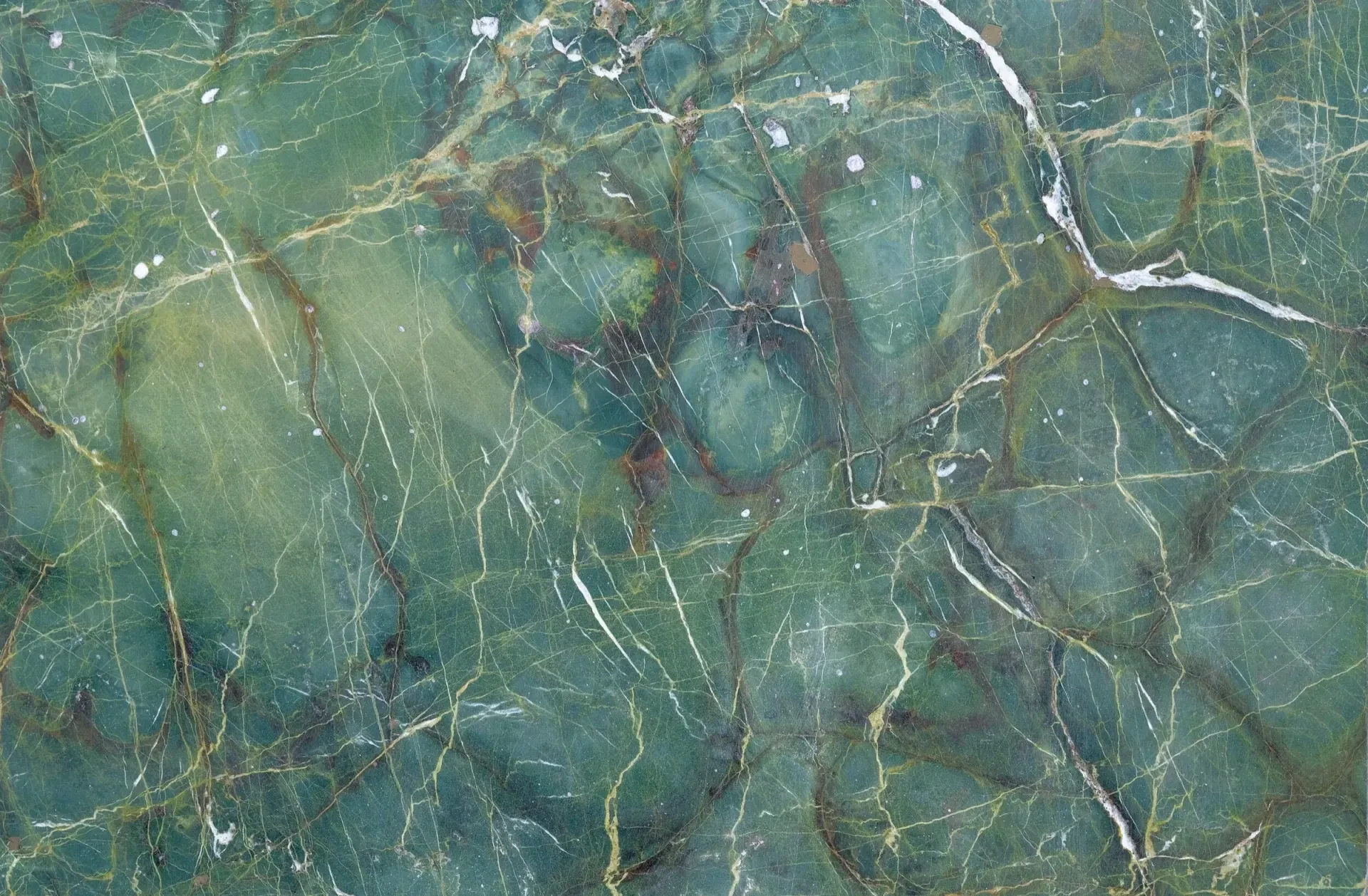
For a top that has to survive heat, scratches and spills, stone is the natural choice, and the difference between stones is large. Quartzite is composed almost entirely of quartz and sits at about 7 on the Mohs scale, harder than glass and steel, with a low porosity. Marble is far softer, at about 3 to 4, and reacts to acids such as citrus and wine, which etch a dull mark into a polished surface. Marble is chosen for its beauty and is expected to age, and many clients prefer a quartzite that looks like marble for the harder-working surface. Our guides to what quartzite is, quartzite worktops and surfaces and stone and marble in interiors go into the detail.
Other mineral surfaces suit particular jobs. Terrazzo is hard-wearing and can be repaired and re-polished. A solid surface is the same material throughout, so scratches can be sanded out of it, and it can be formed into seamless tops. Whatever the stone, seal it, and ask for the edge to be specified, because the edge is where a top is most often chipped. Our stonework facility cuts and finishes these tops.
Metal and metal finishes
Stainless steel is corrosion-resistant and hygienic, which is why it is used for bar fronts, bases and hospitality furniture. A PVD coating, laid down in a vacuum, adds colour and a very hard surface that resists scratching far better than paint or plating; our guide to PVD steel finishes explains it. Brass and bronze are softer and age differently: they take a patina, which can be a feature if it is planned, and can be lacquered to stay bright if it is not. See patination and the metal finishes page, and our metalwork workshop for what can be made.
Finishes: the layer that takes the wear
On timber and board, the finish is usually the first thing to wear, so it deserves as much thought as the material. A catalysed two-pack polyurethane lacquer is the hardest and most water-resistant film we spray, and is the usual choice for bar tops and restaurant tables. It is sprayed in our spraywork facility, in thin coats sanded between each one. Oil is easier to renew and feels natural, but marks more easily; French polish is beautiful and delicate, and wary of heat and alcohol. Our guides to lacquered furniture and French polishing set out how each is applied and repaired. Whichever is chosen, we test a finish against what the piece will actually meet: alcohol, coffee and cleaning chemicals.
Upholstery: leather, fabric and foam
Upholstery is where friction does its work, and the numbers are specific. Fabrics are rated by the Martindale rub test (BS EN ISO 12947). Light domestic use is comfortable above 15,000 rubs, everyday family seating wants 25,000 or more, and contract or hospitality seating should start around 40,000. Tightly woven performance fabrics resist abrasion and stains better than loosely woven or delicate ones, and the fabrics page covers the families. Full-grain leather is among the longest-lasting seating surfaces because it ages instead of wearing out, and it can be conditioned and repaired: see leather in bespoke furniture.
Under the cover, durability depends on the frame and the fill. Higher-density, high-resilience foam keeps its shape under daily use where a softer foam flattens, and the choice of upholstery fills sets how a seat feels and how long it stays that way. A banquette in a busy restaurant takes more punishment than a sofa at home, and is specified accordingly. Our upholstery workshop builds the frame, the springing and the cover as one piece, and how a bespoke sofa is made shows the process.
Outdoor, marine and wet areas
Outdoors the list narrows. Dense, oily hardwoods such as teak and iroko, marine-grade (316) stainless steel and powder-coated aluminium cope with rain, frost and sun, and outdoor-rated fabrics and foam shed water and resist UV. Interior-grade board and veneer do not belong outside, however well they are finished. The same thinking applies to pool decks, terraces and yachts, where salt and sun are constant: see our outdoor furniture, outdoor tables and superyacht deck furniture, and the guide to bespoke outdoor furniture.
Construction matters as much as material
A durable material in a weak construction still fails, usually at a joint, an edge or a fixing. These are the details that separate furniture built to last:
- Joints: mortise-and-tenon, dovetail and doweled joints that are glued and pegged, not stapled.
- Stable cores: veneers and lacquers laid on boards that will not move.
- Edges: a small radius on exposed edges, because corners take the knocks first.
- Fixings: hardware and hinges rated for the weight and the number of cycles, not the minimum.
- Protection: sealed undersides and backs, so that moisture cannot enter from the side no one sees.
Choosing by use
Put together, the choice follows the situation:
- A family dining table: a hardwood top or a veneer on a stable core with a catalysed finish, or a quartzite top for the hardest wear.
- A restaurant table or bar top: catalysed lacquer, stone or steel, as in our hospitality bars for restaurants and bars.
- A hotel bedside table or desk: lacquer or veneer with a protected edge, detailed for hotel use.
- Contract seating: a performance fabric of 40,000 Martindale or more over high-density foam, on dining chairs and banquettes.
- Kitchens, pantries and wet areas: stone or solid surface on a moisture-resistant core, as in our kitchens and pantries.
- Fitted wardrobes and dressing rooms: veneer or lacquer on a stable core, with hinges and runners chosen for the cycles.
Durable materials in our projects
- The Grill at The Dorchester: banquettes whose outer framework and base are finished in satin black lacquer, with leather upholstery.
- Julie’s Restaurant: red lacquer dining tables, brass martini tables and glass-top side tables.
- The Glass House: consoles in moisture-resistant MDF finished with a matt lacquer to protect the wood.
- Maybourne Riviera: iroko poolside furniture, in a timber chosen for outdoor use.
If you are specifying materials for a project, our materials and finishes guide for the trade and our sampling service let you test a material before it is committed, and aftercare keeps it looking right once it is installed. Interior designers and architects can specify through our trade service, and anyone can start a project with us.
Questions we are asked
What is the most durable material for furniture?
There is no single answer, because durability depends on what the piece has to resist. For hard use, the strongest combinations are a dense hardwood such as oak or ash with a catalysed finish, a hard stone such as quartzite, stainless steel with a PVD finish, full-grain leather, and a performance fabric over high-density foam.
What is the most durable wood for furniture?
Dense hardwoods such as oak, ash, beech and maple, which sit at roughly 1,100 to 1,450 on the Janka scale, resist dents and wear best. Walnut and cherry are a little softer but very stable and age well. Softwoods such as pine dent more easily.
Is veneer less durable than solid wood?
Not necessarily. A veneer on a stable core moves less than solid timber, so large panels stay flat and joints stay closed. Solid timber can be sanded back more times than a veneer, so with veneer the finish and the edges matter more.
Which is more durable, marble or quartzite?
Quartzite. It sits at about 7 on the Mohs scale and resists scratching and heat, while marble sits at about 3 to 4 and etches with acids such as citrus and wine. Marble is chosen for its look and is expected to develop a patina, and both stones should be sealed.
What is the most durable fabric for upholstery?
Fabrics are rated by Martindale rubs. Light domestic use is comfortable above 15,000, everyday family seating wants 25,000 or more, and contract or hospitality seating should start around 40,000. Tightly woven performance fabrics resist abrasion and stains better than loosely woven or delicate ones.
What is the most durable finish for a table top?
A catalysed two-pack polyurethane lacquer is the hardest and most water-resistant film we spray, which is why it is specified for bar tops and restaurant tables. An oil finish is easier to renew but marks more easily.
What are the most durable materials for outdoor furniture?
Dense, oily hardwoods such as teak and iroko, marine-grade (316) stainless steel and powder-coated aluminium, with outdoor-rated fabrics and foam. Interior-grade board and veneer are not suitable for use outdoors.
Can durable furniture be repaired?
Often, and repairability is part of durability. Oiled timber is re-oiled, French polish and lacquer are touched in or re-sprayed, solid surface and some stones are sanded back and re-polished, leather is conditioned, and upholstery can be re-covered.