Bespoke Iroko furniture for a cliff-top Riviera hotel
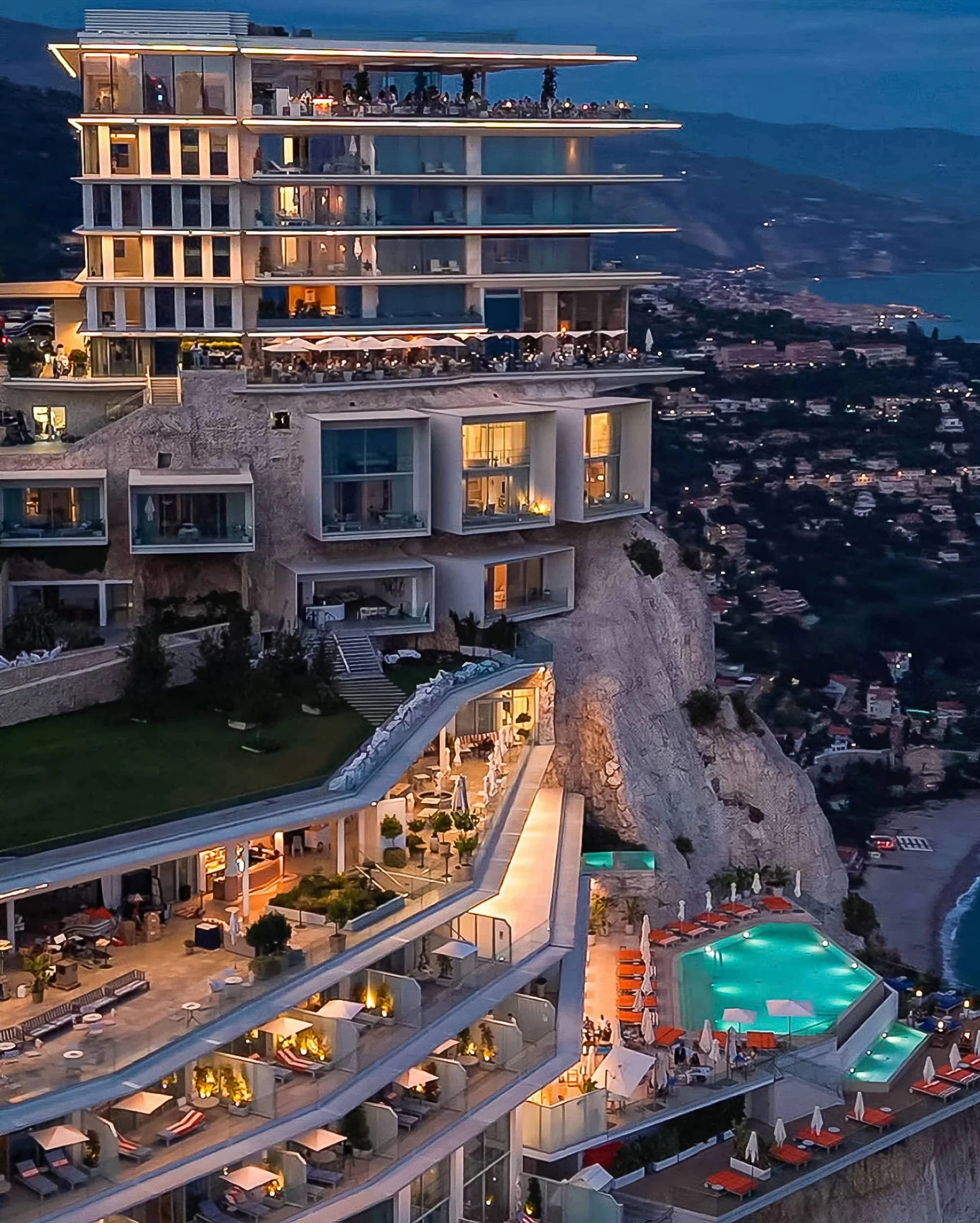
Sheltered by Mont Agel and suspended above the Côte d’Azur, the Maybourne Riviera is one of those rare hospitality projects where architecture, interiors, landscape and bespoke furniture all pull in the same direction. Built into the cliff at Roquebrune-Cap-Martin, between Menton and Monte Carlo, the hotel is a white, mineral and graphic presence that feels grown from the rock rather than placed on it.
For interior designers and hospitality teams, it is a living blueprint: 83 rooms, including 16 suites, tiered down the hillside, wrapped in terraces and Mediterranean gardens, covering over 9,461m² with every element choreographed around an extraordinary sea view.
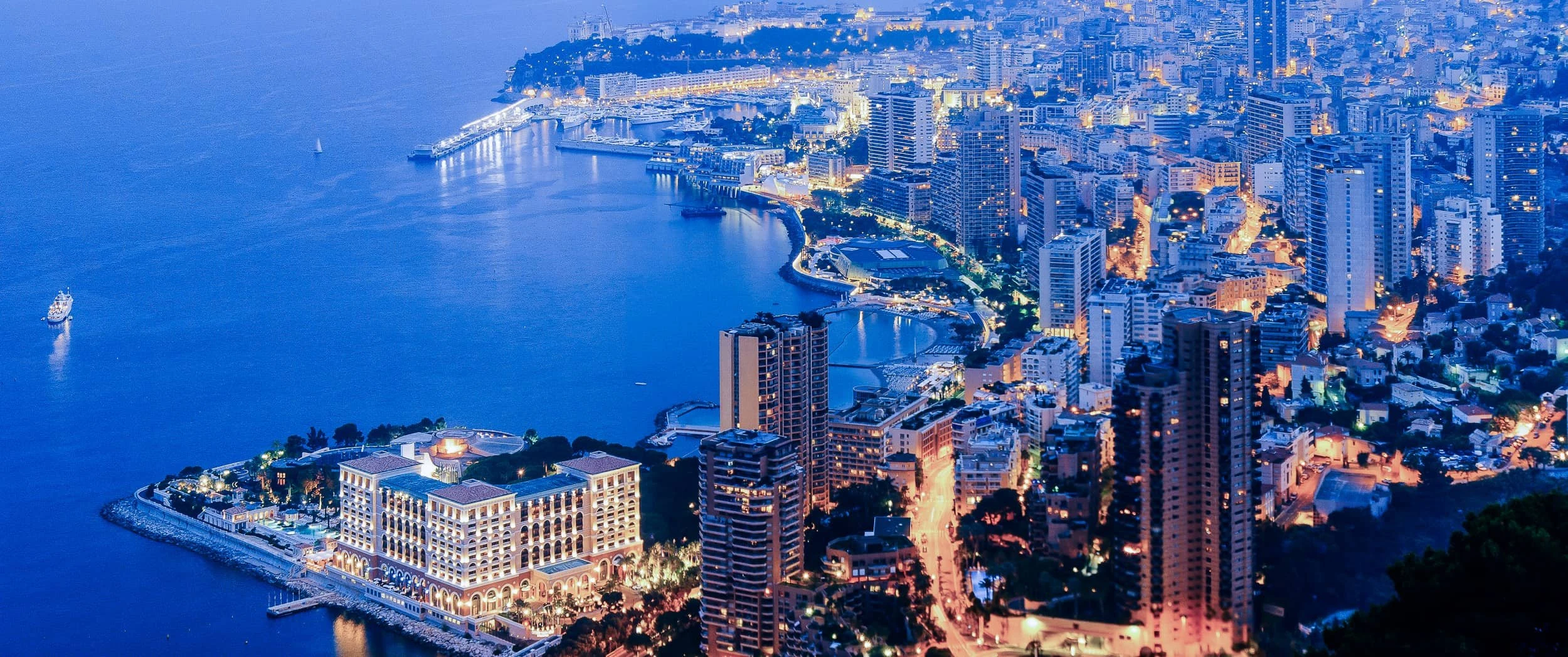
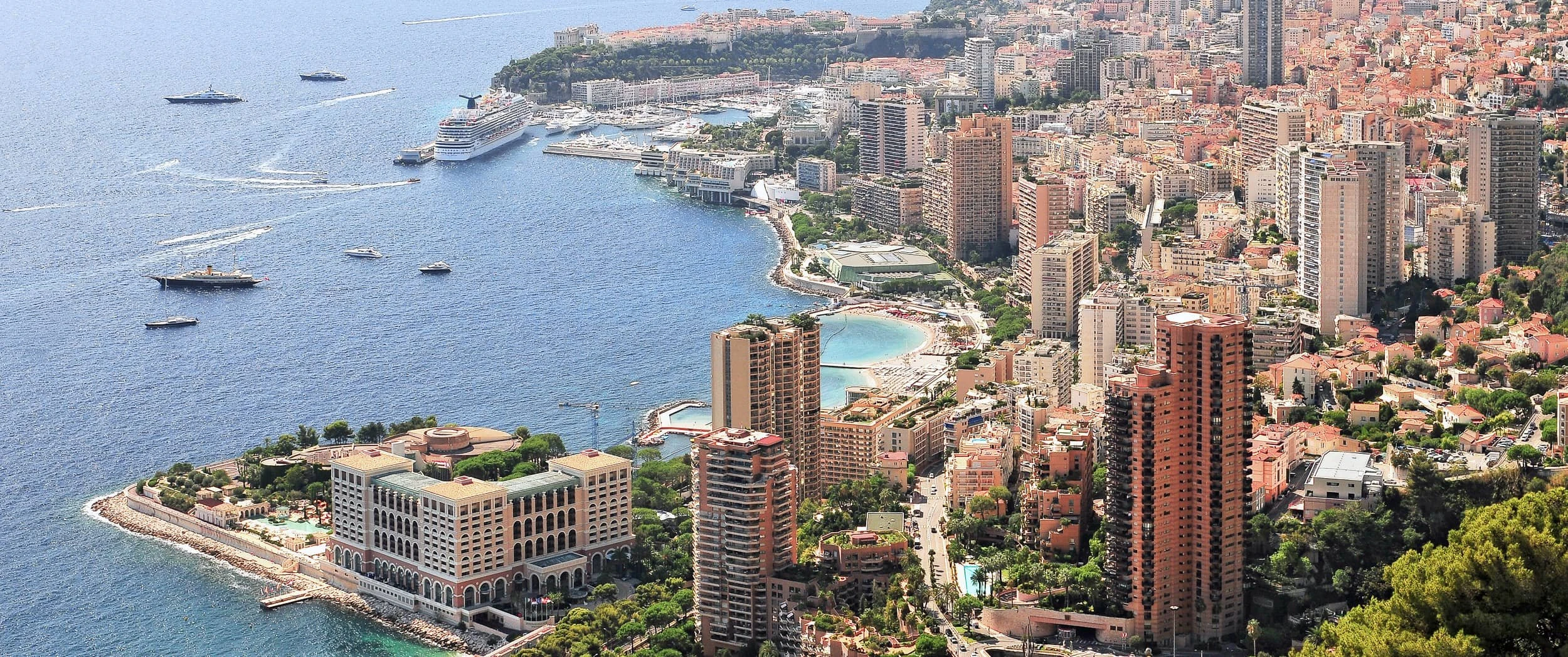
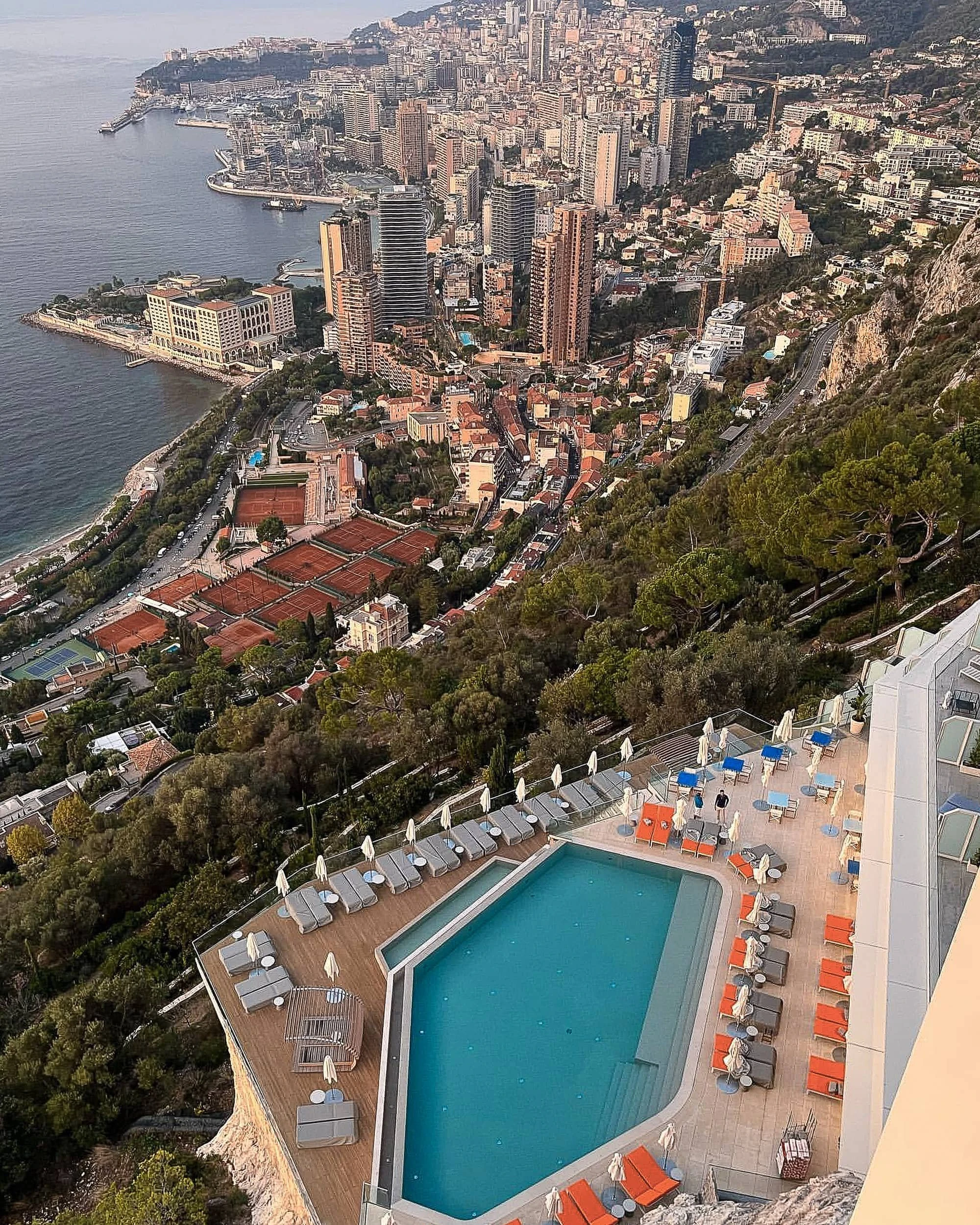
From the Maybourne Riviera, Monaco stretches out like a miniature city below. The hotel looks straight onto Port Hercule and the curve of Monte Carlo, with the harbour, casinos and the Grand Prix circuit all clearly in view. By day it’s a sharp blue tableau of sea and towers; by night it turns into a glittering field of lights cascading down to the water.
From the Vista Palace to a cliff-top stage
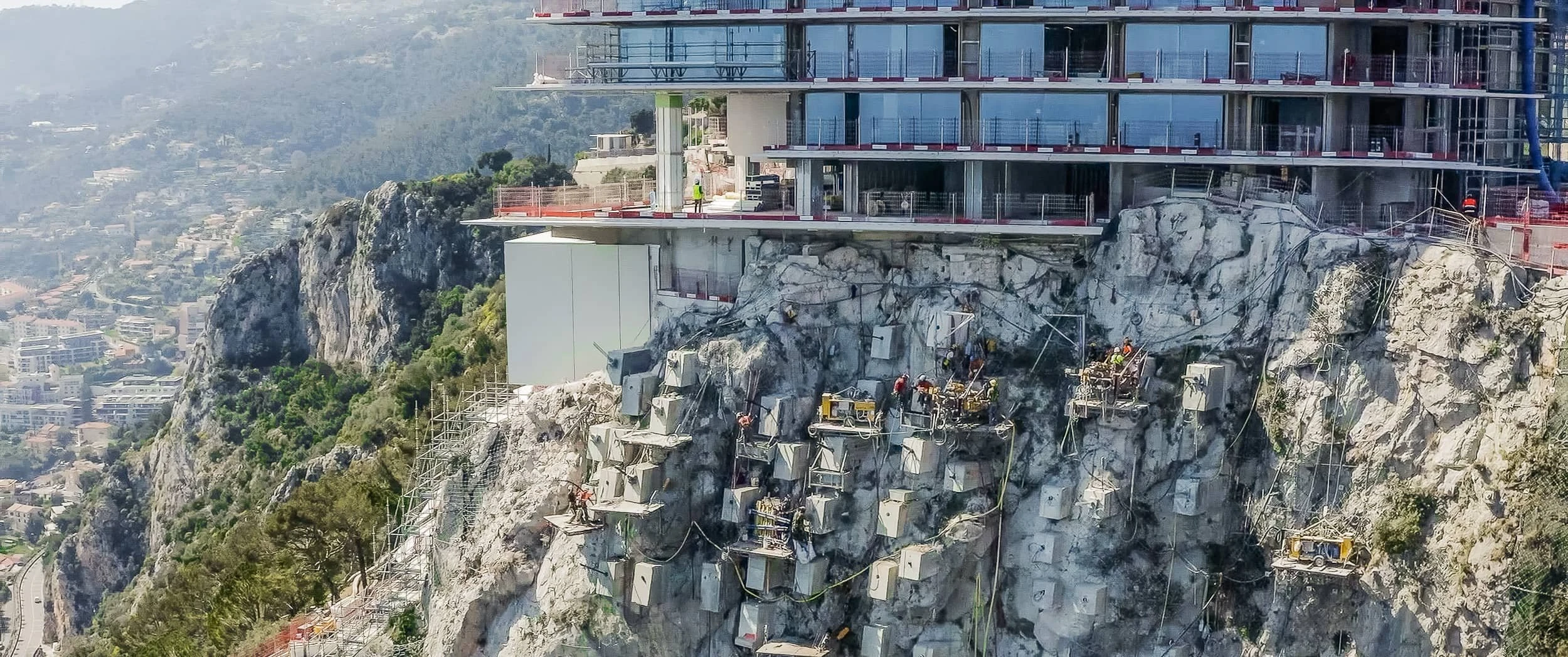
Before it became the Maybourne Riviera, the site was home to the Vista Palace hotel, itself the evolution of a modest tearoom perched on an outcrop above the sea. Over time the building grew into a solid, somewhat uncompromising mass of concrete, prized for its panorama rather than its architecture.
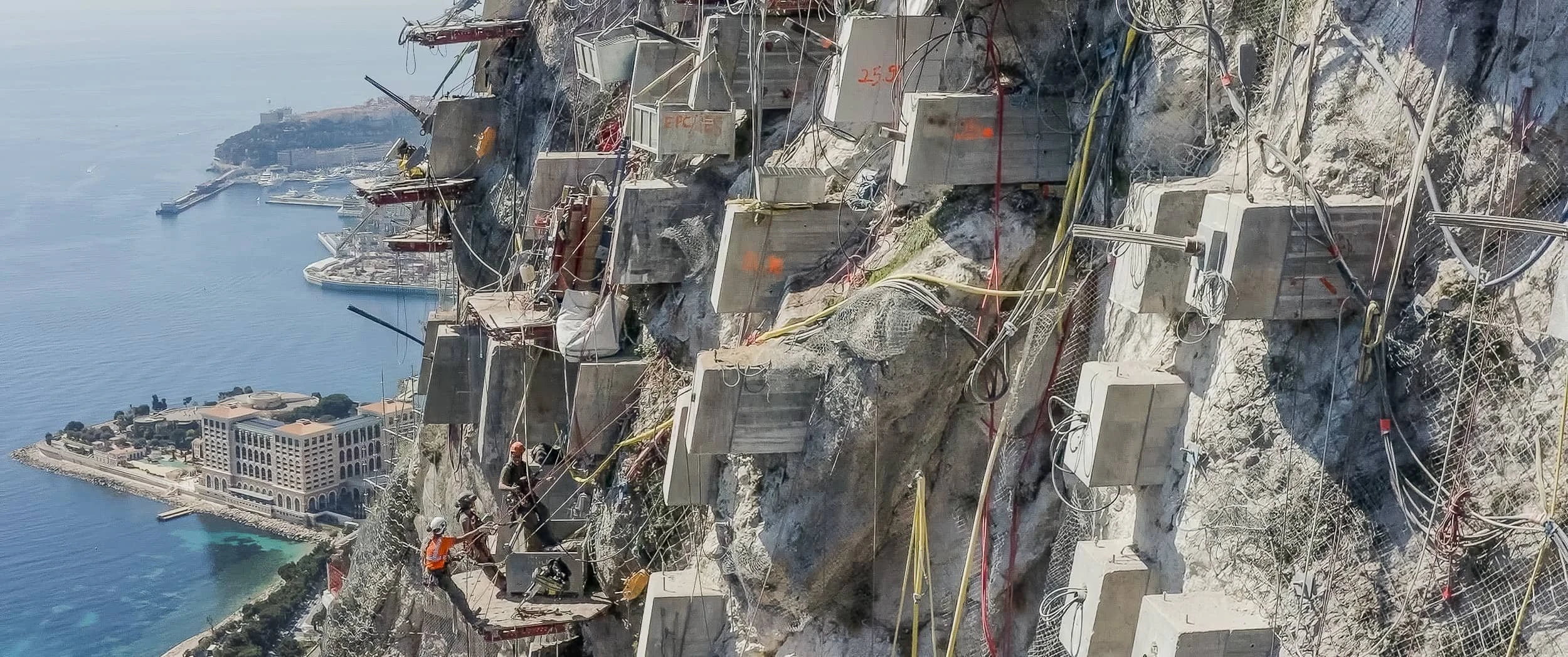
When Maybourne Hotel Group acquired the property, they did not see a tired hotel to rebrand; they saw a cliff-top stage. Apart from the original triangular footprint, the old structure was largely dismantled. In its place, Maybourne pursued a far more ambitious idea: a contemporary homage to Riviera modernism that could stand confidently alongside Claridge’s, The Connaught and The Berkeley within the group’s portfolio.
Hotelier Paddy McKillen was instrumental in driving that vision — closely involved with the design and project teams, championing the bolder architectural moves and pushing for a level of craft, art and detailing that would make the hotel feel genuinely new rather than simply renovated. The result reads very much as a passion project: a highly personal, modernist, art-filled take on the Riviera.
Horizontal planes, deep overhangs and sheer glass
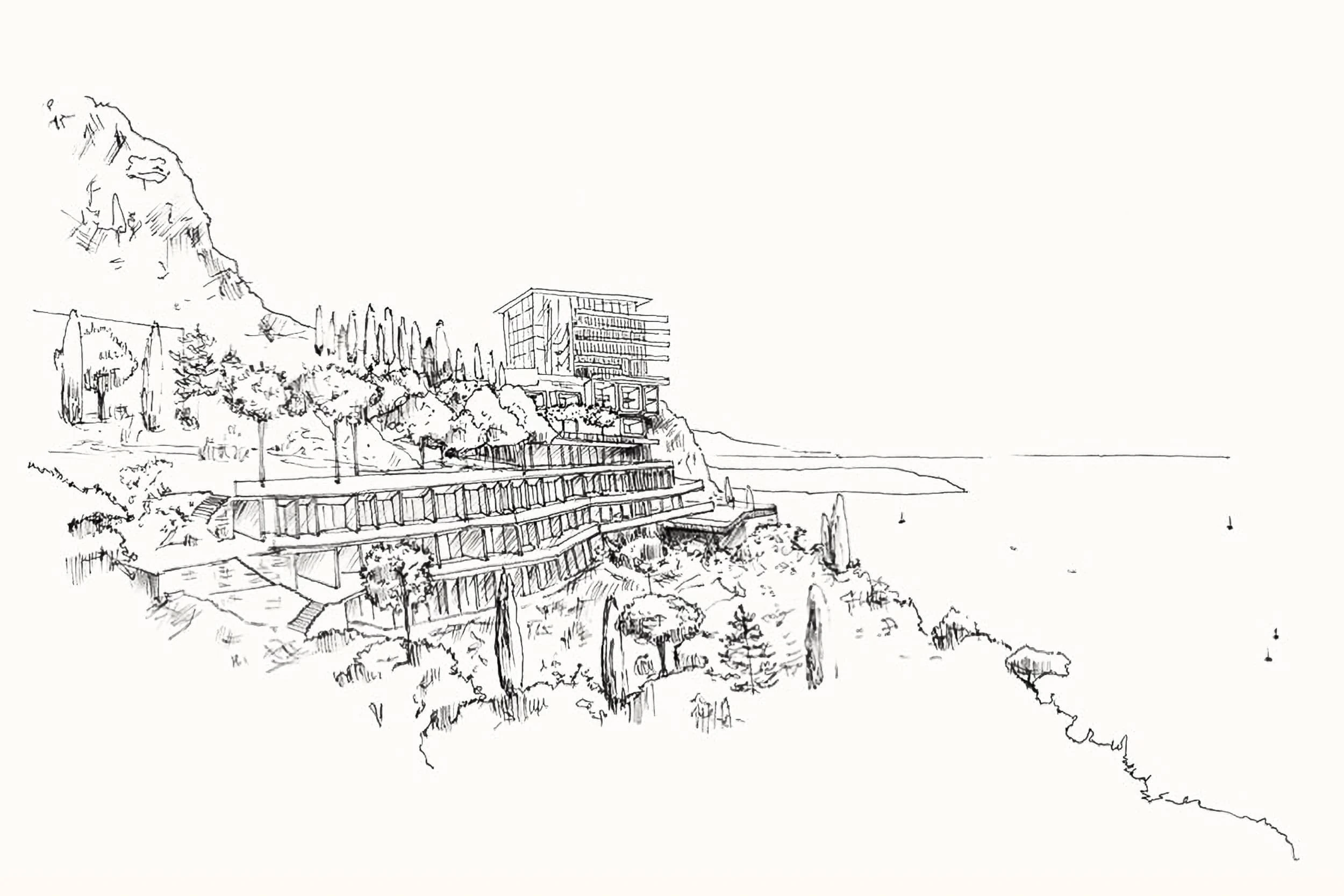
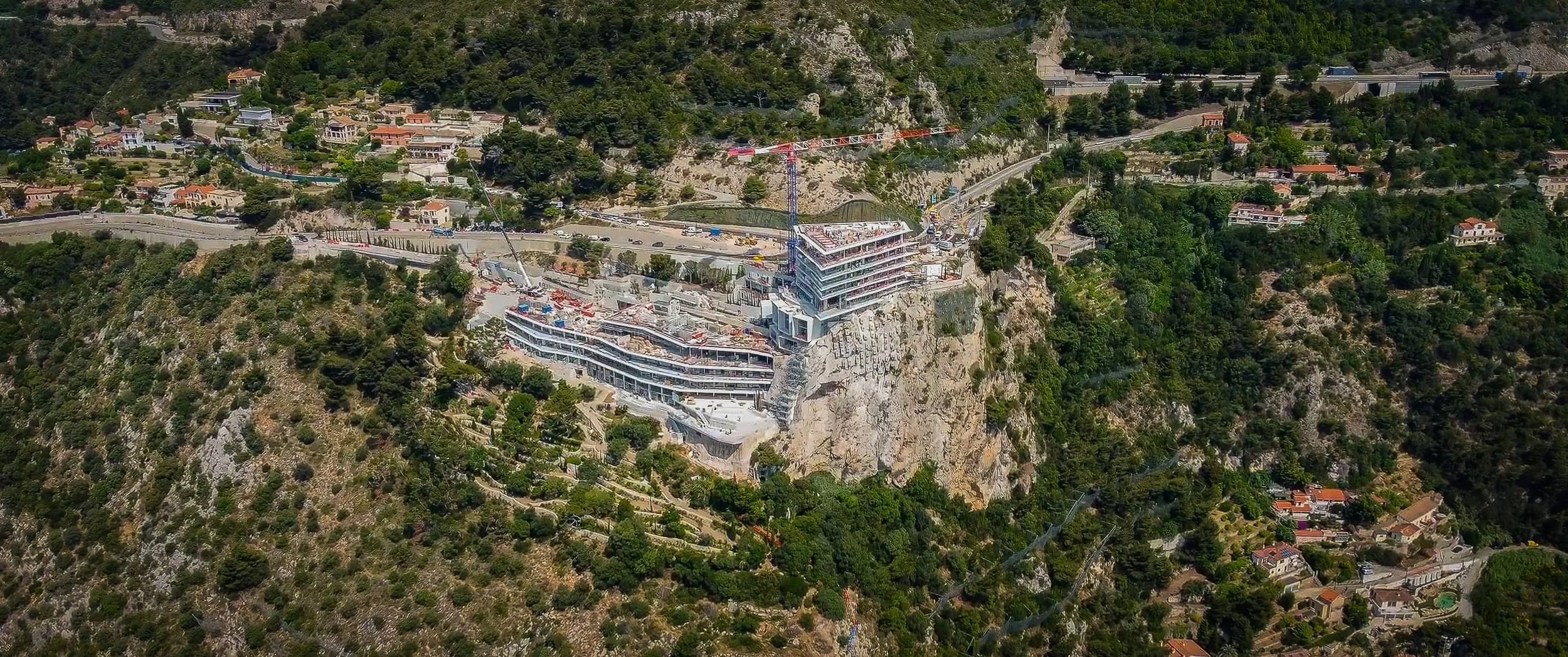
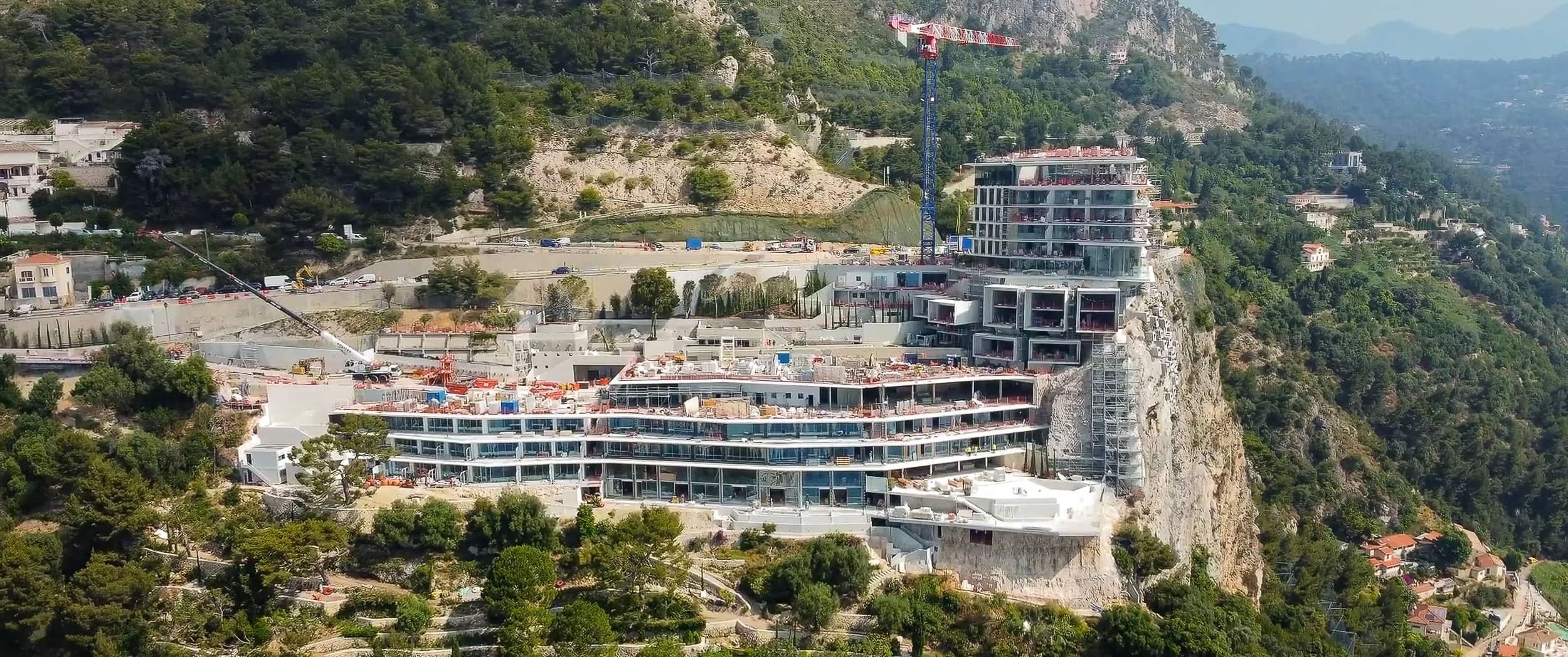
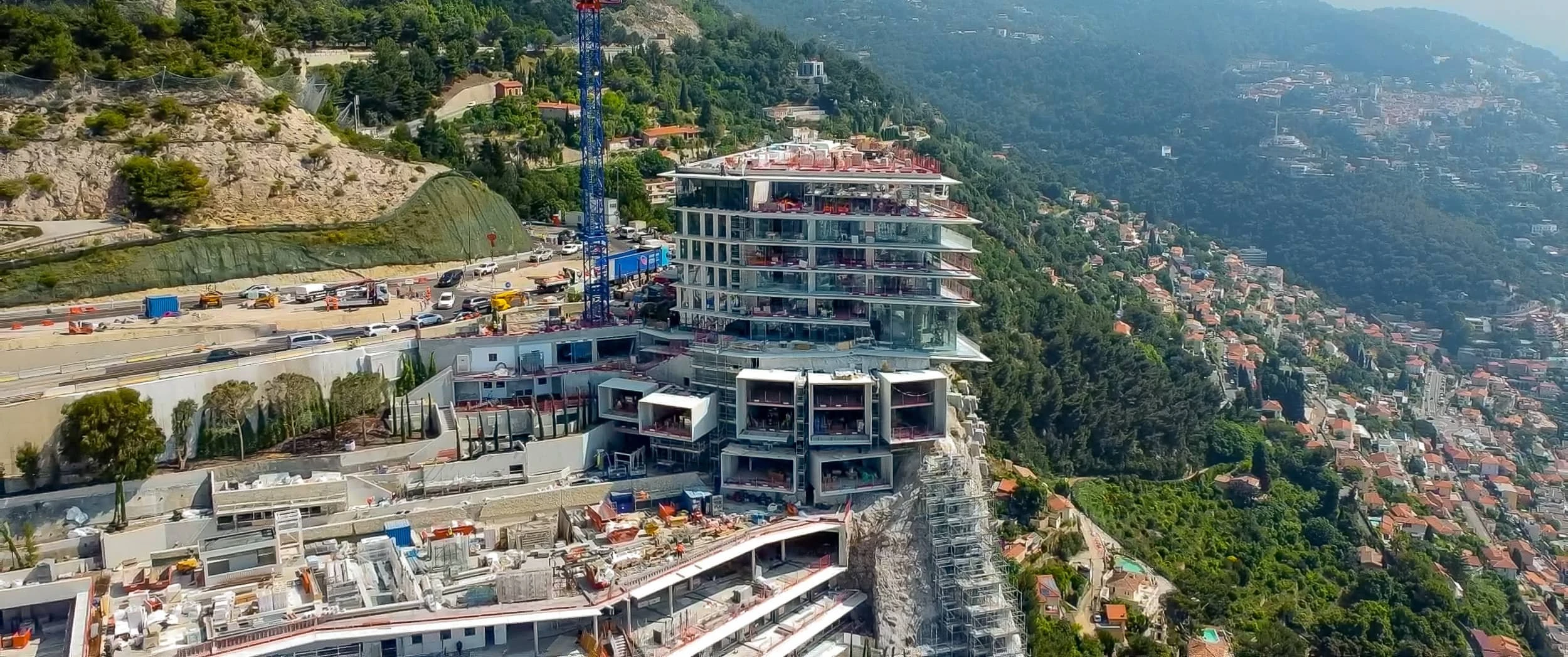
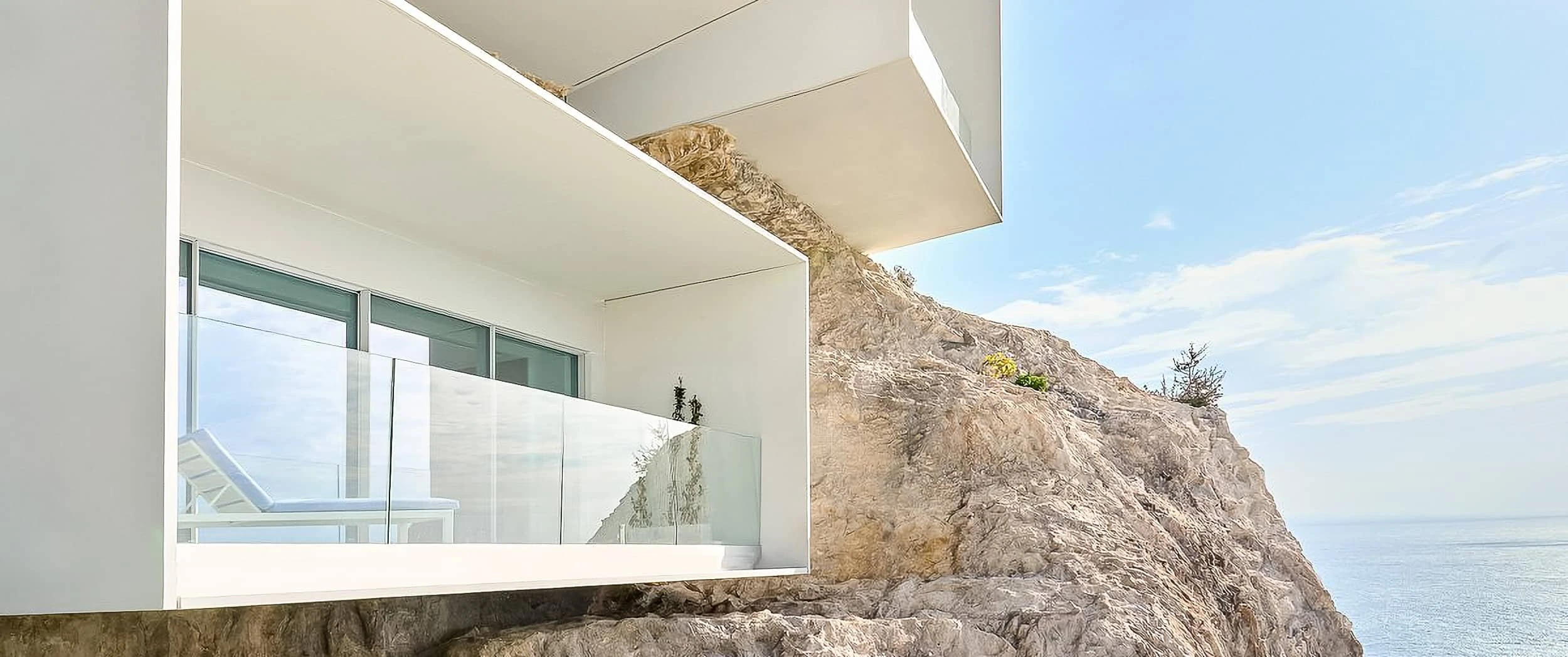
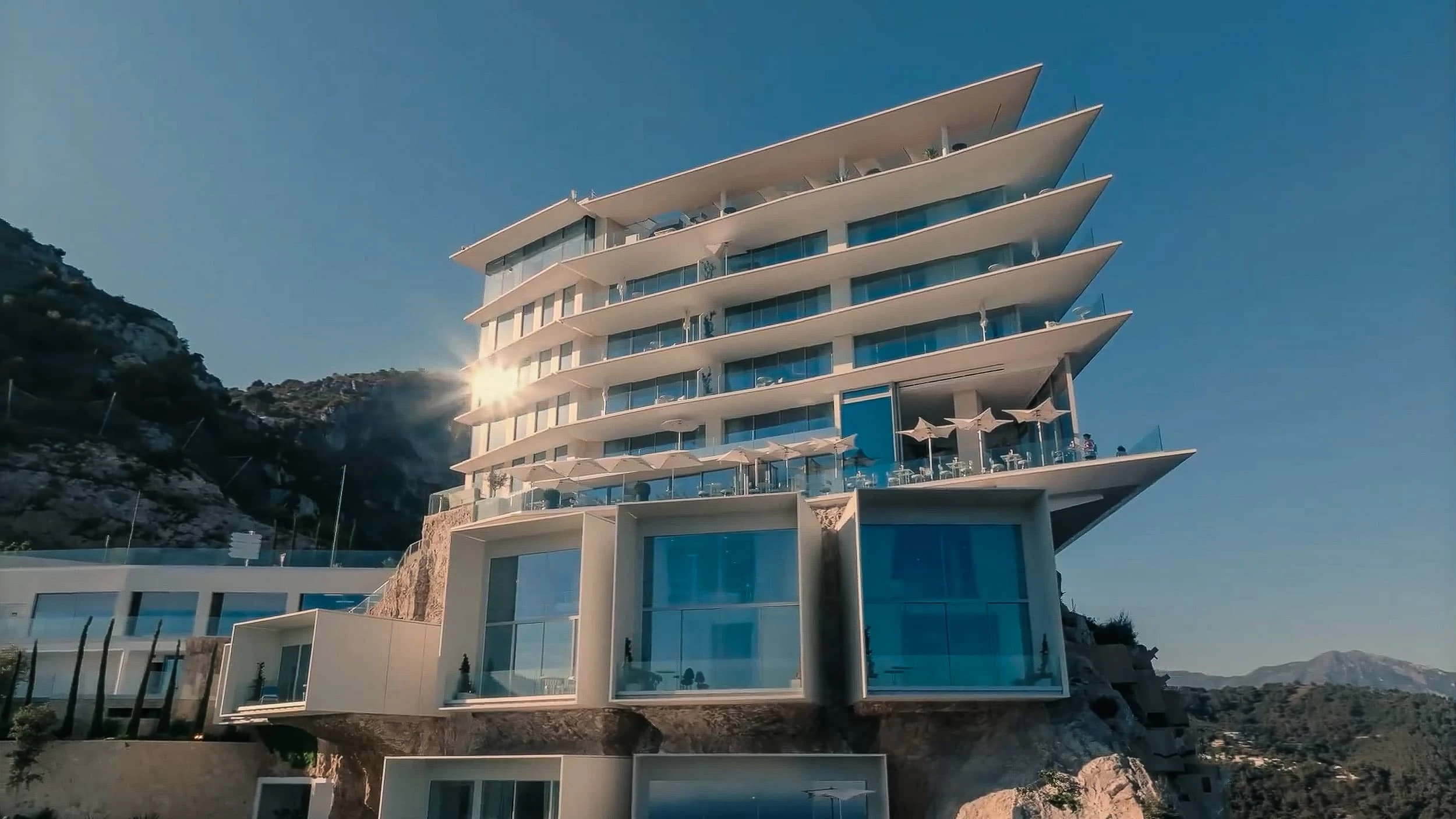
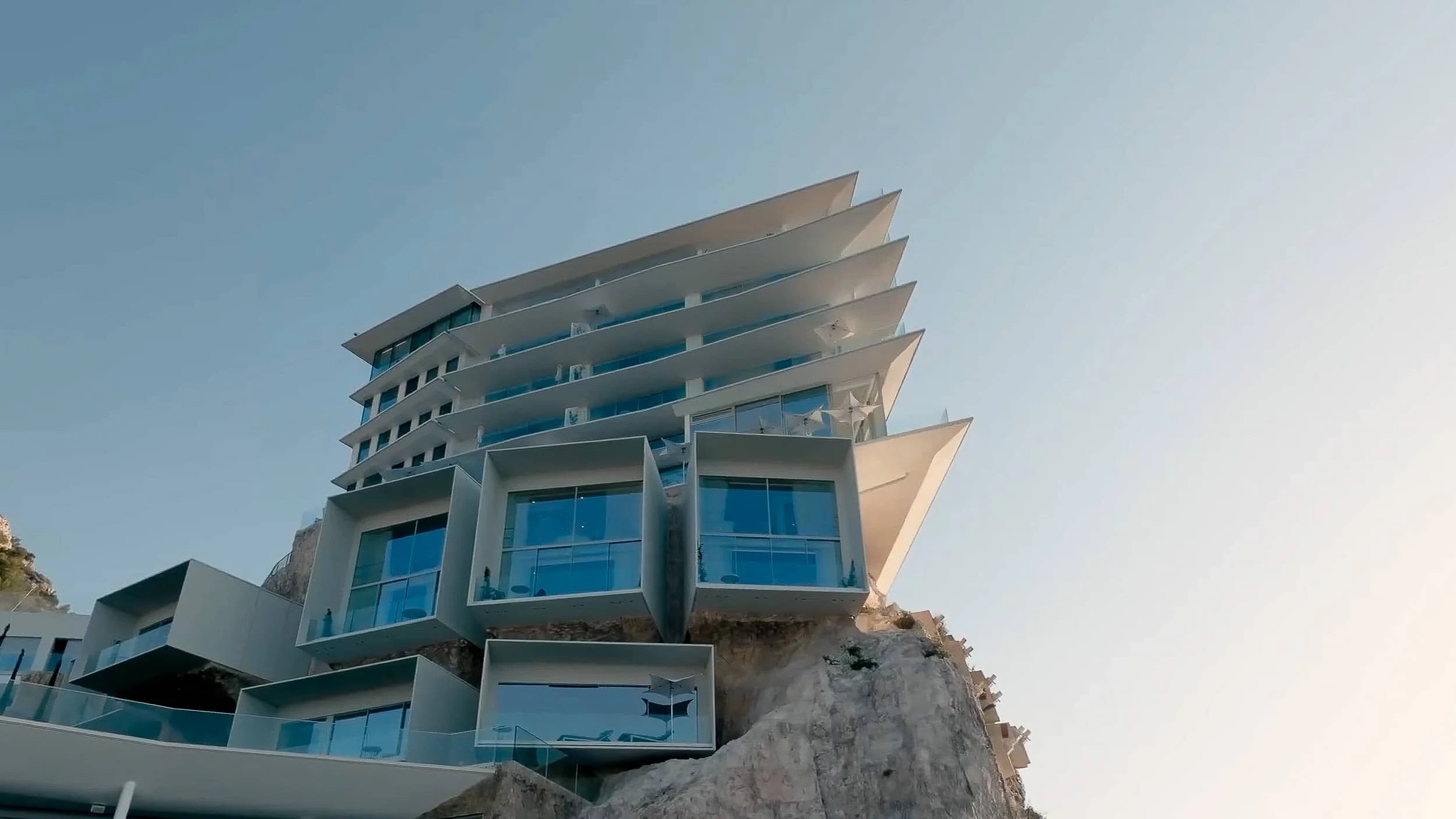
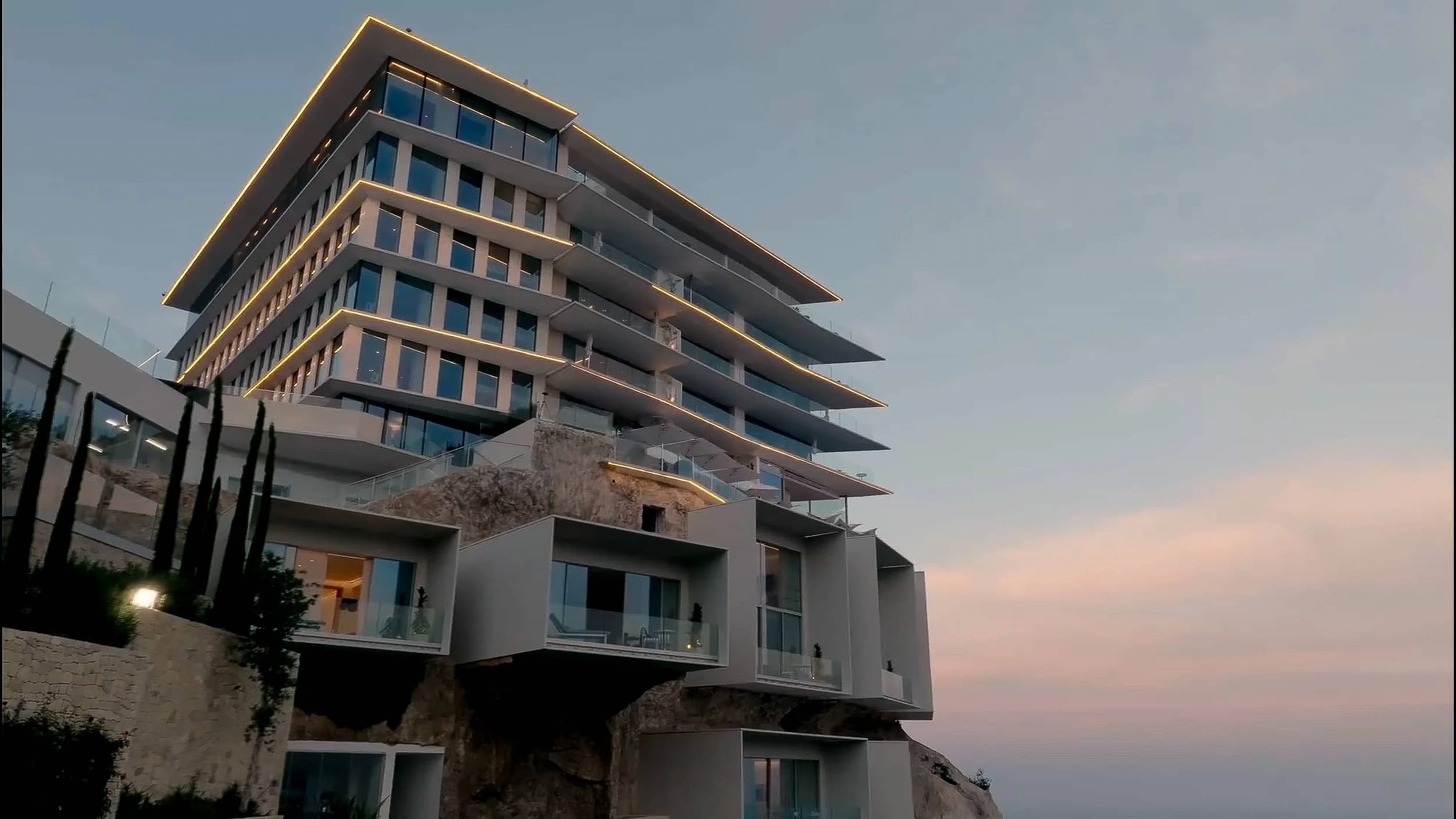
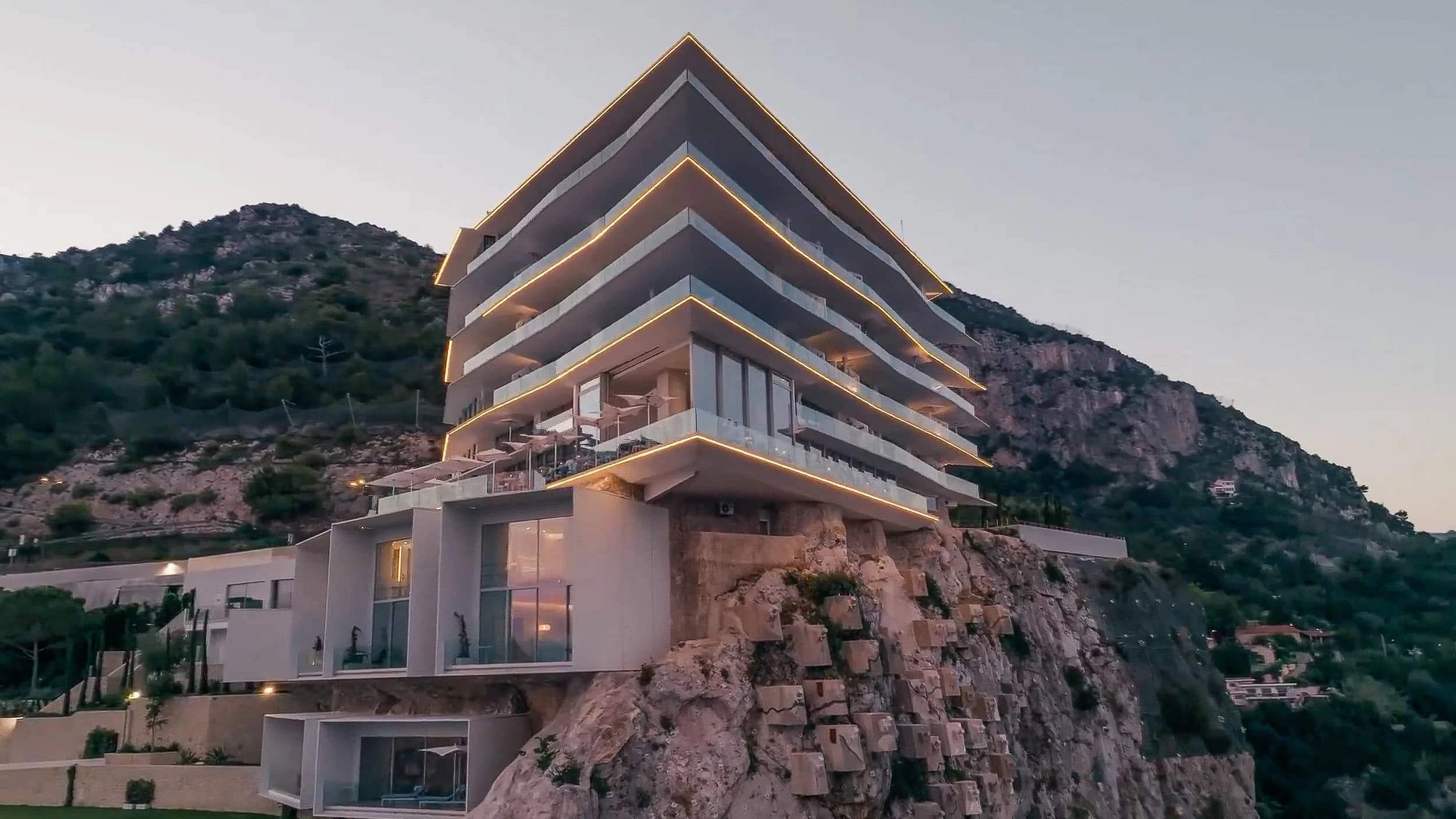
French architect Jean-Michel Wilmotte was commissioned to reimagine the hotel from the ground up. The result is a striking composition of horizontal planes, deep overhangs and sheer glass — a white, mineral and graphic hotel in symbiosis with the cliff. The architecture is organised into three intertwined entities — Vista Aéro, the Cristaux and the Corniche — which lock together to form a single, coherent figure in the landscape.
The main building sits on the site of the former triangular block, but the hill has been completely recomposed. A series of terraces step down the slope, recalling the traditional restanques of the region. Below, seven faceted ‘crystals’ — suites partially carved into the rock — are anchored directly into the cliff wall, linked to the Corniche below by a panoramic path.
From a distance, the hotel reads almost like the prow of a ship cut into the hillside. Close up, the layering of levels becomes clear: platforms, gardens, pools and balconies sliding over one another, every line quietly calibrated to keep the sea in view. For designers working with challenging topographies, it is a masterclass in using structure and circulation to turn a complex site into a legible, exhilarating journey.
A landscape by Jean Mus, knitted back into the hillside
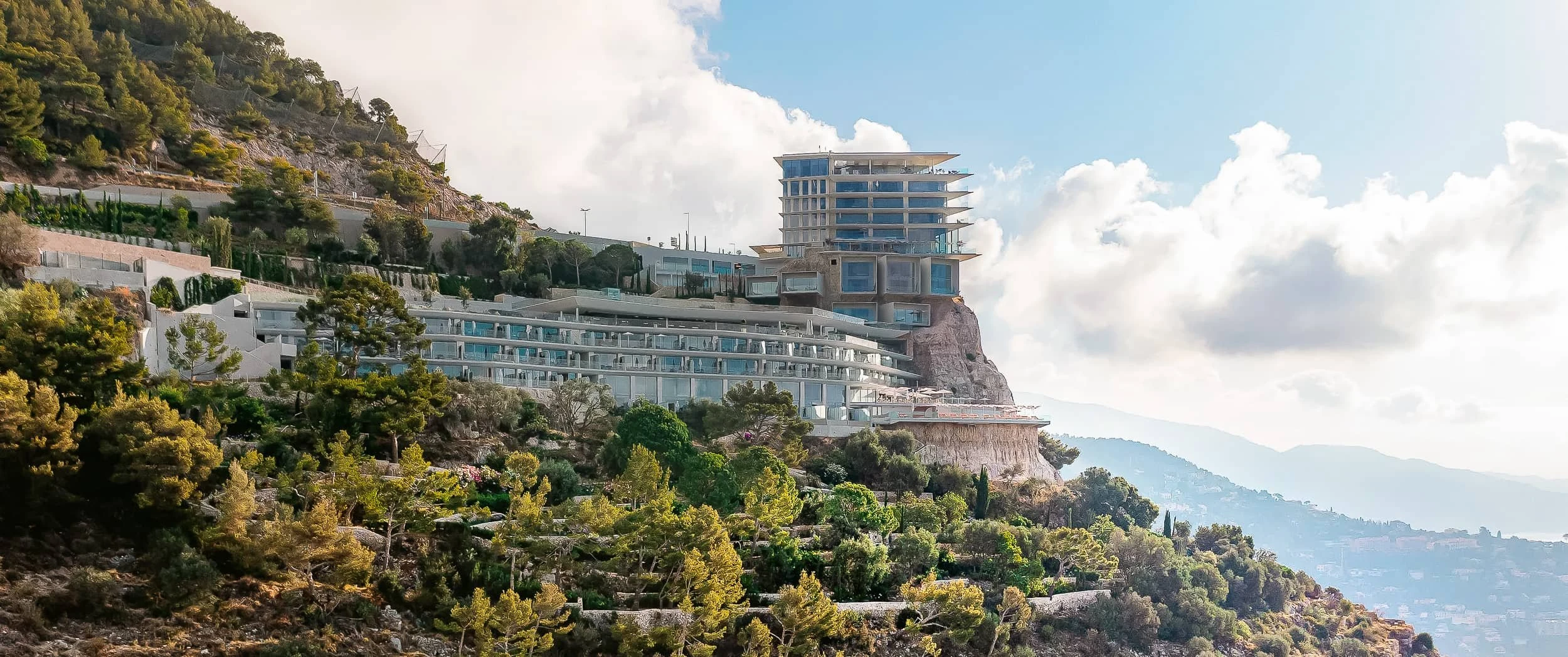
The gardens by Jean Mus give the project its softness and soul. Working with an exceptional Mediterranean promontory, he set out to knit the new building back into its setting rather than simply surround it with planting. A cypress grove now punctuates the approach and gives the hotel a distinctly Riviera silhouette, while a layered canopy of Aleppo pines, holm oaks and cork oaks re-establishes the native structure of the hillside and casts dappled shade across paths and terraces. Fruit trees — citrus, olives, strawberry trees, pomegranate and carob — are woven through the restored terraced fields, recalling the site’s agricultural past.
Within these terraces, Mus has created a series of quieter moments: a vegetable garden dedicated to heirloom herbs and vegetables, and a children’s playground discreetly tucked into the greenery so families can inhabit the landscape as naturally as the interiors. For guests, the result is experienced as a chain of fragrant, shaded pauses and long, framed views.
A deliberately plural design strategy
Inside, the Maybourne Riviera is the product of a deliberately plural design strategy. Maybourne’s in-house team, led by Michelle Wu, set the overall direction: a luminous, art-led Riviera modernism with a strong sense of craft. Around this, a constellation of studios were invited to contribute, each taking responsibility for distinct zones while working within a coherent brief.
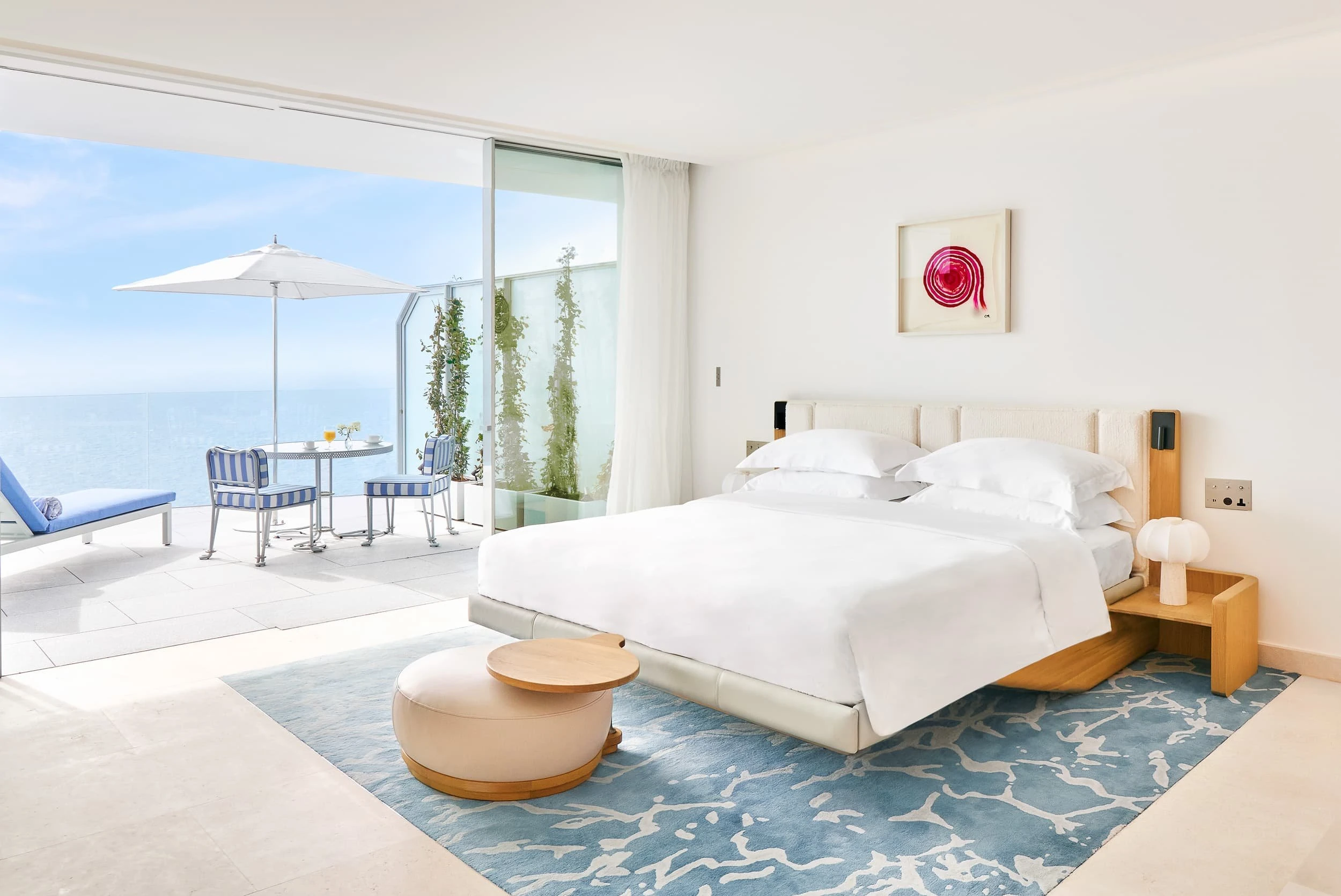
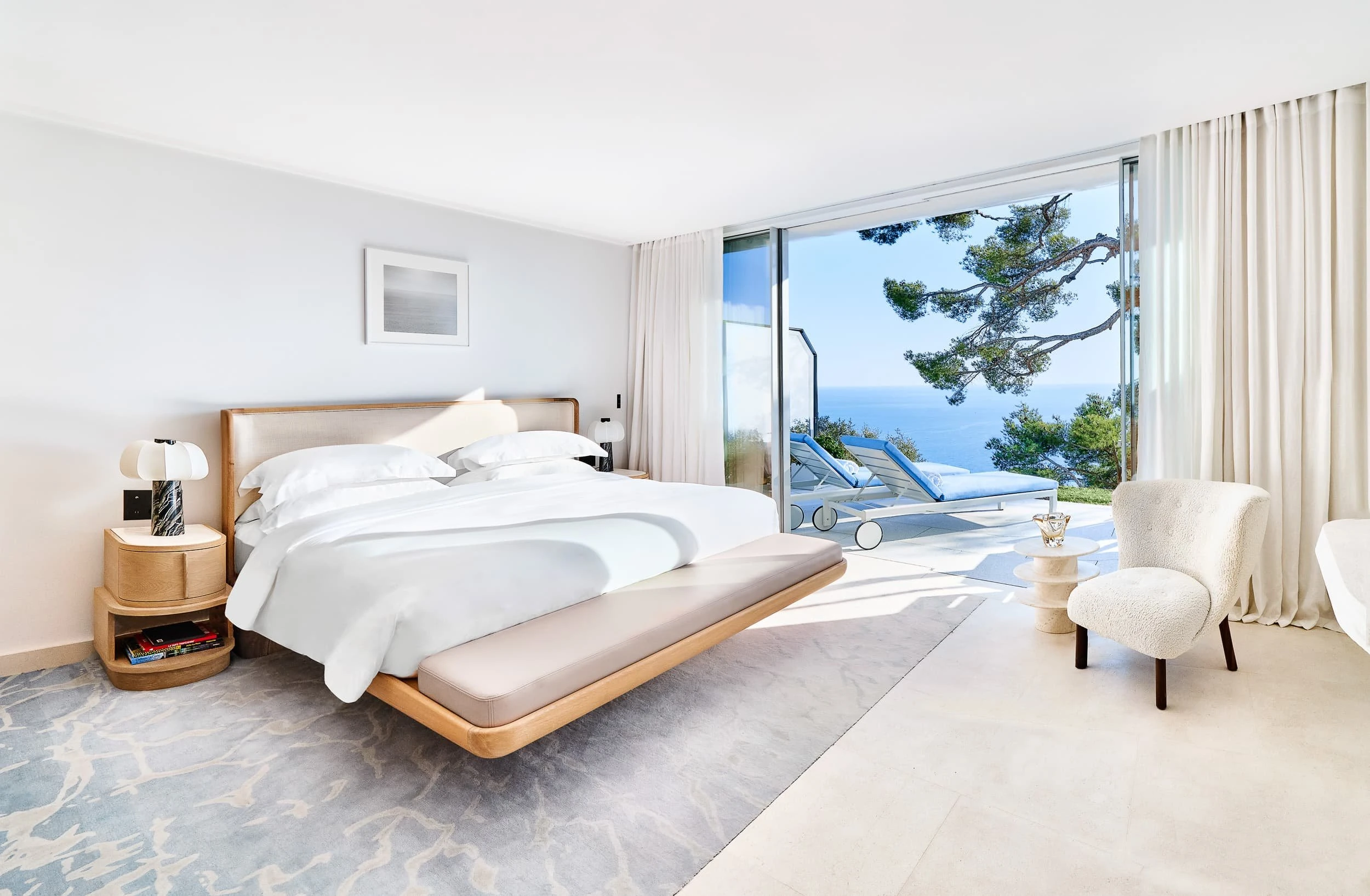
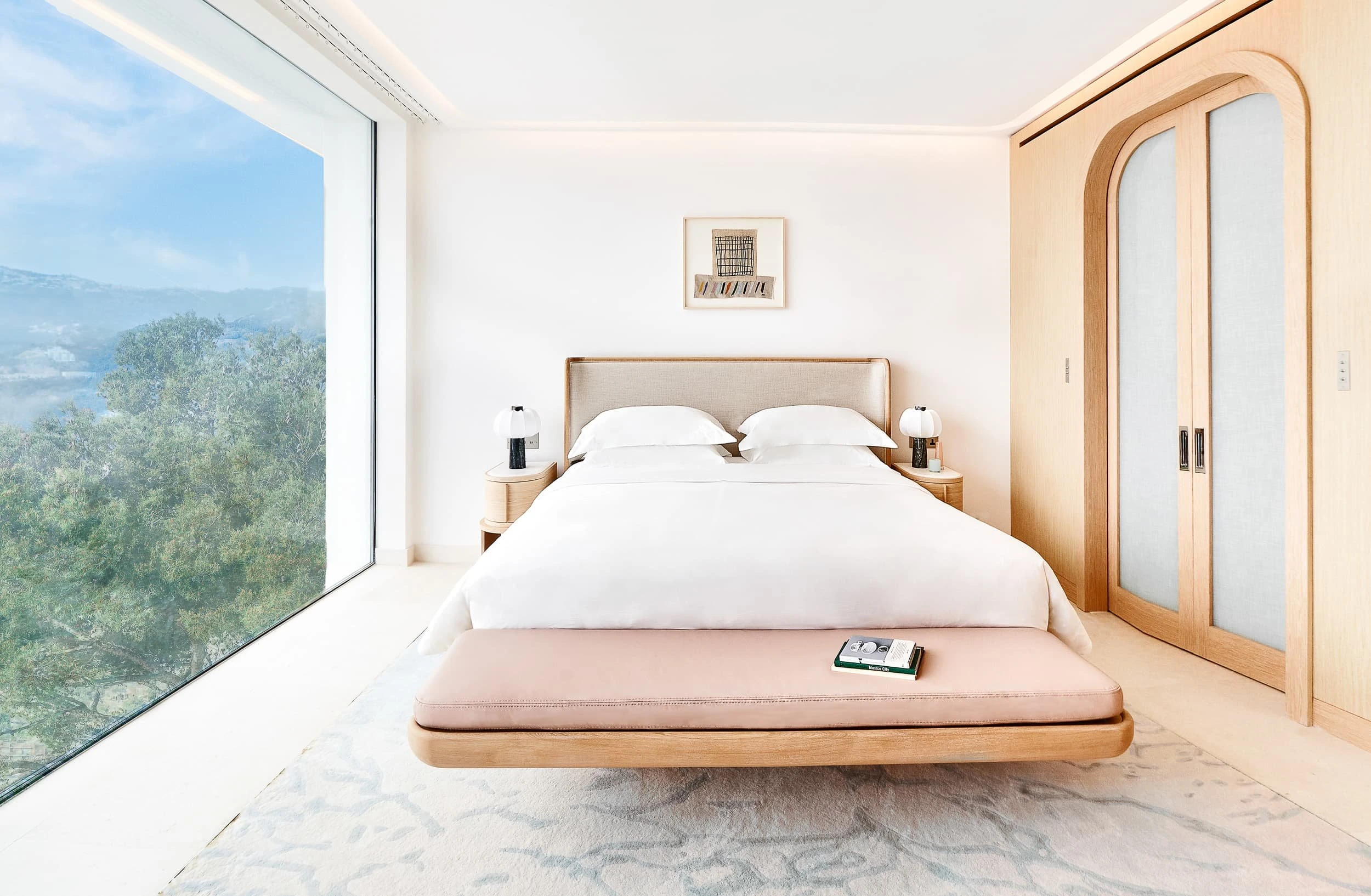
Bryan O’Sullivan Studio shaped many of the public spaces and restaurants, including the Riviera Restaurant. Their interiors are timeless yet contemporary, with custom furnishings, sculptural forms and exquisite craftsmanship. Rigby & Rigby designed suites in the Aero Wing and a number of panoramic rooms, pairing clean-lined joinery and pale finishes with those huge, cinematic windows.
Hong Kong–based André Fu Studio conceived the wellbeing floor and spa, drawing on the shifting tones of the sea and sky. Additional suites and spaces were developed with other collaborators, including Pierre Yovanovitch, whose designs we produced. Behind the scenes, Rainey & Best provided quantity surveying and FF&E project management, steering the extensive renovation and coordinating the complex FF&E packages for guestrooms, public areas and the multiple pool decks.
Colour used with precision, form carefully softened
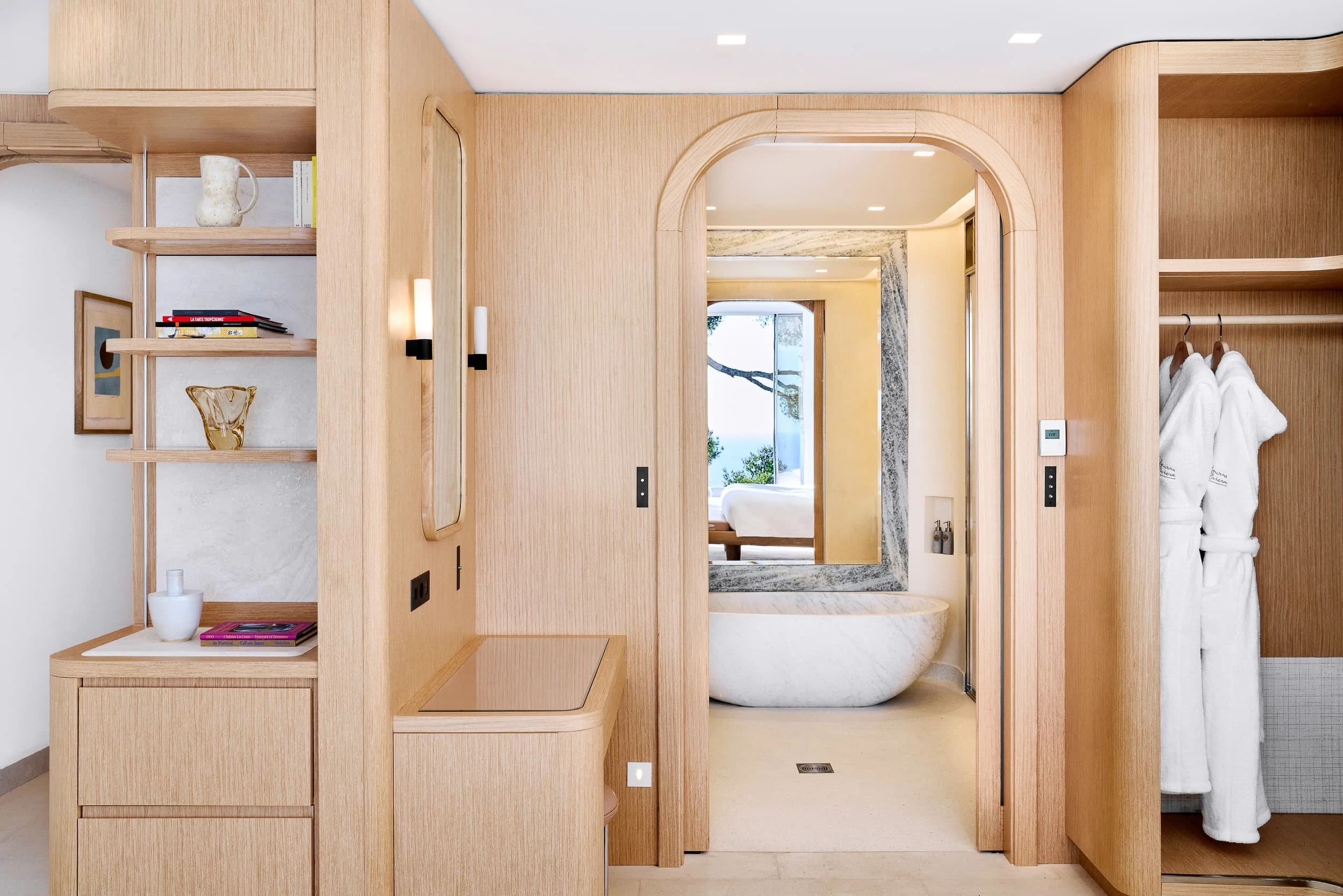
Walk through the Maybourne Riviera and several interior themes quickly become apparent. Colour is used with precision. A base palette of stone, sand and sun-bleached timber provides calm continuity. Onto this, richer tones are dropped where they matter: cobalt blues in dining chairs, rust and tangerine at poolside, soft corals in textiles that catch the last light of the day.
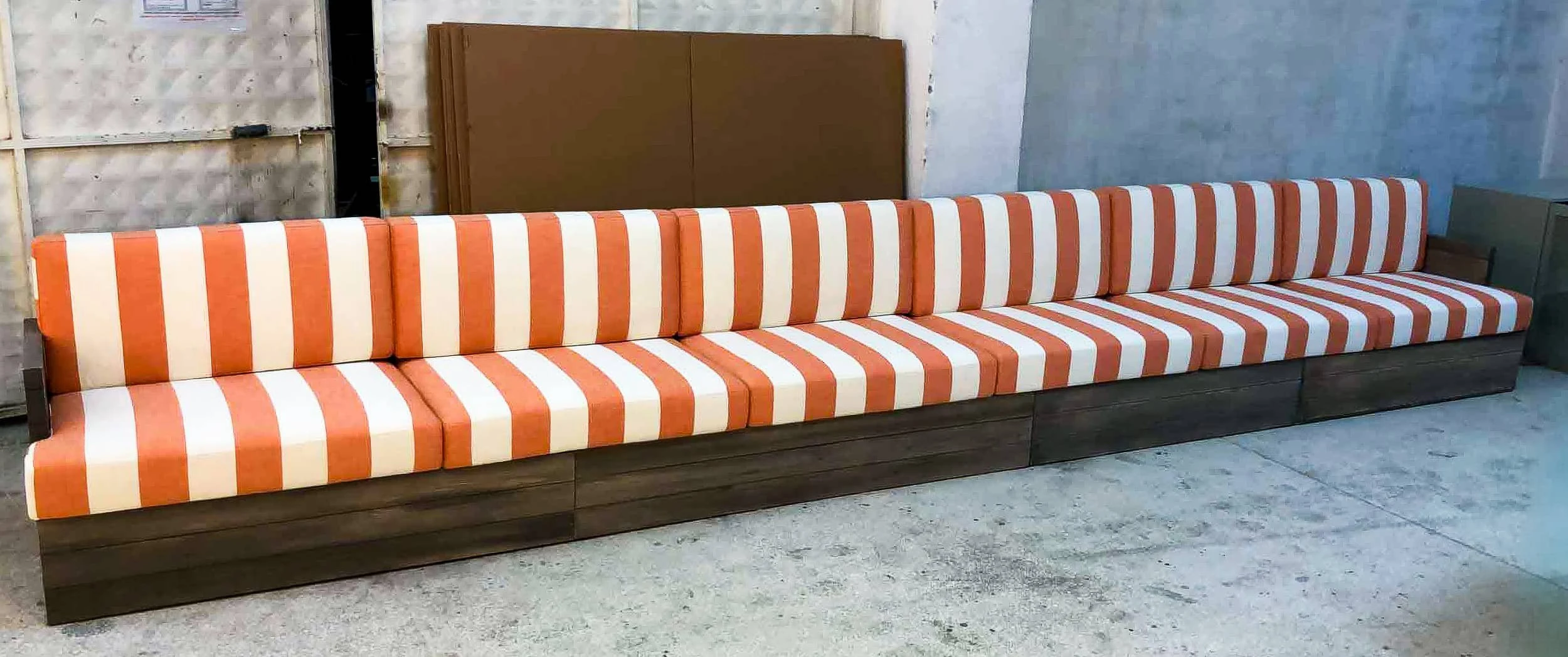
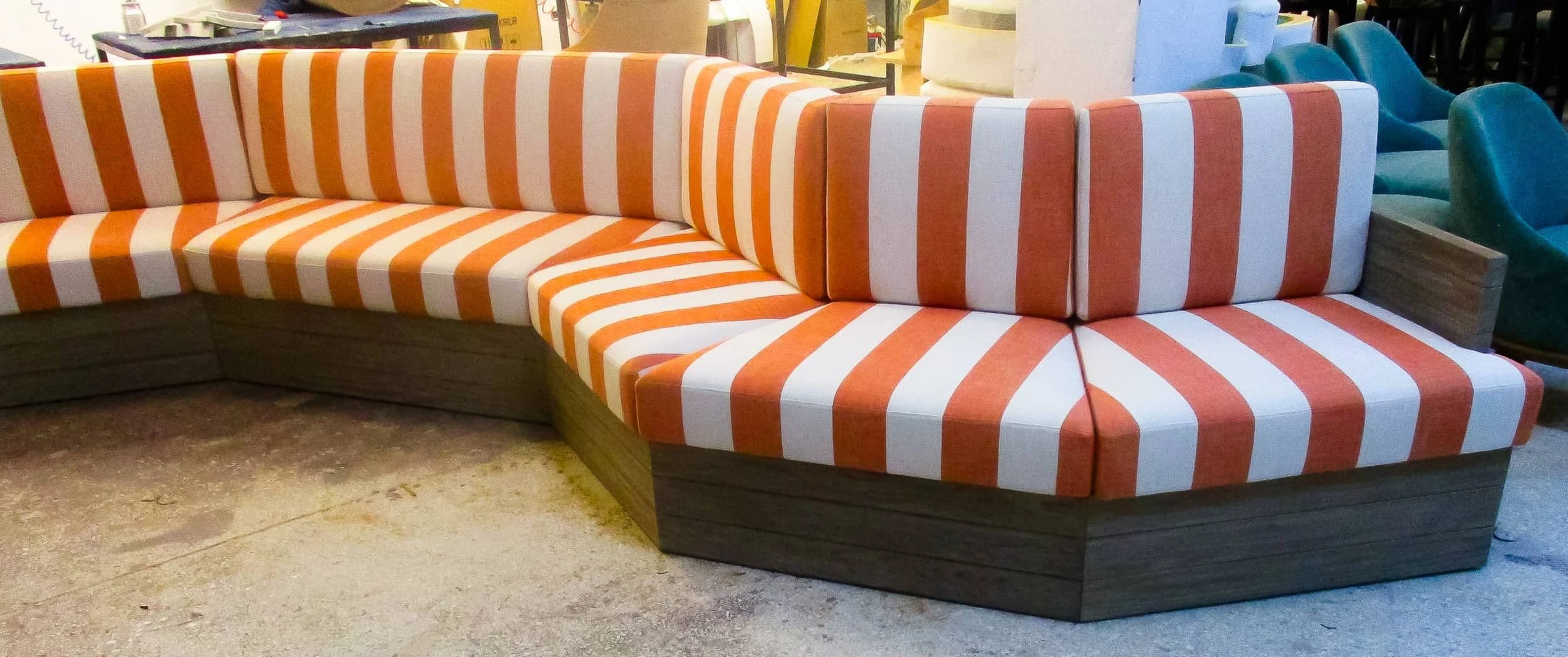
Form is carefully softened. The architecture may be sharply geometric, but the interiors lean into curve and tactility. Banquettes sweep around corners, table edges are eased, and armchairs invite you to sink in rather than simply perch. That residential softness is critical in a luxury hotel of this scale; it turns a potentially intimidating building into somewhere genuinely liveable.
Materials are layered, not piled on. Travertines and limestones sit alongside lacquer, pale and mid-tone timber, textured plaster and finely woven textiles. Many surfaces feel designed for the hand as much as the eye: door pulls, balustrades and tabletop edges are resolved with the same care as grand staircases or double-height windows.
Art and sculpture are treated as structural parts of the design rather than afterthoughts. Curated works and site-specific pieces anchor corridors, lift lobbies and lounges, creating moments of pause and recognition within the flow of circulation.
Every suite orientated to frame the sea
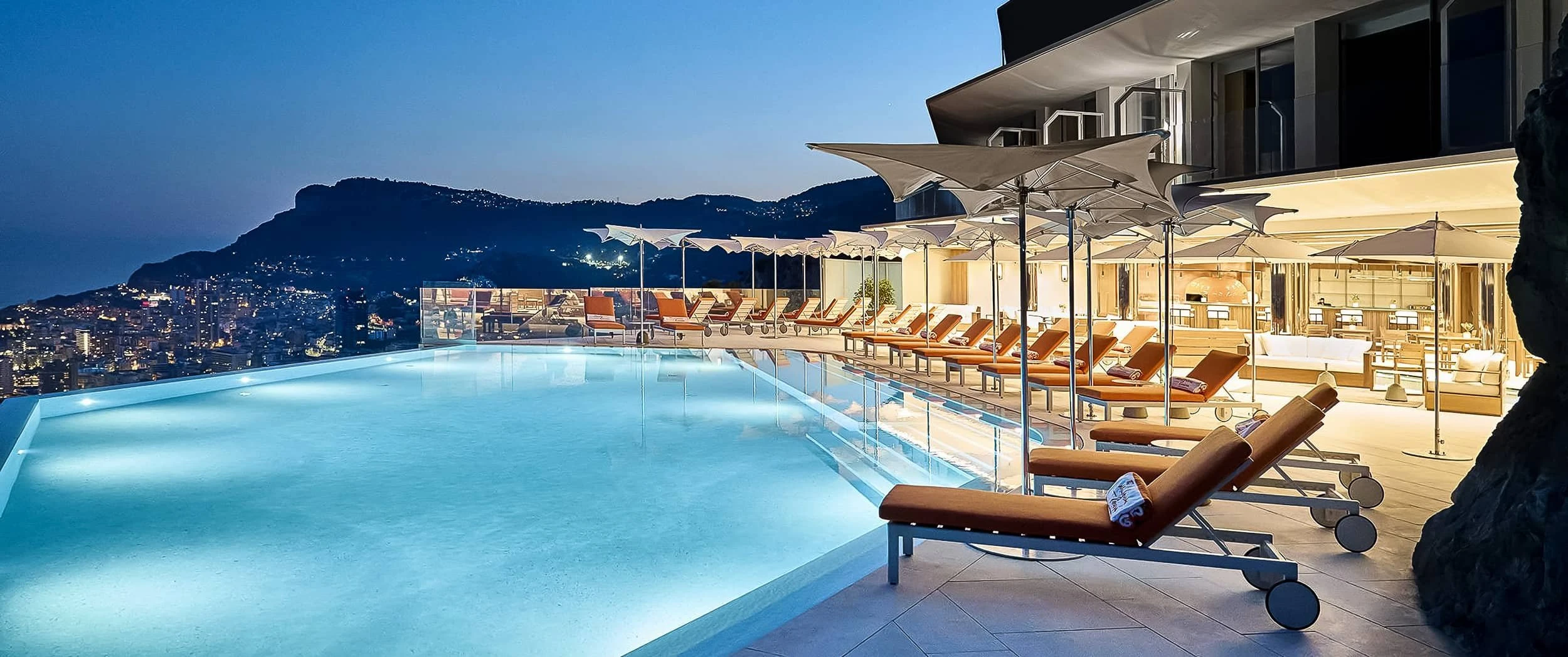
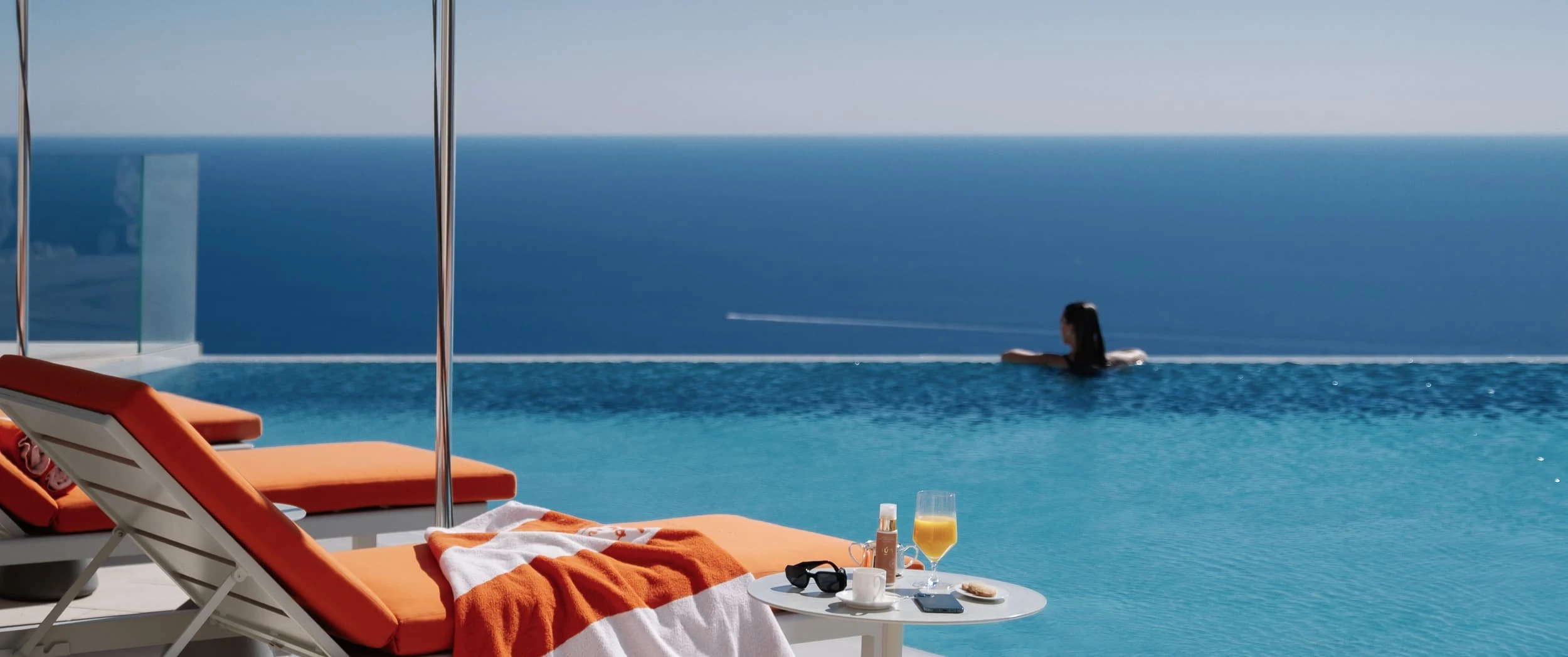
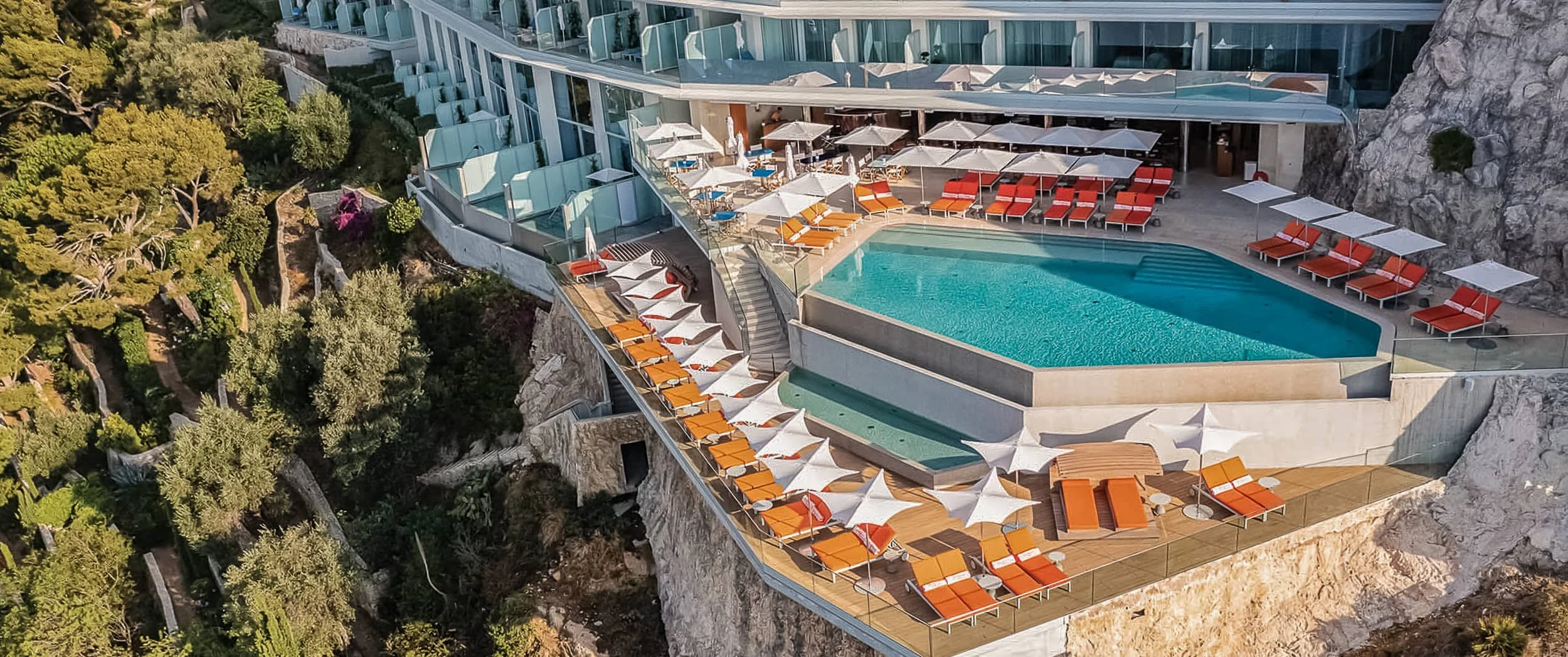
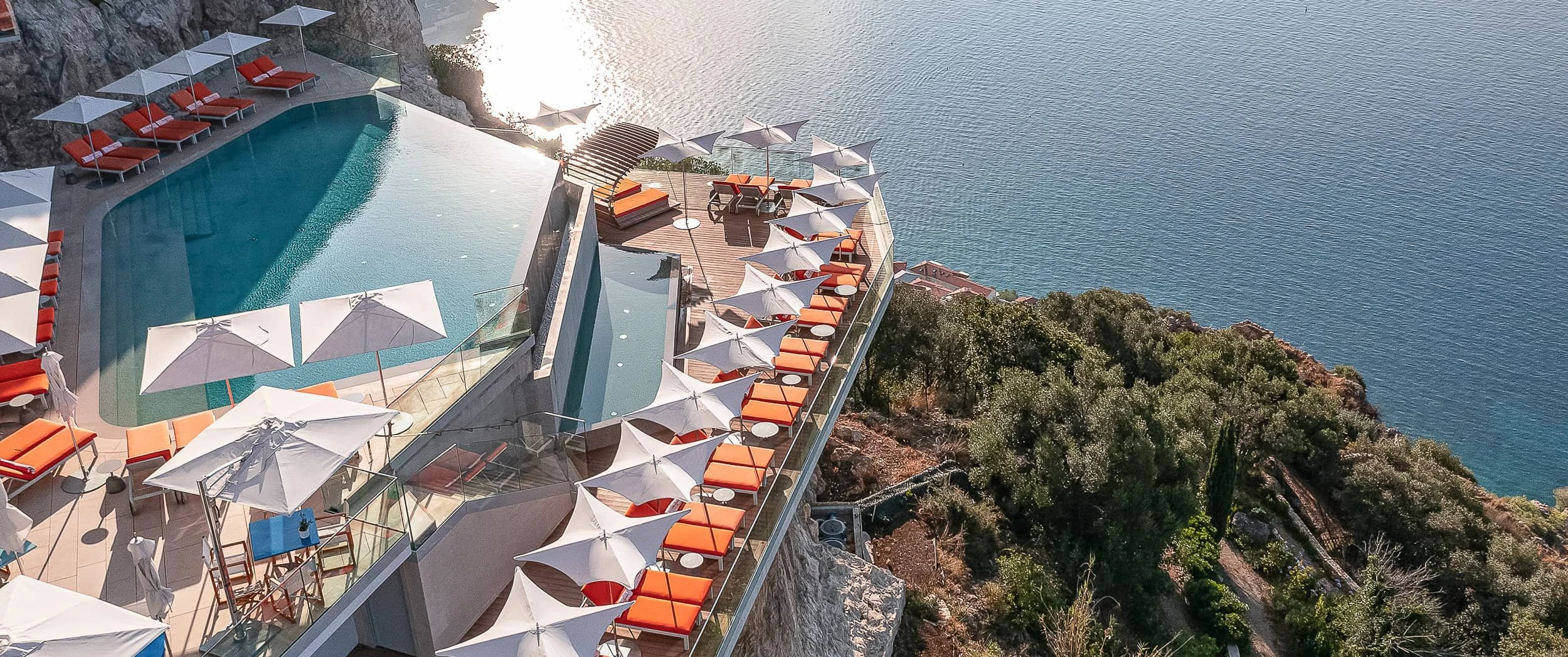
The Maybourne Riviera is generous in spatial drama. Every suite is orientated to frame the sea; many have corner glazing that turns the coastline into a wraparound panorama. The main infinity pool terrace is the hotel’s social stage. The pool appears to skim the edge of the cliff, its geometry aligned with the bay below.
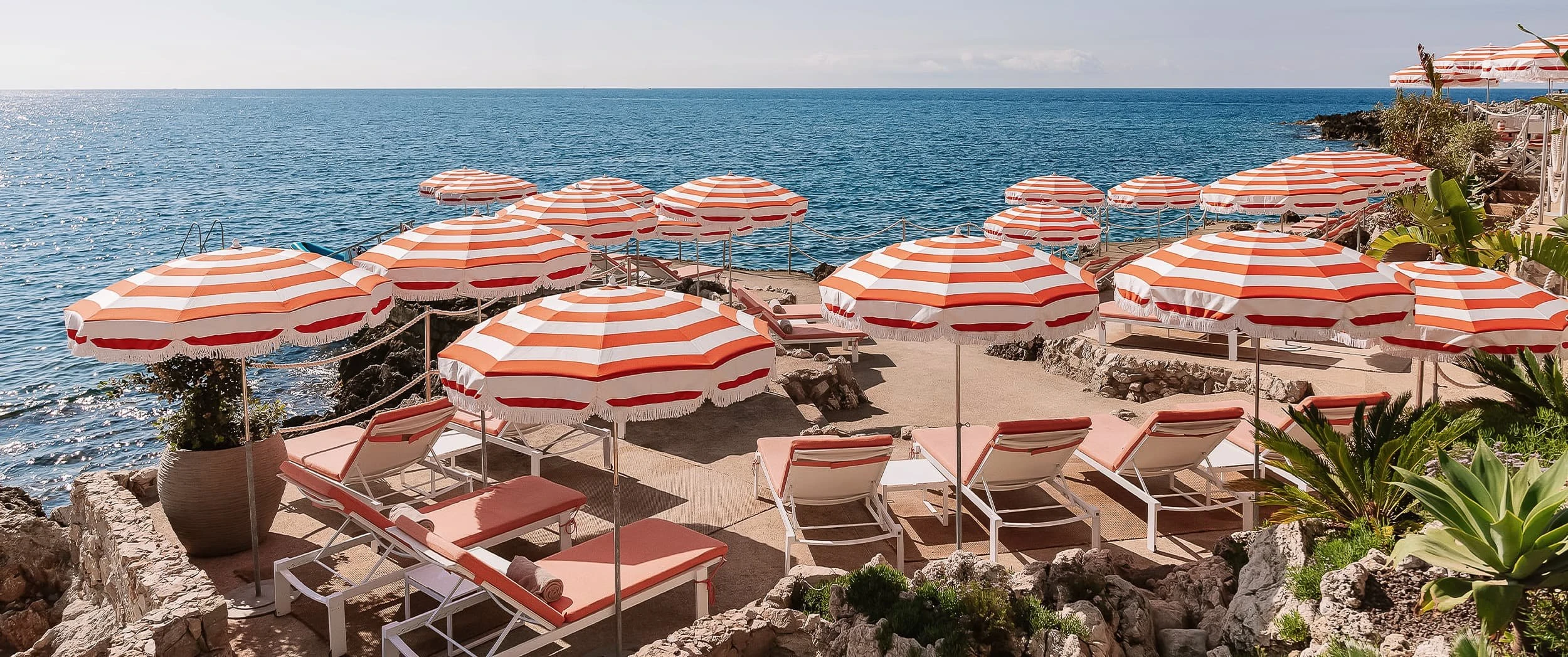
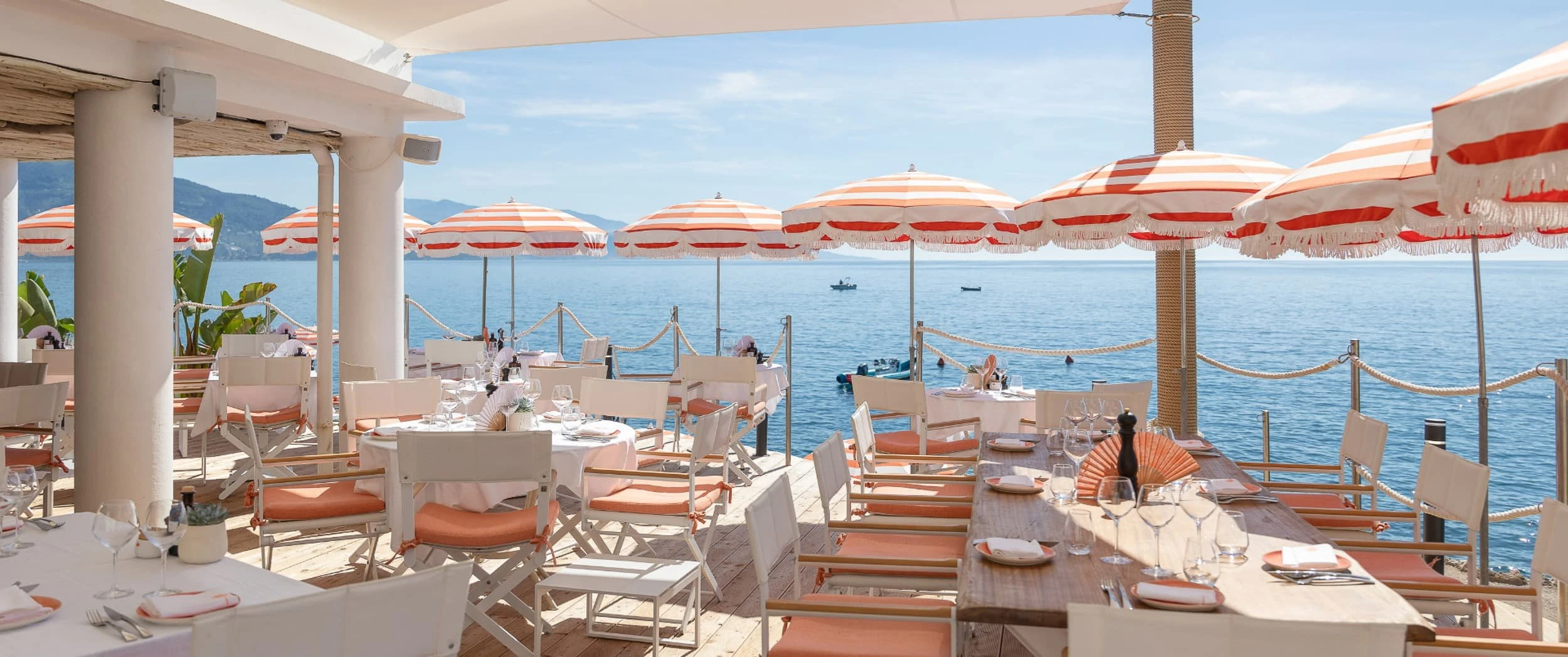
At lower levels, the hotel reaches down to the water with Maybourne La Plage, a beach experience in a more barefoot, sand-and-salt language.
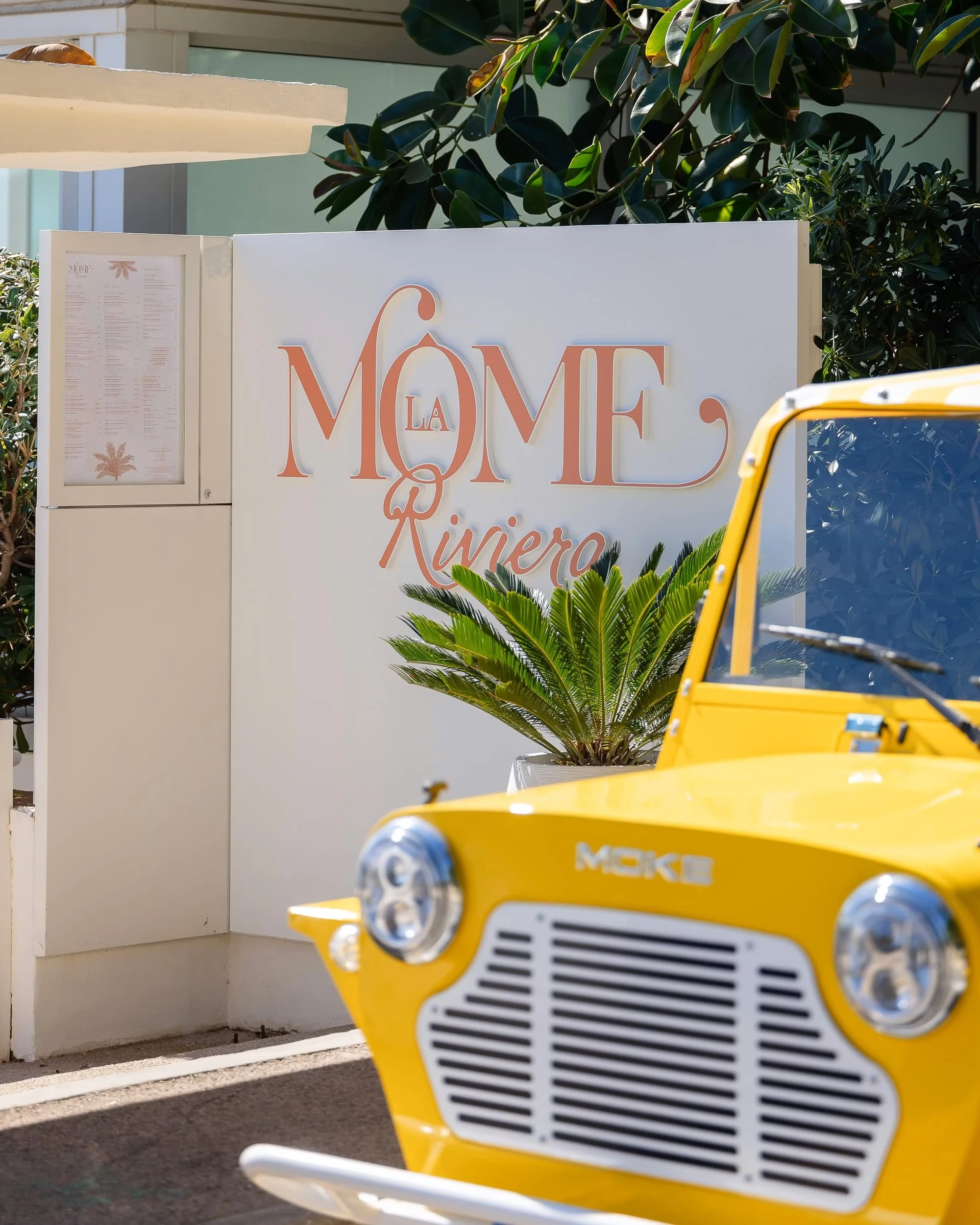
In the summer, Maybourne La Plage comes to life with the arrival of La Môme, the Cannes-born restaurant group founded by twin brothers Ugo and Antoine Lecorché. Starting with their original address just off La Croisette, La Môme has built a reputation for glamorous, high-energy Mediterranean dining that channels the golden-age Riviera — all sun-drenched plates, chilled rosé and late-night music. Their outpost here settles into the natural cove beneath the hotel: striped parasols, daybeds and a low-slung open-air dining room where the sound of the DJ blends with the sea.
Surrenne, the wellbeing destination envisioned with André Fu, turns a full floor into a sequence of calm, immersive spaces combining spa rituals with advanced wellness programming.
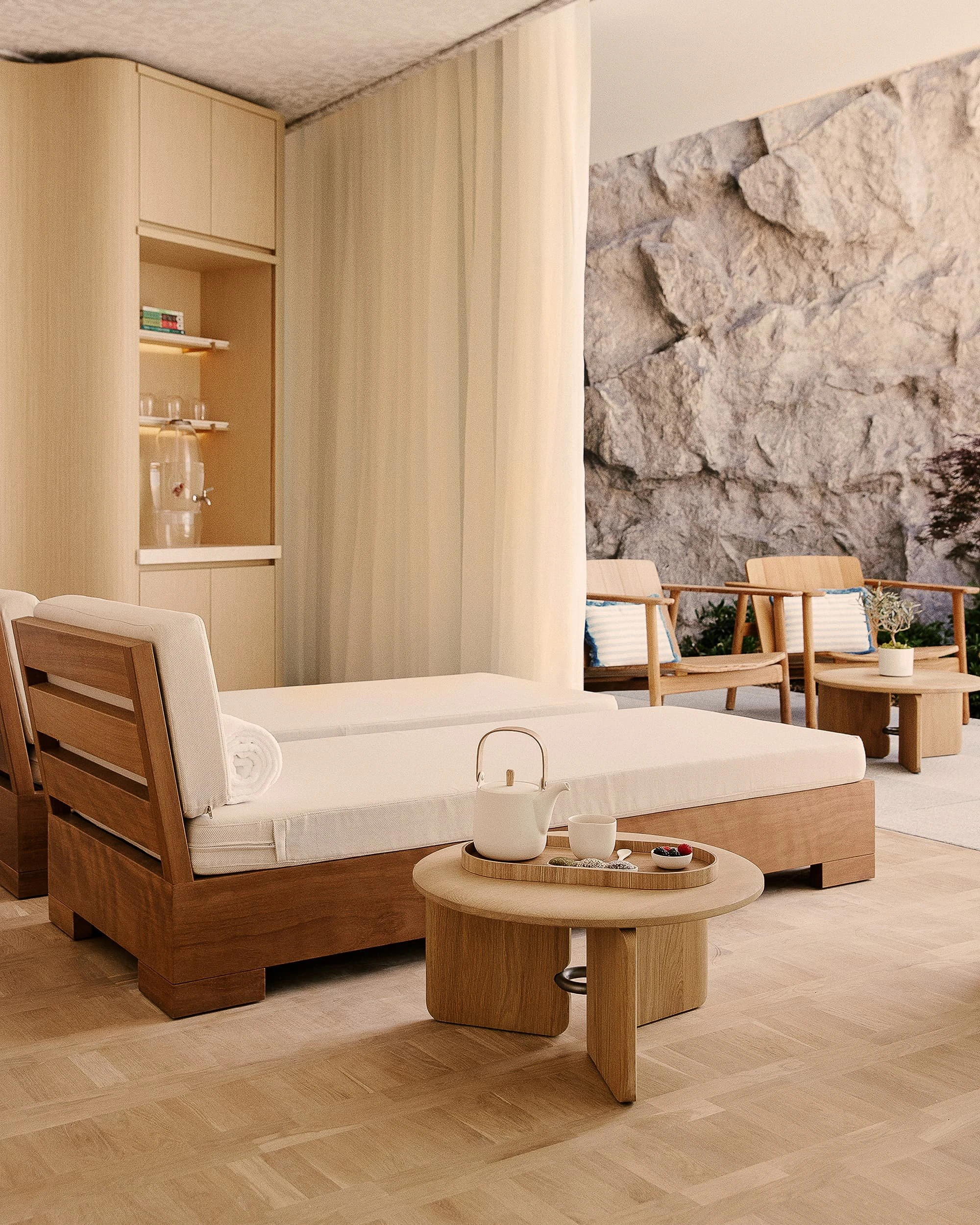
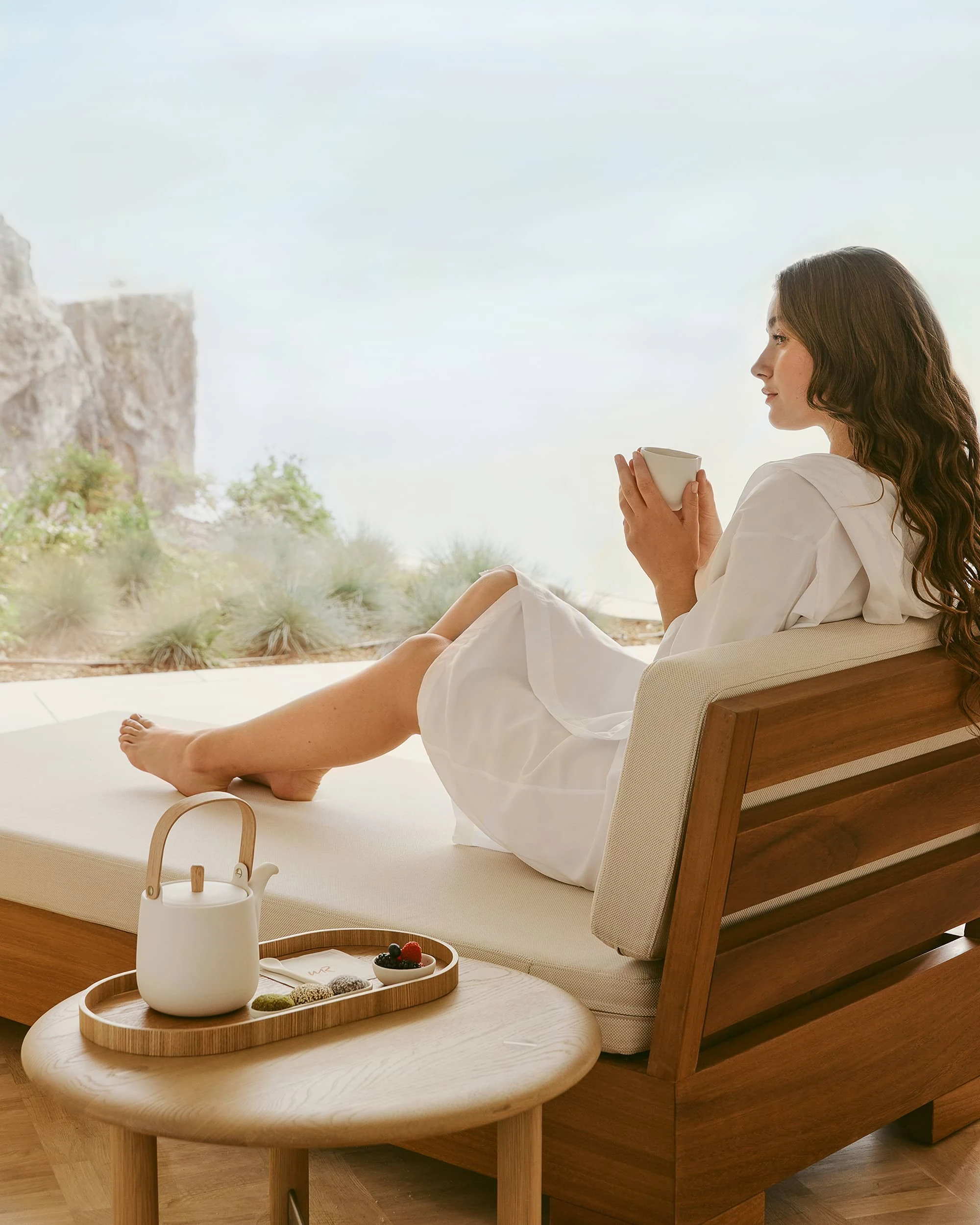
Where architecture, gardens, pool and furniture work in concert
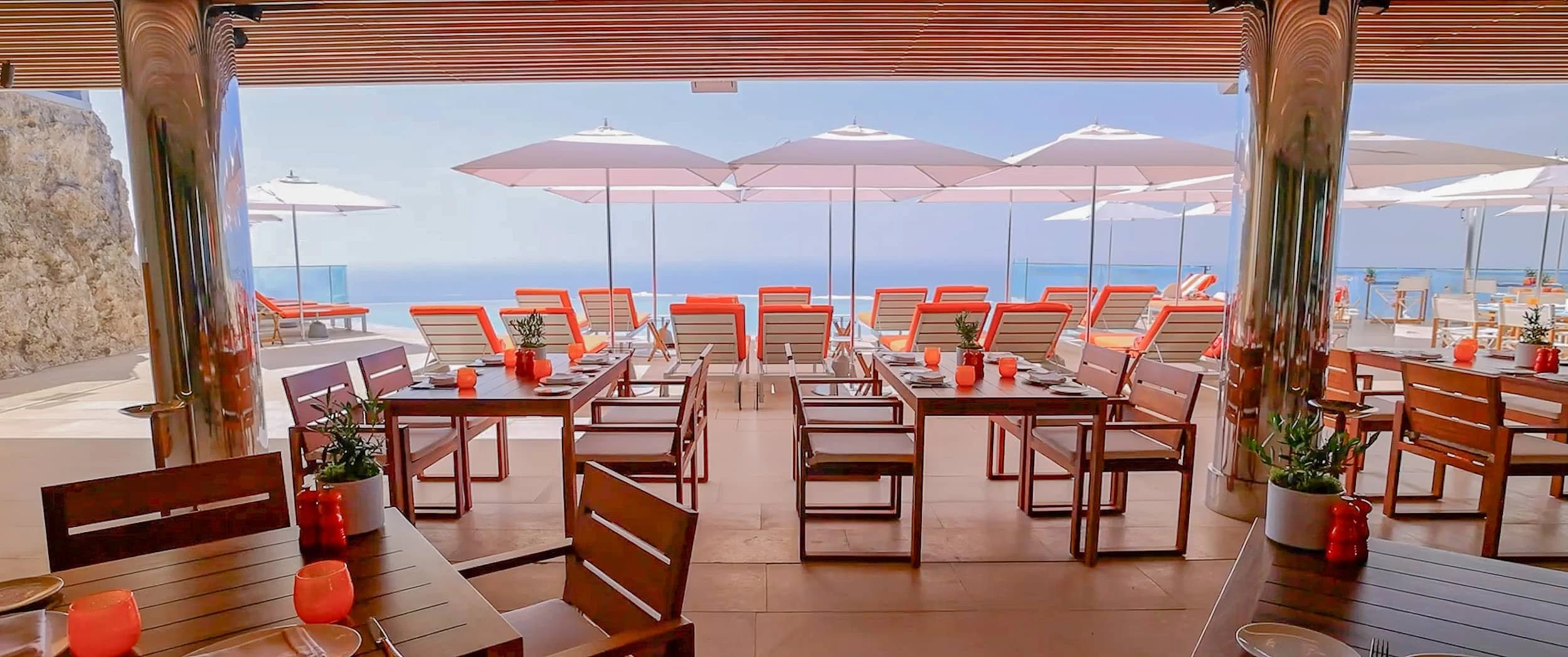
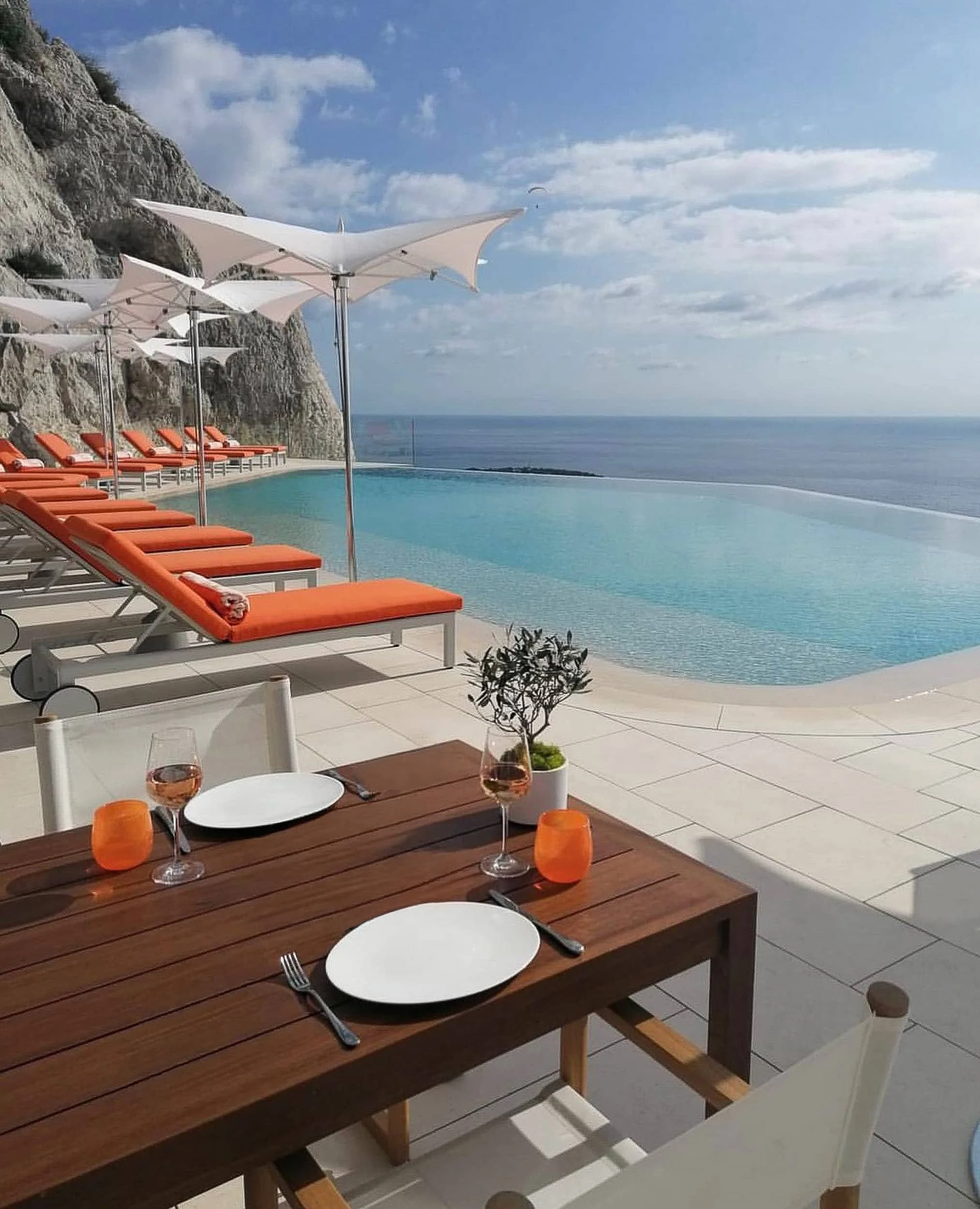
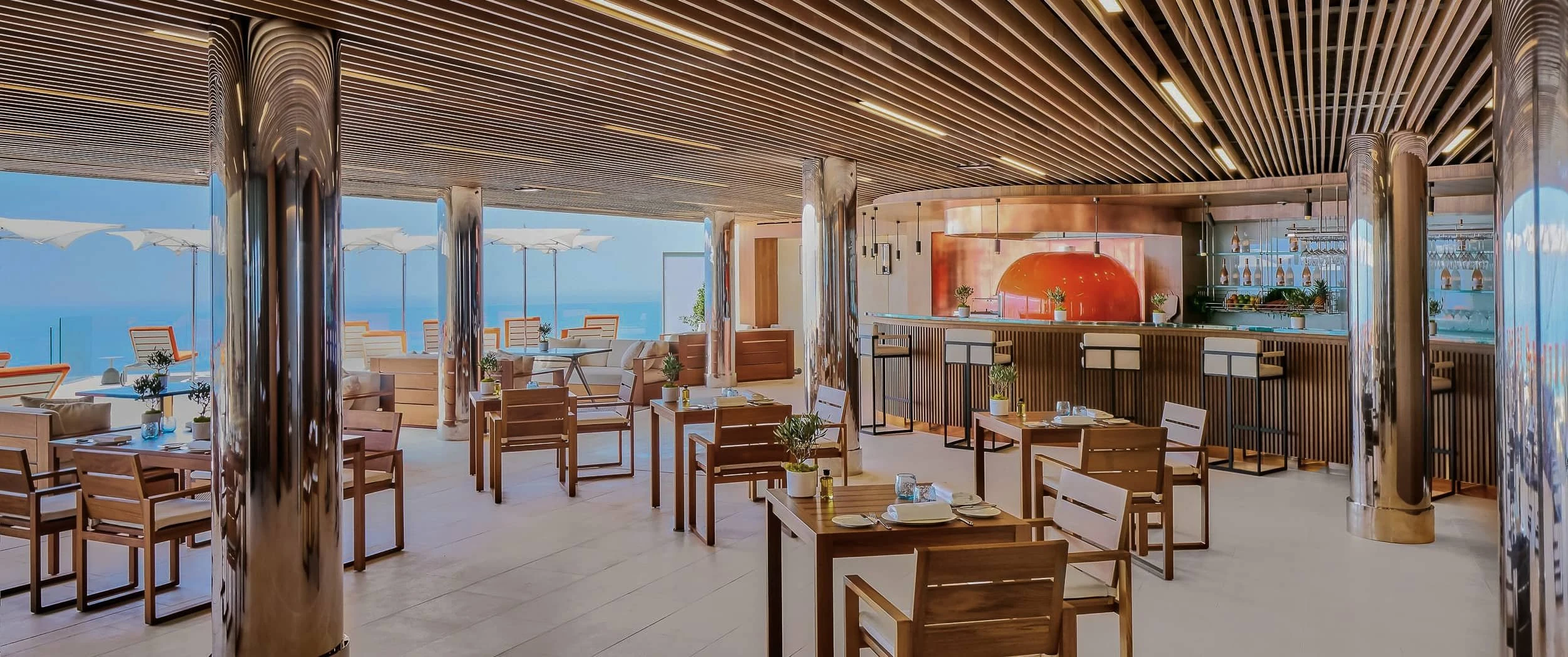
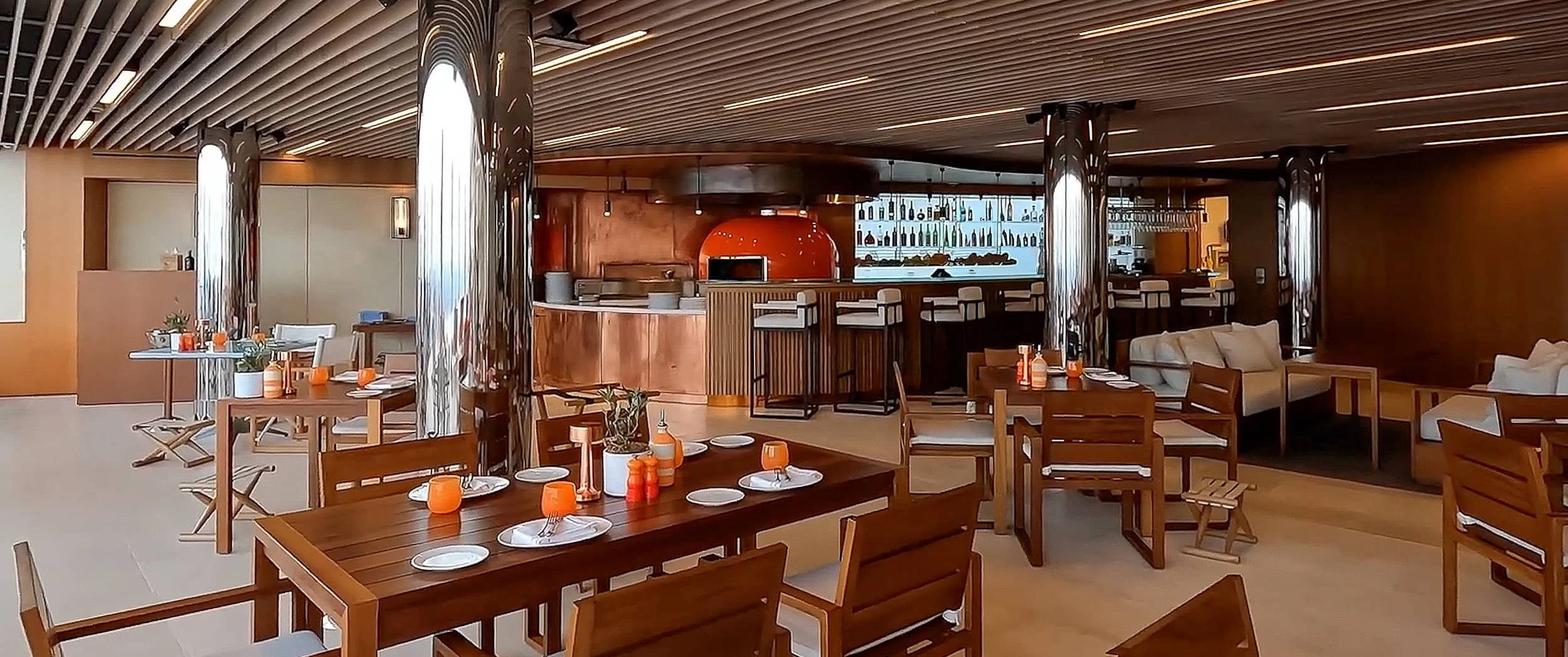
At the upper terraces, La Piscine is where everything comes together most visibly: architecture, gardens, pool and furniture working in concert. The open-air restaurant and bar sits beside the main infinity pool, its stone floor running seamlessly into the pool surround and the cliff face rising almost vertically on one side.
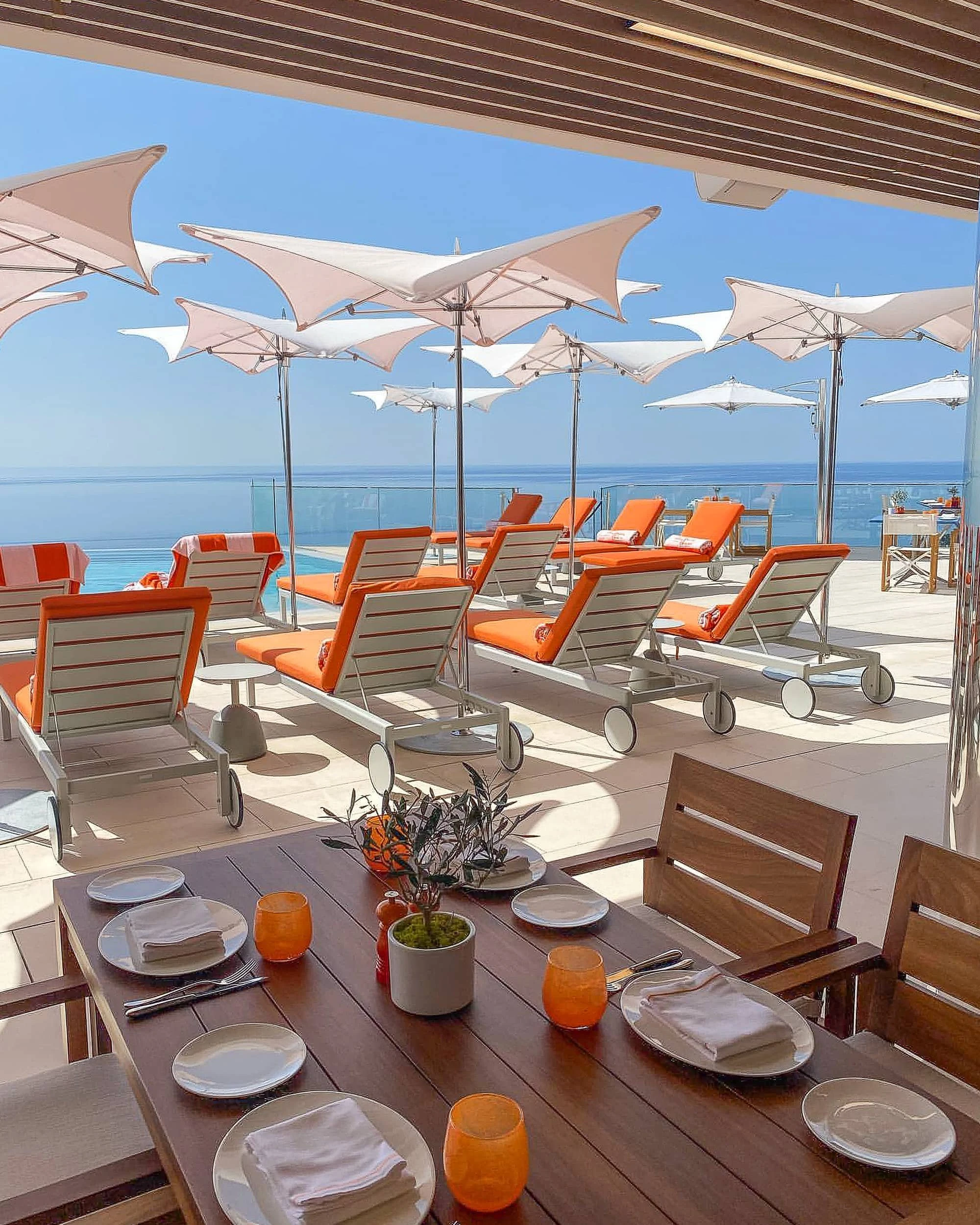
The brief here is relaxed but exacting. Guests drift between loungers, dining tables and bar seating in swimwear; staff need clear service routes; the view must remain uninterrupted. Every profile, height and gap matters. Low-slung furniture keeps sightlines open, parasols are placed to punctuate rather than clutter, and the rhythm of pieces along the water’s edge creates a strong graphic line when seen from above.
For interior designers, the terrace is an open-air room where every decision is on display: heights, silhouettes, the spacing between pieces, how shadows fall during the day. Nothing can hide.
A family of pieces in Iroko, inseparable from the architecture
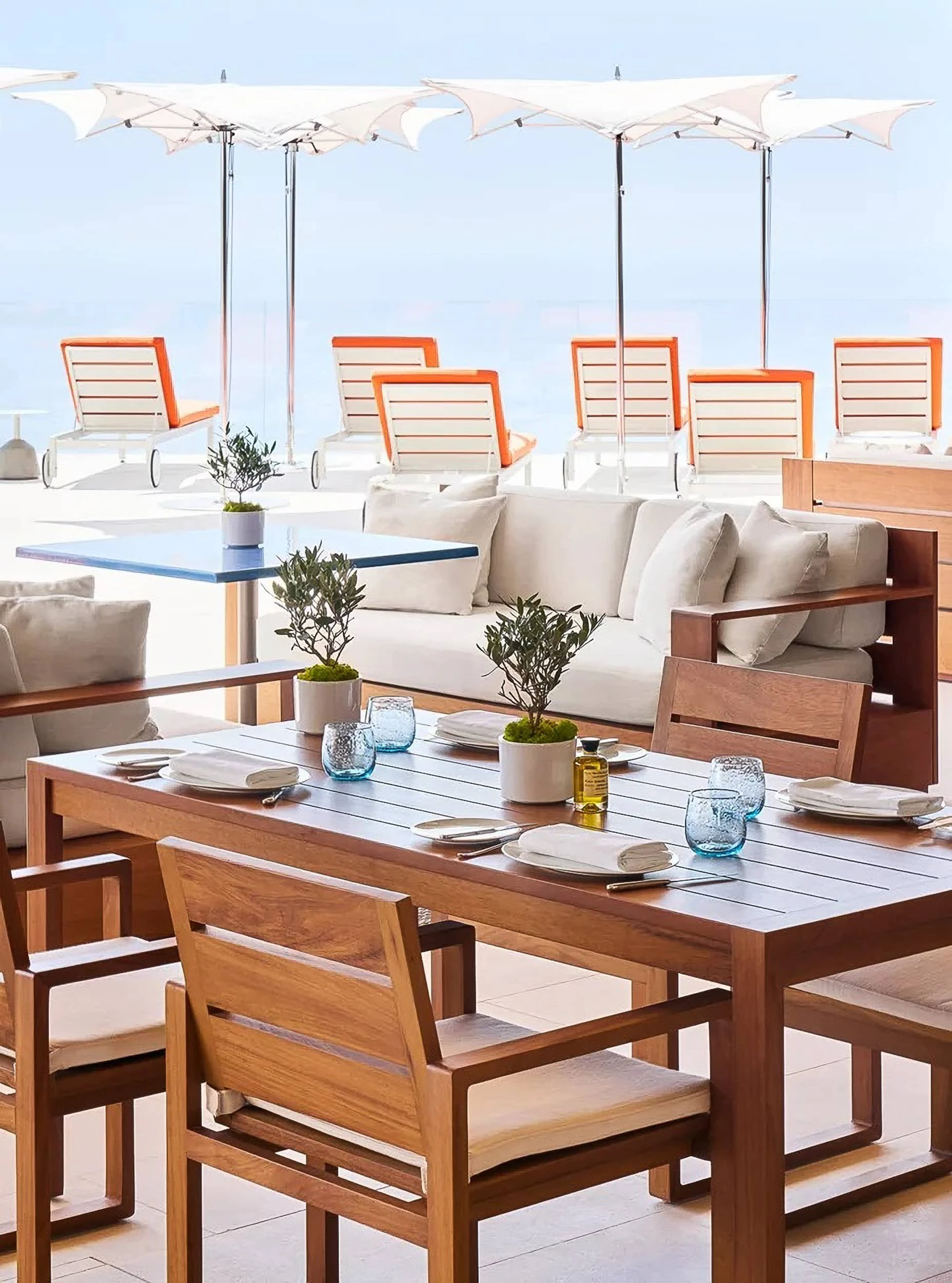
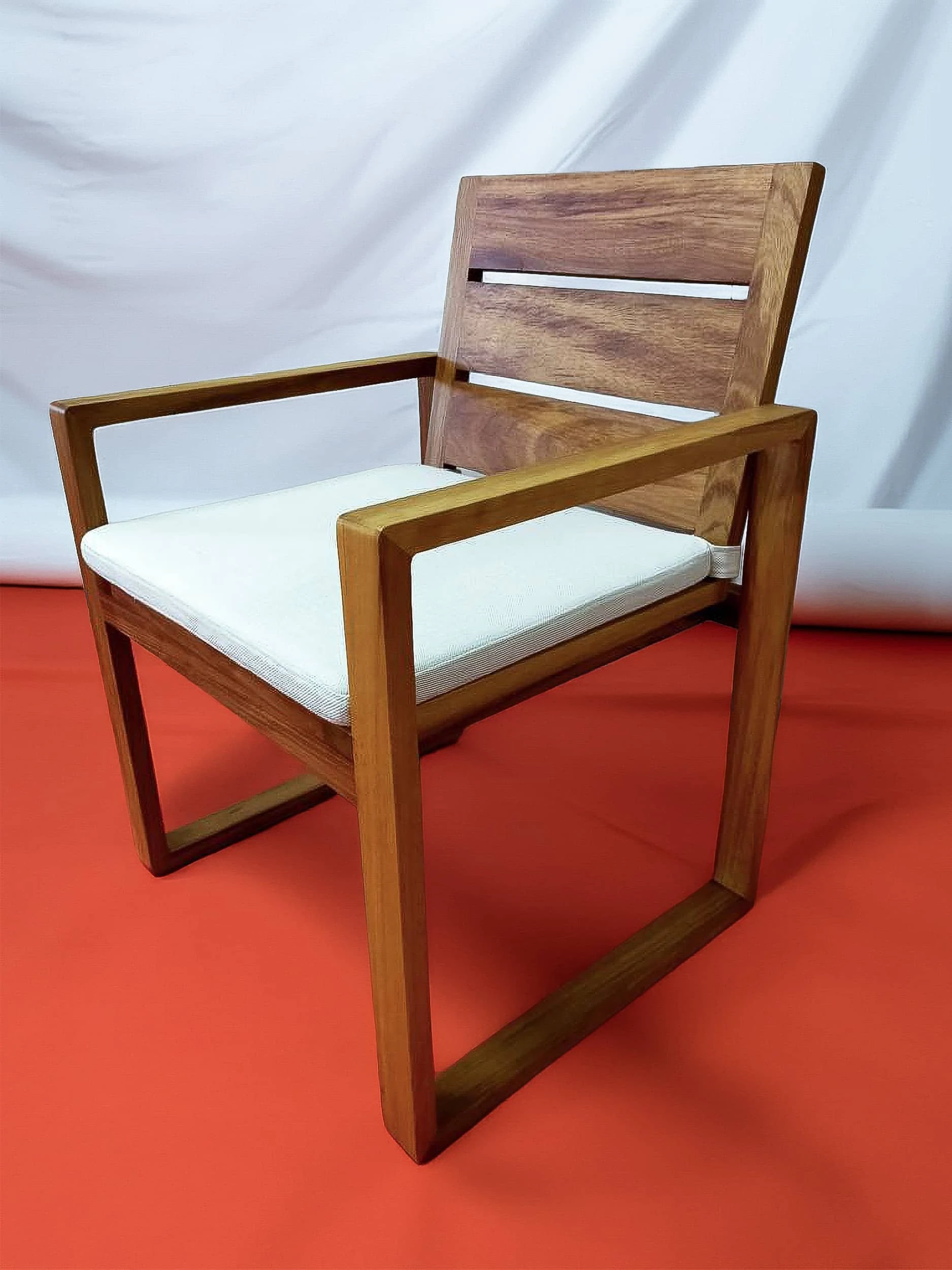
Our studio was invited to create bespoke furniture for La Piscine and the adjoining poolside areas, contributing to the wider choreography of the Maybourne Riviera’s exterior spaces. The ambition was to develop a family of pieces that felt inseparable from the architecture and gardens, robust enough for demanding hotel use yet refined enough to sit comfortably within this intensely photographed setting.
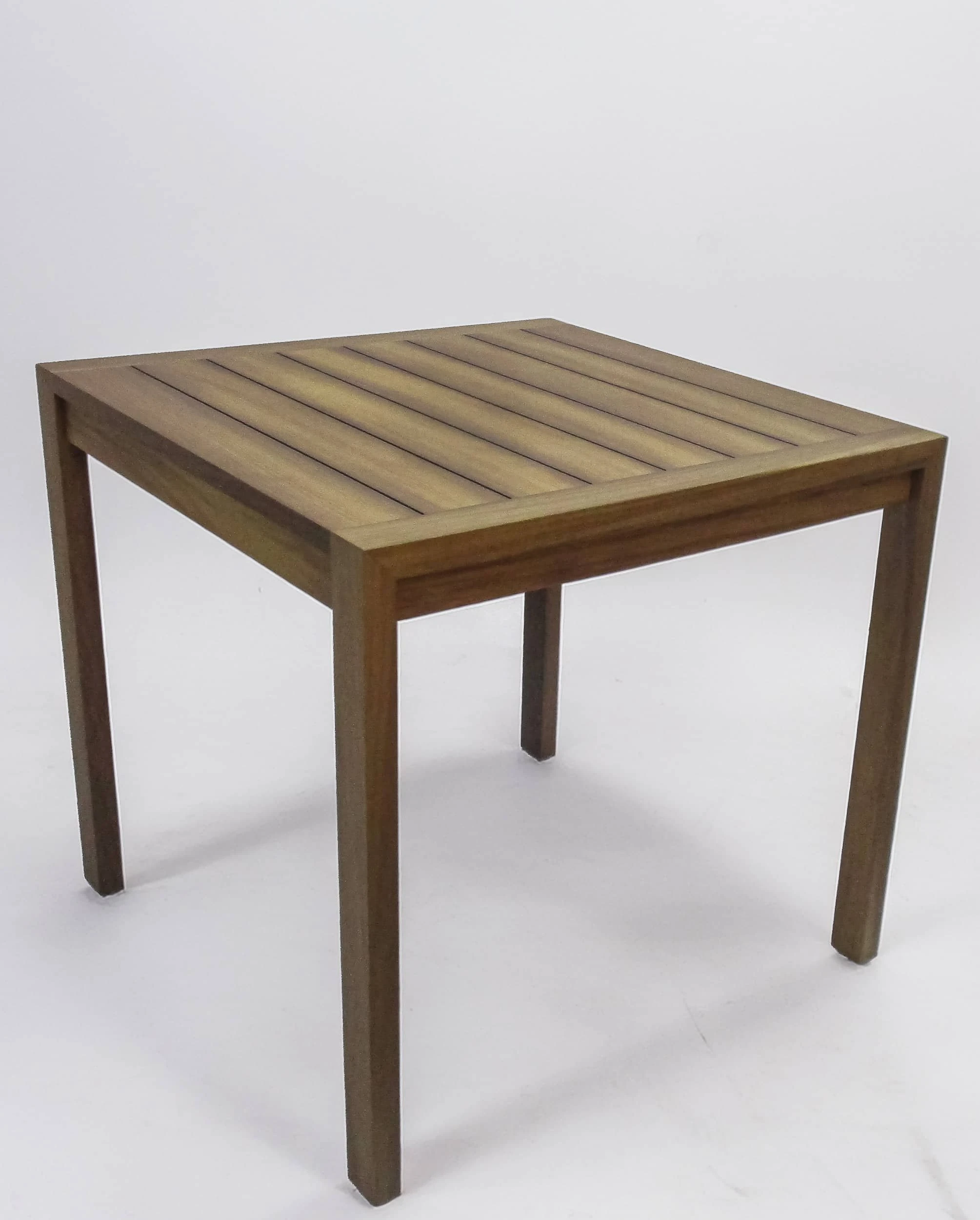
We anchored the collection around Iroko, a dense hardwood with excellent dimensional stability and natural resistance to moisture. Its warm, golden tone sits beautifully against the pale paving and the cool blue of the pool, and it weathers elegantly under Mediterranean light.
Working closely with the hotel and design teams, we developed a suite of outdoor timber elements that flows through La Piscine and beyond: dining pieces, chairs and service elements for the restaurant terrace, along with discreet waiter stations and supporting joinery. The language is intentionally understated. Sections are slim but strong; edges and corners are softened to echo the curving gestures of the interiors and to be kind to bare skin; slatted details allow air and water to move freely, keeping the silhouettes visually light.
Detailing for full sun, salt and constant movement
Clifftop pool furniture works harder than almost any other element in a luxury hospitality project. It is exposed to full sun, chlorinated splashes, sea air and constant movement. Our detailing reflects that reality.
Joinery is engineered for long-term stability: robust traditional joints and concealed mechanical fixings where appropriate, bracing designed to cope with repeated repositioning, and careful attention to how pieces meet the ground to avoid moisture traps. Components are proportioned so that hotel staff can handle them with ease, yet they still feel substantial and purposeful to guests.
Touchpoints receive particular care. Armrests, seat fronts and table edges are eased and rounded for comfort. Any hardware that must remain visible is kept as discreet as possible, allowing the grain and geometry of the Iroko to take precedence. Over time, the timber will develop a gentle patina, tying it even more closely to the surrounding stone, terracing and pine trunks.
When every layer is treated as part of one story
The Maybourne Riviera offers several clear lessons for those working on hospitality projects. It shows how far you can go when architecture, landscape and interiors are all anchored to a single idea — in this case, the drama of the cliff and the endless sea view. Every decision, from the orientation of suites to the height of a poolside chair, reinforces that relationship.
It demonstrates that multiple design studios can collaborate successfully when guided by a strong in-house vision. From its origins as the Vista Palace to its rebirth as the Maybourne Riviera, this cliffside property has become a touchstone for contemporary hotel design on the Côte d’Azur.
For interior designers and hospitality teams looking to create their own destination projects, the Maybourne Riviera is proof that when every layer — building, landscape, interiors and furniture — is treated as part of one story, the result can feel almost inevitable. Our contribution in Iroko along the poolside and terraces is just one thread in that tapestry, but it is a thread we are proud to have woven into this extraordinary hospitality project.