No timber is sustainable on its own. A floor earns the word from four things together: where the wood grew, how that forest is managed, whether the paperwork can be checked, and how many decades the floor stays down. This guide takes the European timbers, reclaimed boards and bamboo that we are comfortable discussing, sets out what each does well and badly, and says plainly where the evidence is thin.
Kneel on a freshly laid oak floor and you can smell it: dry, faintly sweet, a little sour where a board has been cut. Somewhere a tree spent decades growing to put it there. A floor is one of the longest-lived things we put into a room, and the timber will outlast the fashion, the furniture and often the owner, which makes its origin worth more than a line on a specification sheet. The honest answer to the question “which wood is most sustainable?” is that it depends less on the species than on what stands behind it: the forest, the paperwork and the years of use.
What sustainable means for a floor
Four separate tests are usually run together under one word. It helps to pull them apart.
- Legal: the timber was harvested lawfully, and the business that placed it on the market can show how it knows.
- Traceable: an independent certificate follows the wood from forest to finished board, and you can check it.
- Not threatened: the species itself is not in decline or restricted in trade.
- Long-lived: the floor is built, finished and cared for so that it stays down for decades and can be repaired rather than replaced.
A floor can pass one test and fail another. A certified supply chain can carry a threatened species. A common, abundant species can arrive without any paperwork at all. And the greenest floor in the world is a poor one if it is torn up after fifteen years.
Certificates, and what they do not tell you
The two schemes you will meet are FSC and PEFC. Both certify forest management and chain of custody, which is the record that tracks the material from the forest to the finished product. Neither says anything about whether a species is endangered. They are separate schemes with separate standards and separate public databases, and neither should be presented as simply better than the other.
FSC labels carry real differences. FSC 100% means all the material comes from FSC-certified forests. FSC Mix means a blend of certified material with recycled material or FSC Controlled Wood. Controlled Wood does not come from certified forests: it has been assessed as low risk of coming from unacceptable sources such as illegal logging, and that is a lesser claim. Under FSC UK’s percentage system a Mix product must be at least 70 per cent certified or recycled input, with the rest Controlled Wood.
You can check any claim. FSC and PEFC both publish searchable public databases of certificate holders. Ask your supplier for the certificate code and for the claim to appear on the invoice, then look the supplier up and confirm the certificate is valid and covers the product. A business that only resells certified goods may not appear in the database at all, so ask who holds the certificate.
It helps to keep the national picture in view. At 31 March 2025, 44 per cent of the UK’s woodland by area was certified under FSC, PEFC or both, and Forest Research is careful to note that woodland which is not certified may also be managed sustainably. The UK also imports about four-fifths of the wood it uses, and most of its sawn hardwood, mainly from EU countries. Any hardwood floor is therefore likely to involve supply chains abroad, which is why the paperwork matters.
The law, in brief
Since 1 January 2021 the UK Timber Regulations have applied in Great Britain. A business that first places timber on the market must not place illegally harvested timber there and must run a due-diligence system: gather information (species, quantity, supplier, country of harvest, compliance with local law), assess the risk that the timber is illegal, and reduce any risk to a negligible level. Businesses that buy and sell timber already on the market must keep records of who they bought from and sold to. Flooring is within scope. The Office for Product Safety and Standards enforces the rules, and breaches can lead to an unlimited fine or imprisonment.
Three developments are worth knowing about. In June 2026 the Government announced stronger rules for Great Britain that are intended to cover wood, with legislation expected in 2027; nothing has yet been enacted. If a project ships into the European Union or Northern Ireland, the EU Deforestation Regulation, which lists wood flooring among its products, is due to apply from 30 December 2026, with some smaller businesses following on 30 June 2027. And since 25 November 2024 several tropical hardwood genera used for flooring have been listed in Appendix II of CITES, the international convention on trade in endangered species. That listing is part of British law and covers logs, sawn wood, veneer, plywood and “transformed wood”. Whether a particular finished floor falls within it is a question for the supplier to answer in writing.
This is a summary rather than legal advice. The practical point is that your supplier carries these duties, and a good one will explain how it meets them without being asked twice.
The timbers, side by side
The table gives the shape of the choice. IUCN status is the global assessment of the species on the Red List, which says nothing about any one supplier, and some assessments are old. The sections after it explain each timber in turn.
| Timber | Look | Main strength | Main caution | IUCN status |
|---|---|---|---|---|
| European oak | Pale honey to mid brown | Hard-wearing; takes almost any finish | Origin and management vary, so ask | Least Concern (2017) |
| European ash | Pale cream, bold grain | Tough and light | Ash dieback and future supply | Near Threatened (2018) |
| Walnut | Chocolate to dark brown | The richest colour and figure | Softer than oak; premium price | Least Concern |
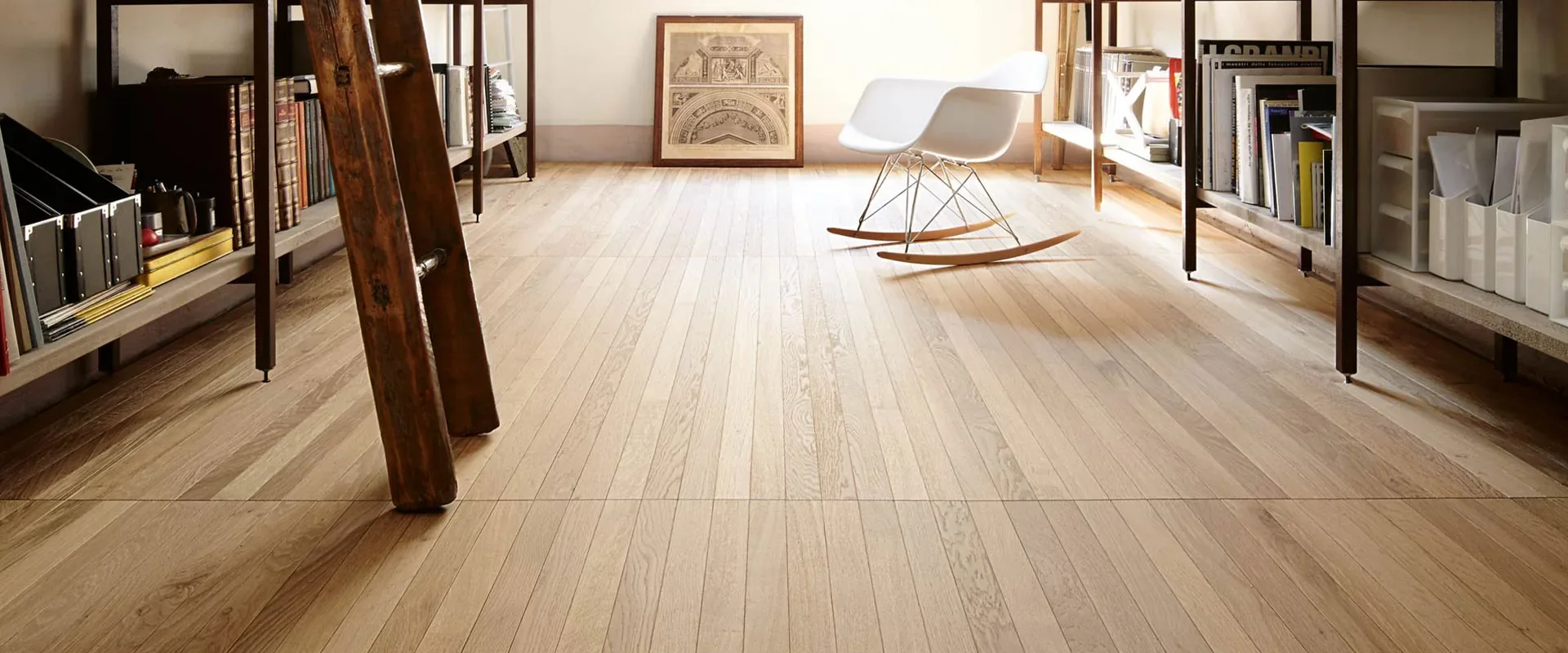
European oak
Oak is the backbone of the European flooring trade for good reasons. It is hard, stable (especially as an engineered board), takes brushing, planing, fuming, oiling and pigment more willingly than most timbers, and it is a Least Concern species on the IUCN list, assessed in 2017. It also travels a shorter way to a British site than any tropical alternative. It is slow, too. A parquet manufacturer’s guide puts the full cycle of a managed Burgundy oak forest at about 180 years on average, with around a hundred of the best trees per hectare felled at the end. That figure comes from a producer, not an independent study, but it shows the scale: a good oak board starts as a tree that grew for most of two centuries.
- In its favour: the widest range of colours and textures; reliable behaviour over underfloor heating when engineered; and a shorter journey to a British site.
- Against: oak is not all one thing. The country, the forest and the certificate vary from supplier to supplier, and Forest Europe’s 2025 report records harvest rising to about 81 per cent of annual growth, up from about three-quarters in 2020, with a few countries reporting harvests above annual growth.
Oak with a named country of origin and a certificate you have checked is as responsible a floor as the trade offers. Oak without them is only oak.
Ash, walnut and the other pale and dark woods
Ash is light, tough and handsomely grained, a clean pale alternative to oak. Its difficulty is the one the whole species now faces. Ash dieback is present in every county of the UK, and the Forestry Commission estimates it could kill up to 50 to 75 per cent of the country’s ash trees. The IUCN lists European ash as Near Threatened (2018). Forest Research has said that industries using ash may need alternatives if supply is affected. We would not call ash scarce, because the sources give no figure for flooring, but we would not specify it without asking where it came from.
Walnut, European or American, is Least Concern. It brings the deepest colour and the most figure, and for a feature room or a pattern floor that is the point. It is softer than oak and will show wear sooner, and it costs more, so it tends to be used where its colour earns its place.
Tropical hardwoods
We have left tropical hardwoods out of this guide for now. Some are hard and durable, and some are well managed, but the evidence on sourcing differs from species to species and forest to forest, and a certificate alone has not always proved reliable. Until we can show a named species, a named origin and documents we have checked, we would rather not recommend one. If a project calls for a tropical timber, ask us and we will set out what we can verify.
Reclaimed timber
Reuse sits above recycling in the hierarchy of environmental choices, and a reclaimed board avoids the felling, sawing and kilning of a new one. Researchers at the US Forest Products Laboratory describe salvaged lumber as a leading contender for the greenest building material. Reclaimed flooring also keeps the carbon in the timber in use for longer.
- In its favour: the lowest demand on forests; character no new floor can imitate; and, under the UK Timber Regulations, timber that has completed its life cycle and would otherwise be waste falls outside due diligence.
- Against: there is no grading standard for reclaimed wood, so expectations must be agreed in writing; boards vary in colour, milling and moisture; older coatings can contain lead, so test; hidden metal and treatments are a risk, so ask how boards are de-nailed and checked; and old boards may be of species now restricted in trade. We have found no reliable figure for how much carbon reclaimed flooring saves, so we do not quote one.
Bamboo
Bamboo is not a hardwood. The FAO describes it as an ancient woody grass with more than 1,600 species. Flooring is made by cutting the culms into strips and bonding them, so the adhesive matters as much as the plant. If bamboo is on the list, ask what adhesive is used, ask for emissions test data, and ask where it was made. It is a different material, not a shortcut.
Make the floor last
The most reliable sustainability measure is the simplest: a floor that stays down for sixty years uses a third of the timber of three floors that each last twenty. Construction and finish decide that.
With engineered boards the number to ask for is the wear layer, the real timber on top, in millimetres. Wear layers range from about 1.6 mm to 6.4 mm. Trade guidance from the US National Wood Flooring Association is not to sand a floor with less than roughly 2.4 mm of wear layer, while solid floors are typically sanded six to eight times over their life. A board with a few millimetres of oak on top uses less of the premium species than a solid plank of the same visible area, and a thick wear layer allows more refinishing than a thin one. Our guide to engineered and solid flooring sets out the trade-offs, and the choice of finish matters here too: a hard-wax oil can be repaired locally and re-oiled every few years, whereas a lacquer forms a film that resists spills but has to be sanded and recoated when it scratches. Repairability is a sustainability feature.
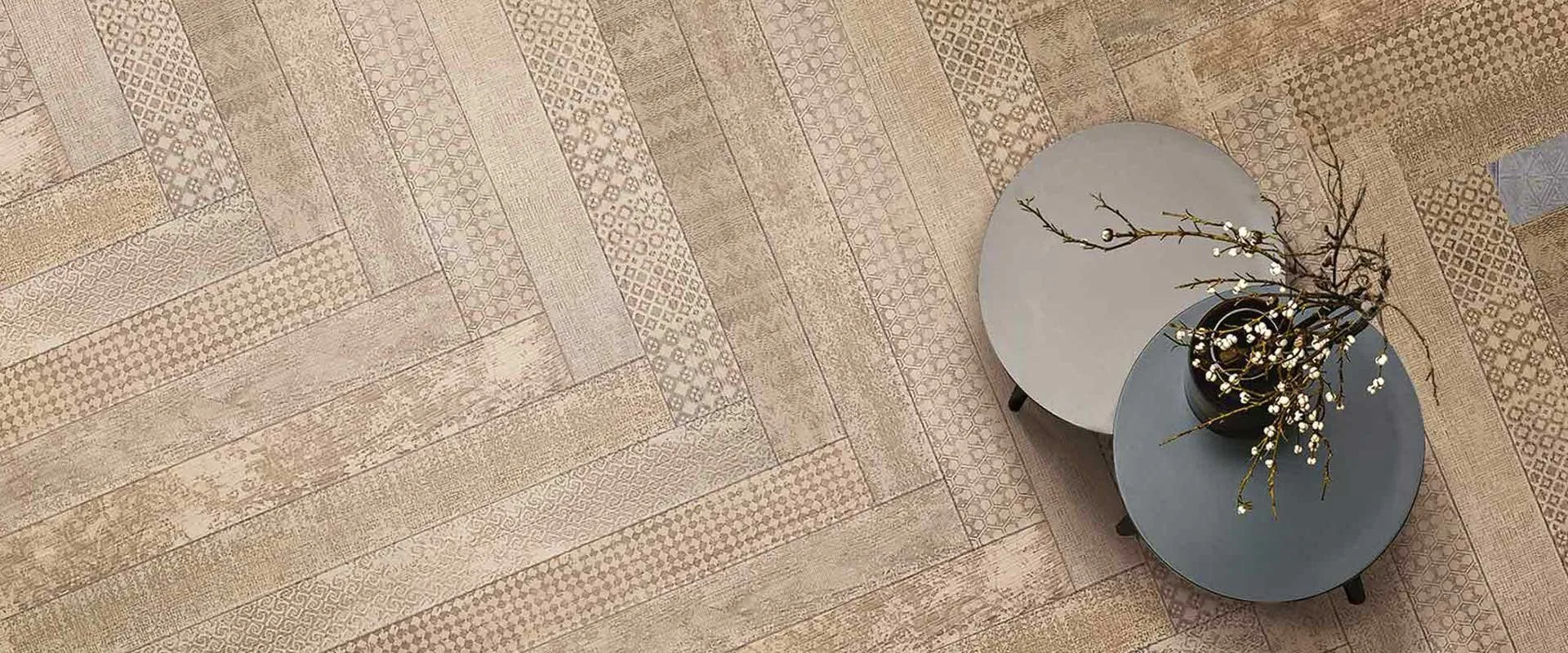
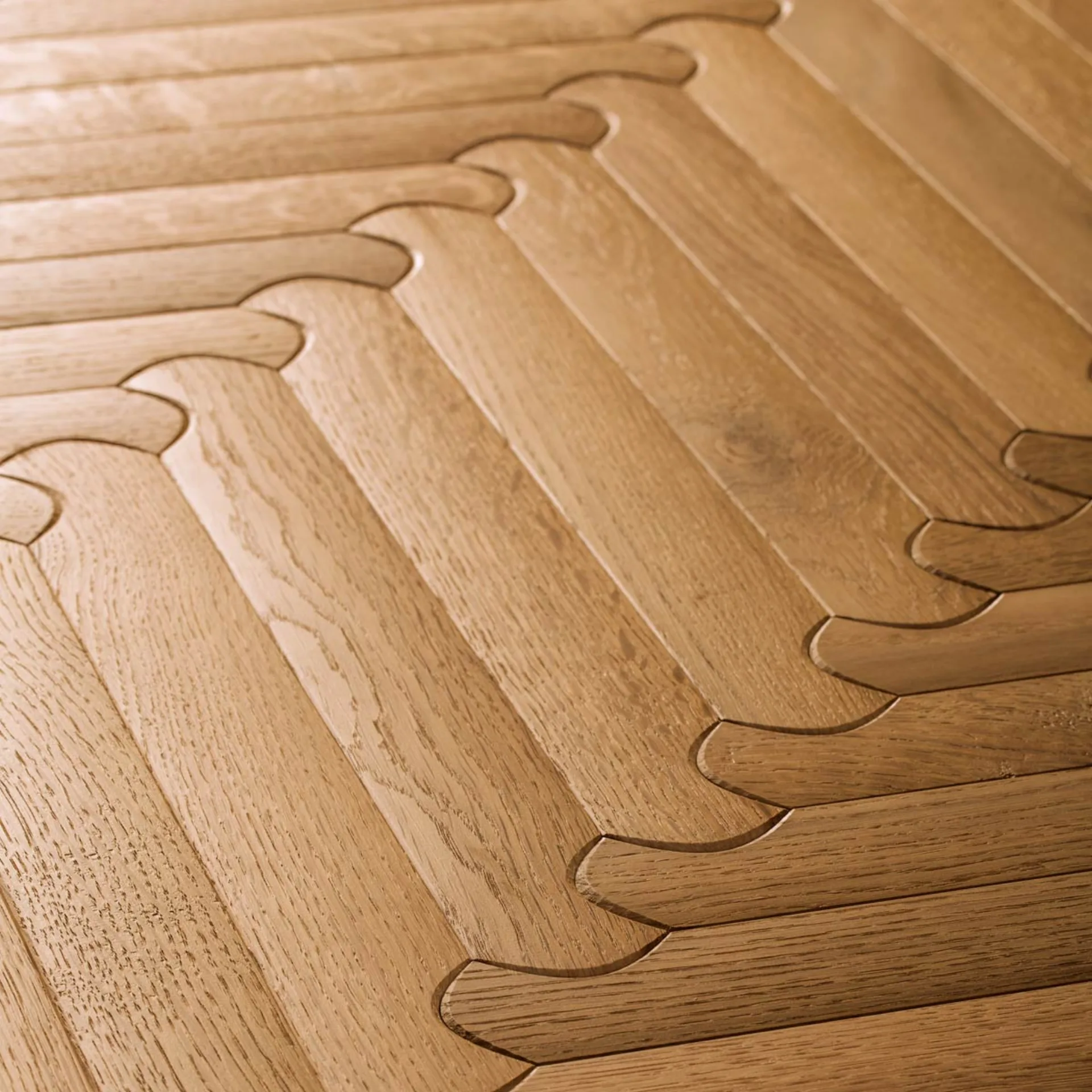
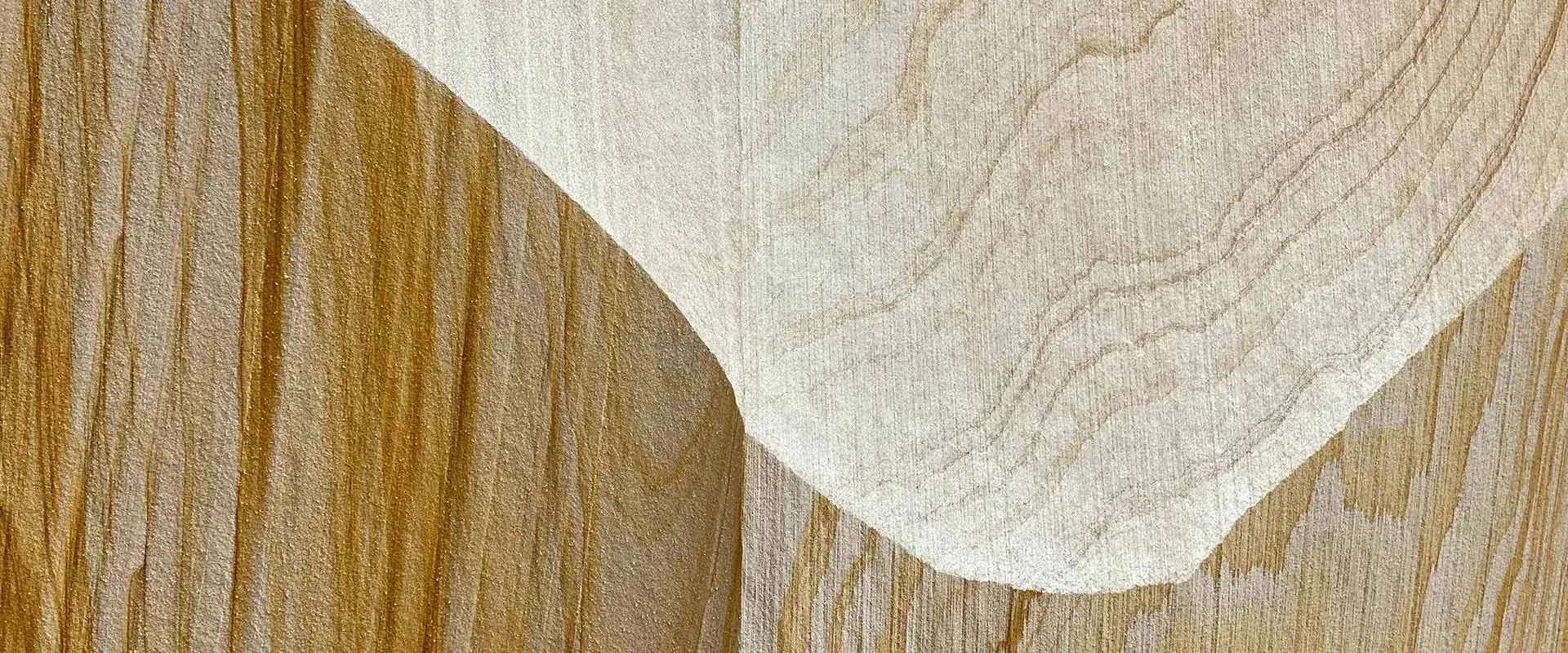
Colour and texture are worth understanding too. Our flooring partner works with colour in four ways: opaque paint over brushed boards, bleached and pigmented translucent tones, pigmented oils and stains that settle into the softer growth, and tannin-reactive colour that forms inside the fibre. Surfaces range from lightly brushed to hand-planed and buzz-sawn. Fuming (ammonia in a sealed chamber), smoking and burning, in the shou sugi ban manner, change the timber itself. Because tannin content differs from species to species, every colour is sampled on the exact species, grade and width, and in person: screens misreport wood colour.
Carbon, without the slogans
A growing tree locks carbon into wood, and harvested timber holds that carbon for as long as the product stays in use. Forest Research notes that sawn timber used for floorboards may remain in use for many decades, and the UK’s official carbon reporting assumes a half-life of 35 years for sawnwood. A rough sum for any board is its volume, times its oven-dry density, times about 0.5 for the carbon fraction, times 44/12 to turn carbon into carbon dioxide: roughly 1.83 tonnes of carbon dioxide held in each tonne of oven-dry wood.
That is carbon stored, not the footprint of getting the floor to you. Felling, drying, transport, adhesives and finishes all emit. Without an independent life-cycle study or an environmental product declaration from the manufacturer, no floor can honestly be called carbon neutral or carbon negative, and we do not use those words. The Competition and Markets Authority’s guidance on green claims, published in January 2026, expects claims to be clear, accurate and backed by evidence; it is a reasonable standard to hold any supplier to.
Questions to ask before you approve a floor
- What is the species, in Latin, and is it the species on the sample?
- Which country and region was it grown in?
- Which certificate covers it, what is the code, and does the claim appear on the invoice? (Then check it in the FSC or PEFC database.)
- What due diligence does the supplier carry out under the UK Timber Regulations, and who is responsible for it?
- If the timber is tropical or otherwise CITES-listed: where is the CITES documentation?
- For engineered boards: how thick is the wear layer in millimetres, how thick is the board, and how many refinishes does the manufacturer allow for?
- Which adhesives and finishes are used, and is there emissions test data?
- For reclaimed timber: has it been tested for lead, how is it de-nailed and checked for metal, and what evidence is there of its earlier life?
Where we land
For most rooms the lowest-regret choice is engineered European oak with a generous wear layer, from a supplier who will name the forest country and show the certificate, laid in a pattern you will still enjoy in thirty years and finished in a way that can be repaired. Reclaimed timber makes the lowest demand on forests wherever a project can tolerate its variability.
Every floor we discuss starts from the room, the look and the questions above. You can see how any pattern would sit in a room in our floor visualiser, browse the range on our wood flooring page, and read more about how timber choice shapes furniture in our guide to wood species. Species status and the law both change, so check the sources below for the current position before you specify.
Sources and further reading
- FSC: the labels explained (UK)
- FSC certificate search
- PEFC: find certified organisations
- GOV.UK: the UK Timber Regulations and FLEGT licences
- GOV.UK: the UK's approach to deforestation regulations (updated 2 September 2026)
- European Commission: EU Deforestation Regulation
- legislation.gov.uk: CITES amendment regulations 2023 (SI 2023/106)
- Forest Research: Forestry Statistics 2025, woodland area and certification
- Forest Research: Forestry Statistics 2025, trade
- Forest Research: climate change and carbon in wood products (2025)
- Forest Research: ash dieback
- Forest Europe: State of Europe's Forests 2025
- Hardwood Floors magazine: how many times can a wood floor be sanded?
- Hardwood Floors magazine: installing reclaimed flooring
- US Forest Products Laboratory: reclaimed lumber (Falk, Cramer and Evans, 2013)
- FAO: bamboo
- CMA: making green claims, getting it right across the supply chain (January 2026)
- IUCN Red List of Threatened Species