
Working with the grain of a Grade II listed cottage
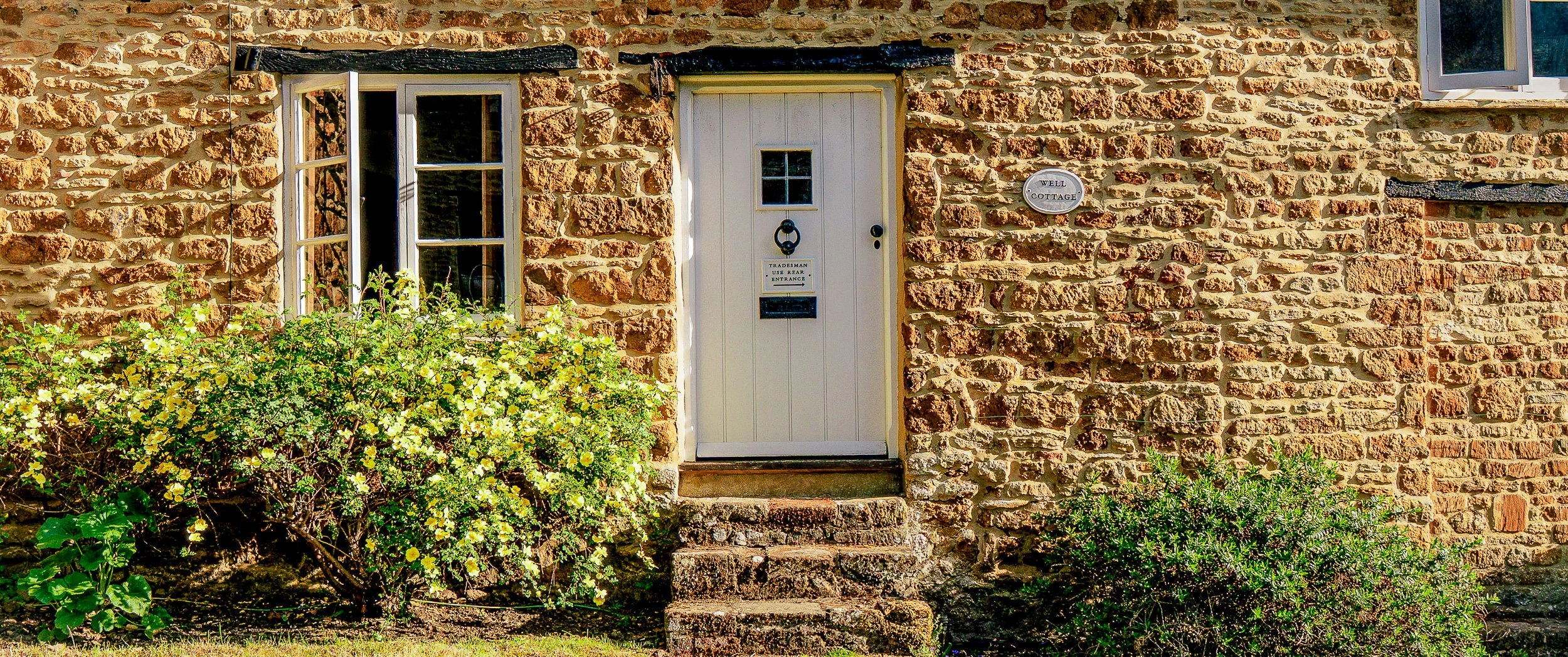
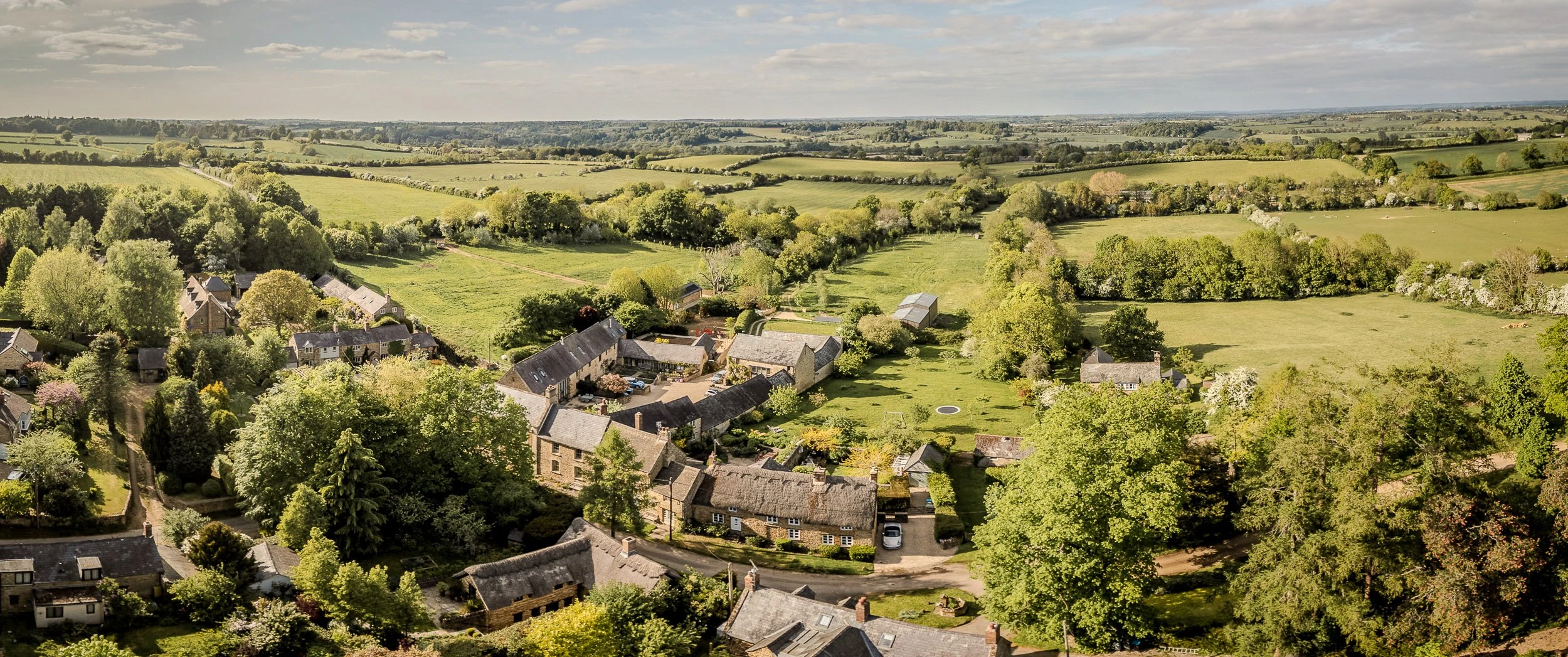
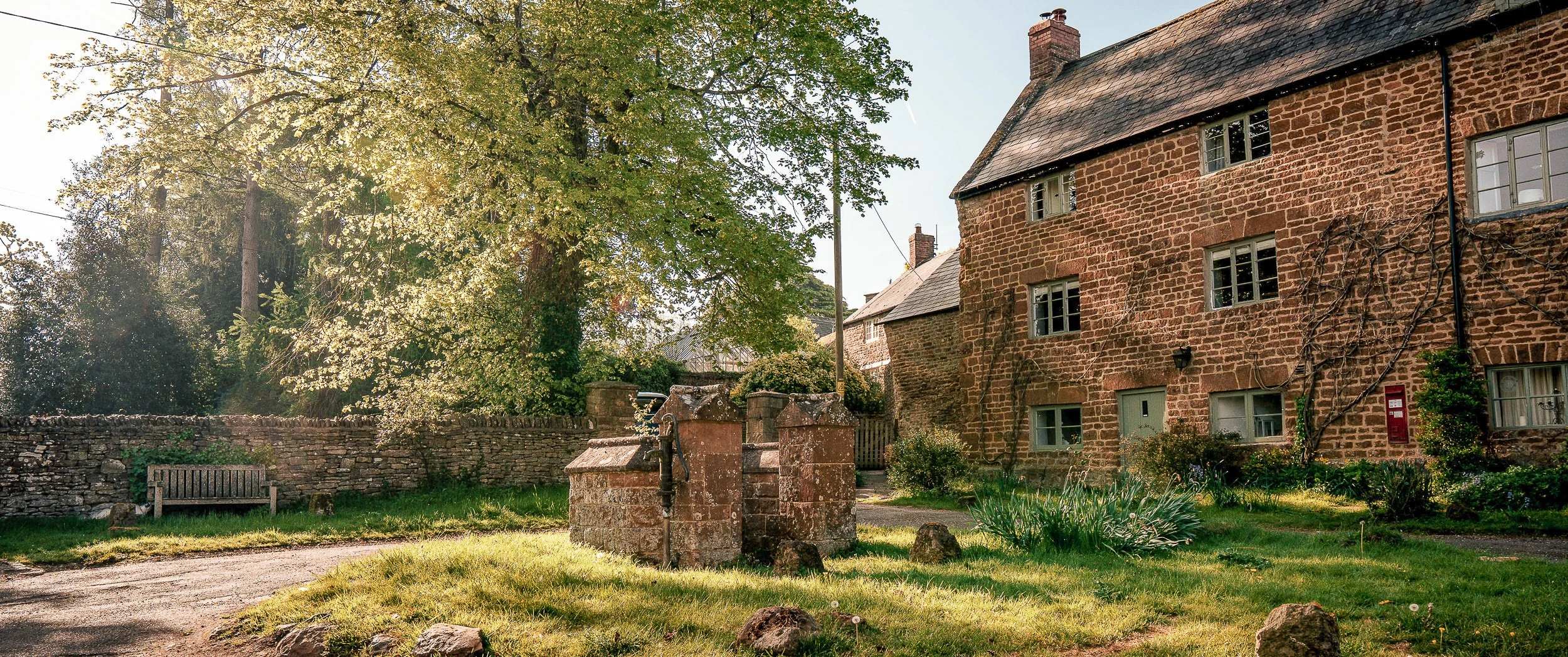
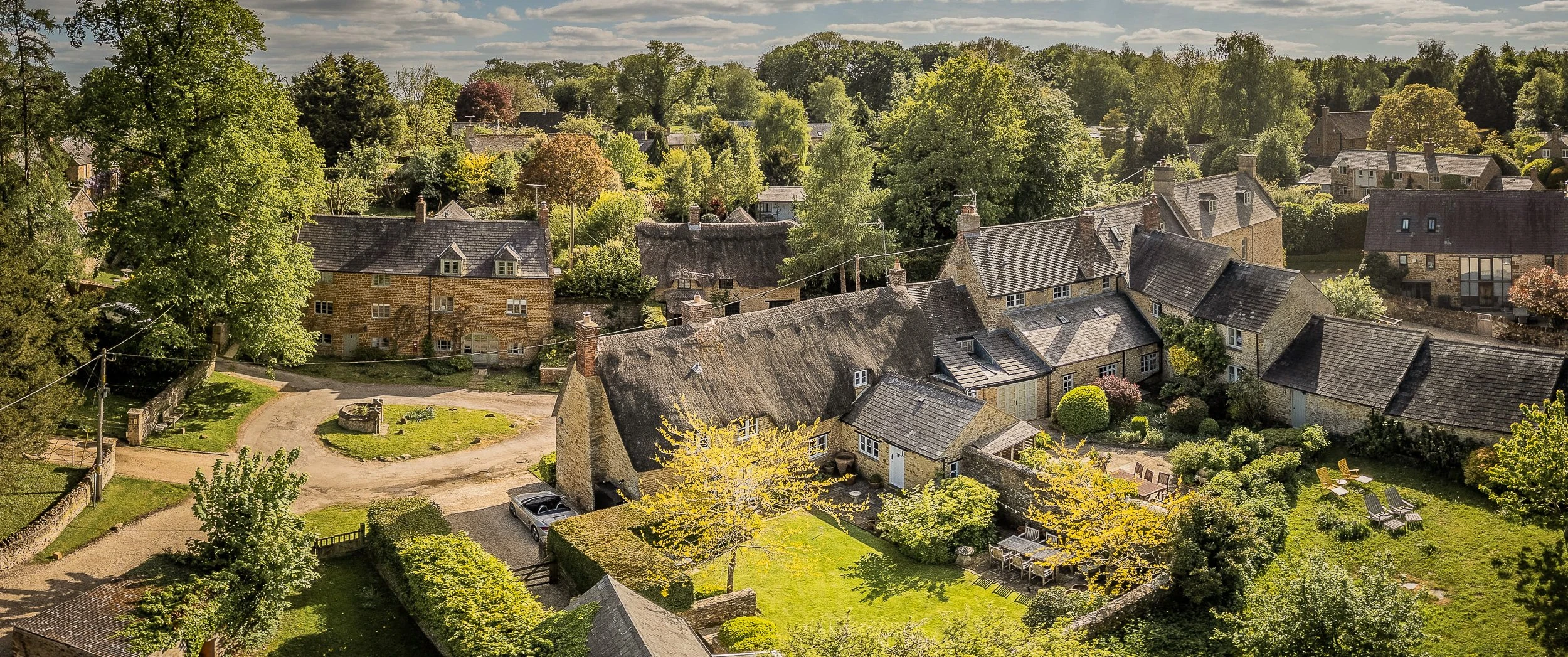
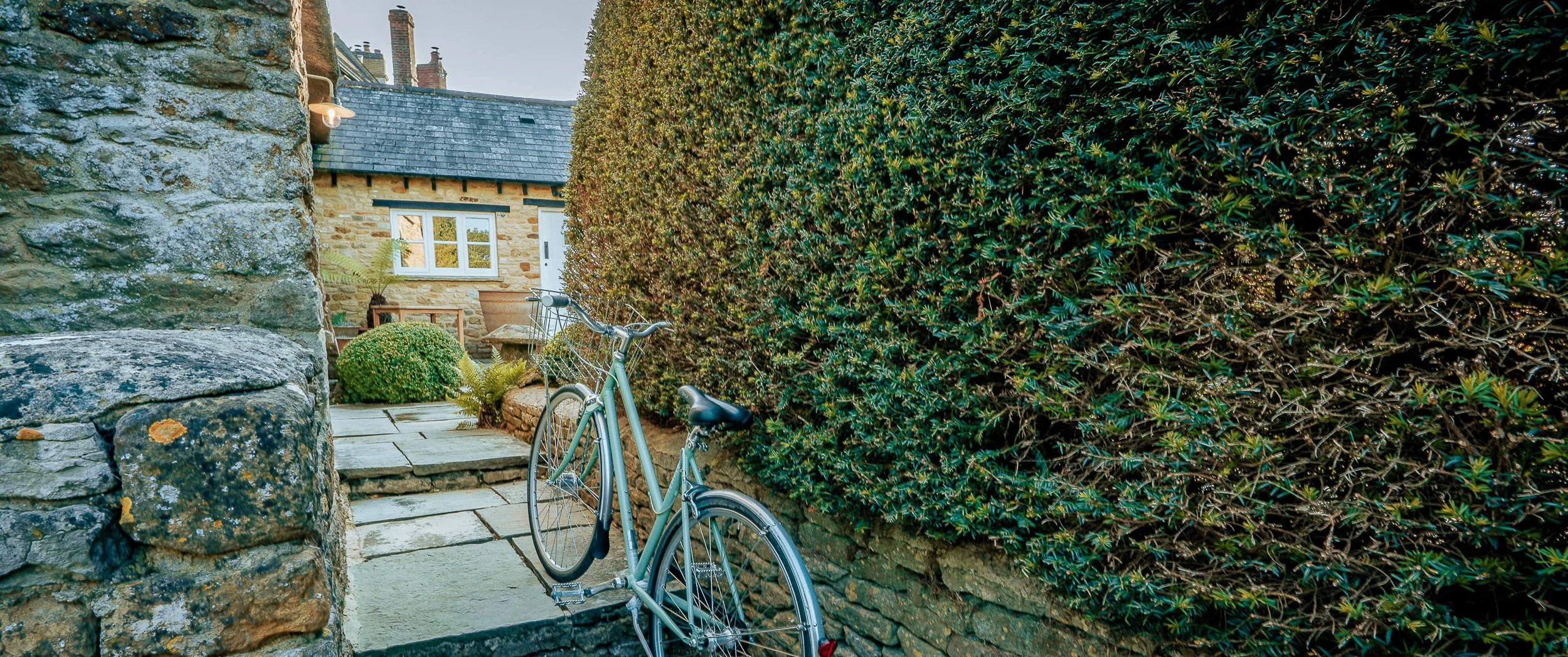
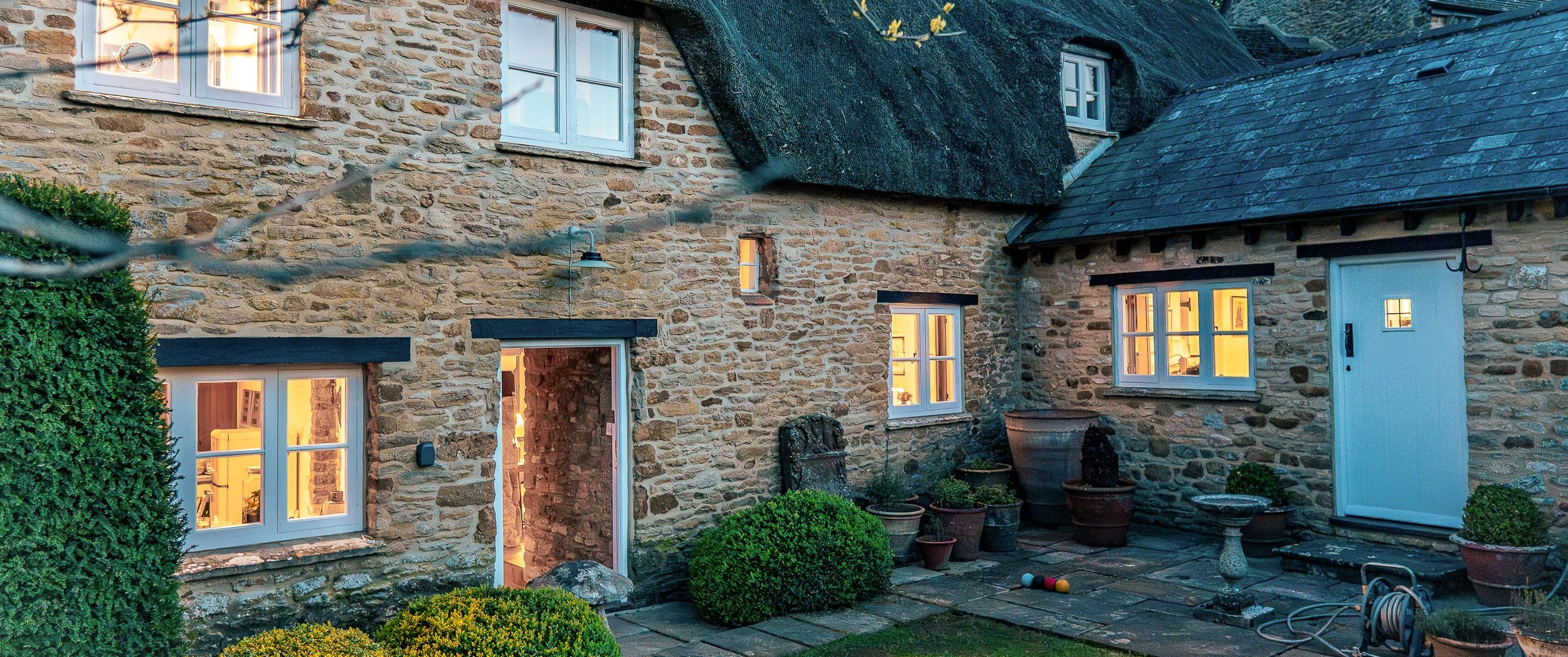
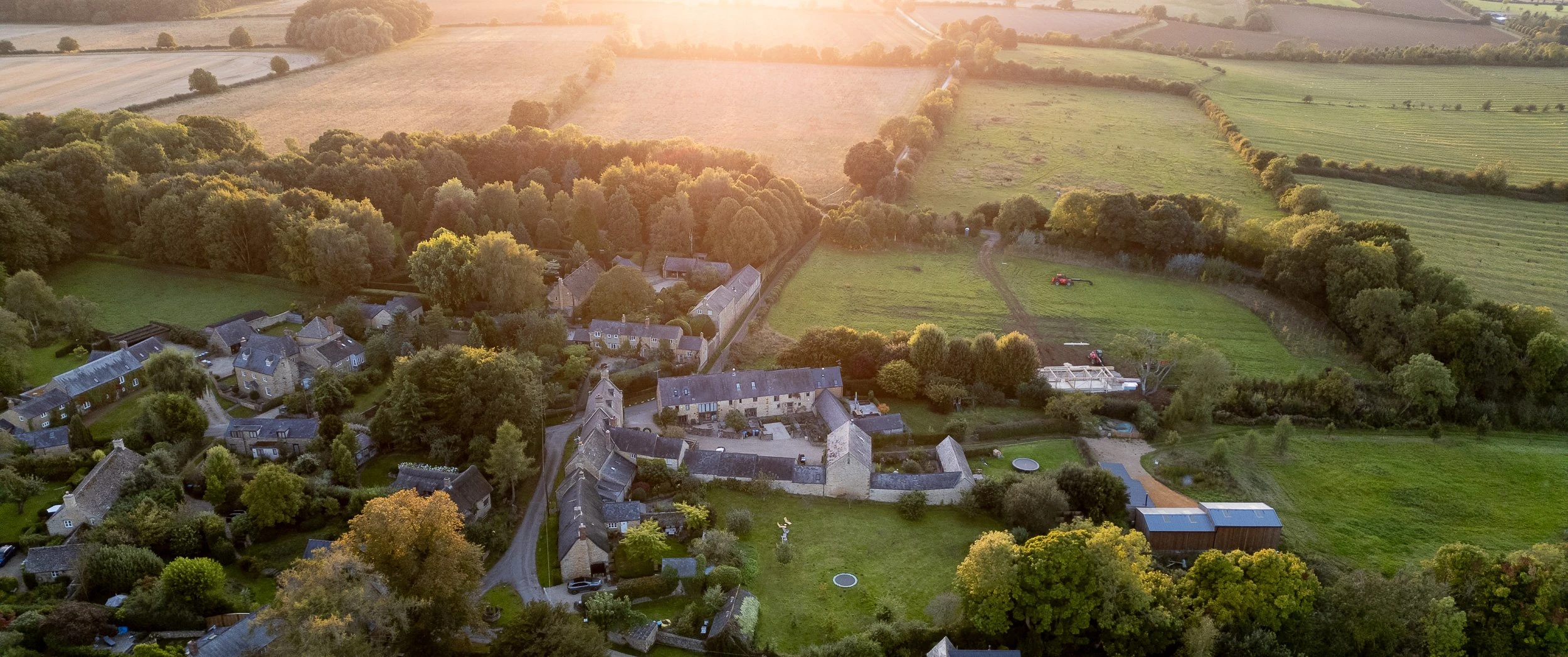
We unlock the door to Well Cottage with the hush that precedes a favourite chapter. This Grade II listed cottage in the tiny hamlet of Ledwell, honey‑coloured and low under the eaves, is as close to the paradigm of rural English life as you can imagine. From the outset we promised to work with the grain of the building — to add comfort, certainly, but never at the expense of its voice.
A quiet edit, never a straightened line
We began by listening. Days were spent tracing light as it moved across the limestone plaster, measuring its endearing wonkiness without once considering the straightening of a line. The prescription was gentle: breathable mineral paints to refresh the walls; lime‑friendly fixings; services threaded through existing voids rather than chased into the stone. No plastic skins, no heroic interventions, just a quiet edit that lets the house go on being itself.
Scribed to the softly wavering plaster
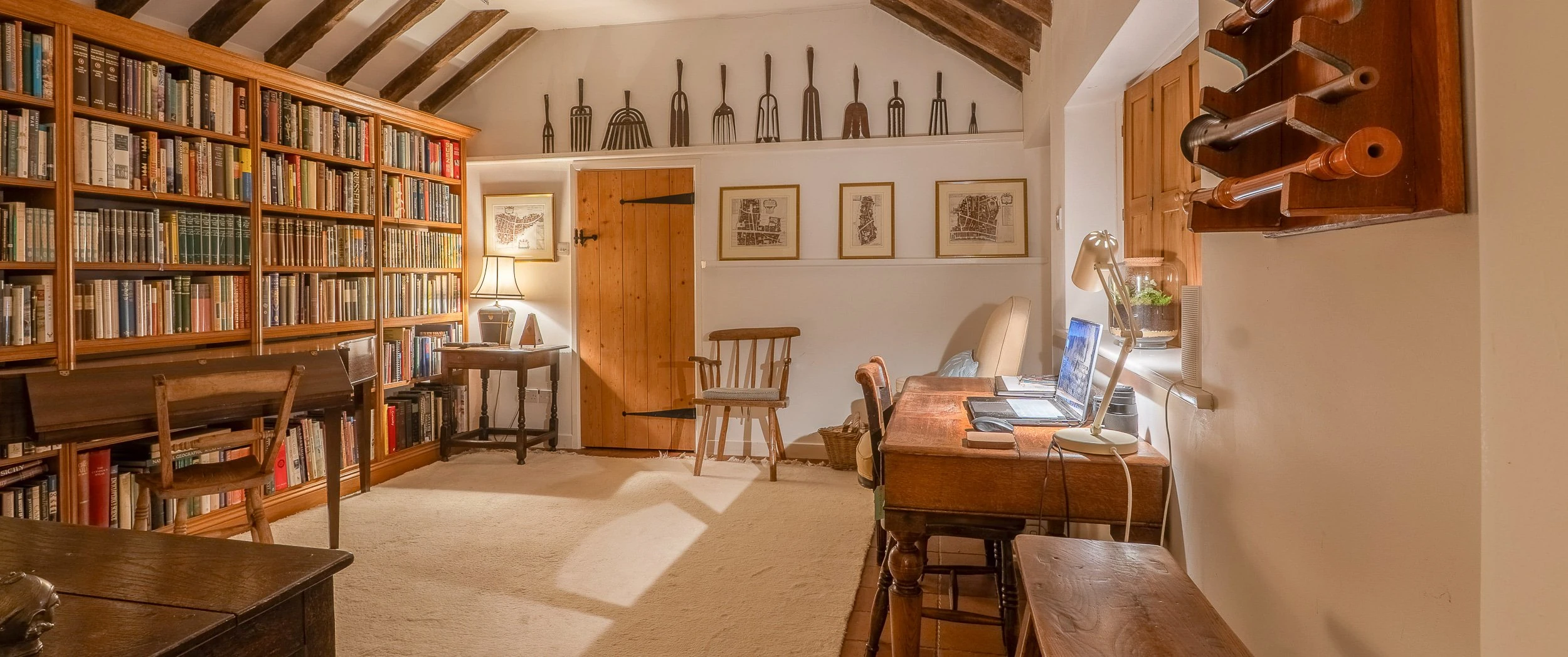
With the fabric respected, our attention turned to the pieces that would live closest to hand. We kept the making local — craftsmen who understand how oak settles through the seasons and how a Cotswold wall leans just so. The bookshelves were planned like a long sentence: calm, legible, and scribed to the softly wavering plaster so small shadow lines could celebrate the cottage’s geometry. Edges are hand‑planed and warm to the touch; joints are pegged in the old way, the sort of detail you feel before you notice.
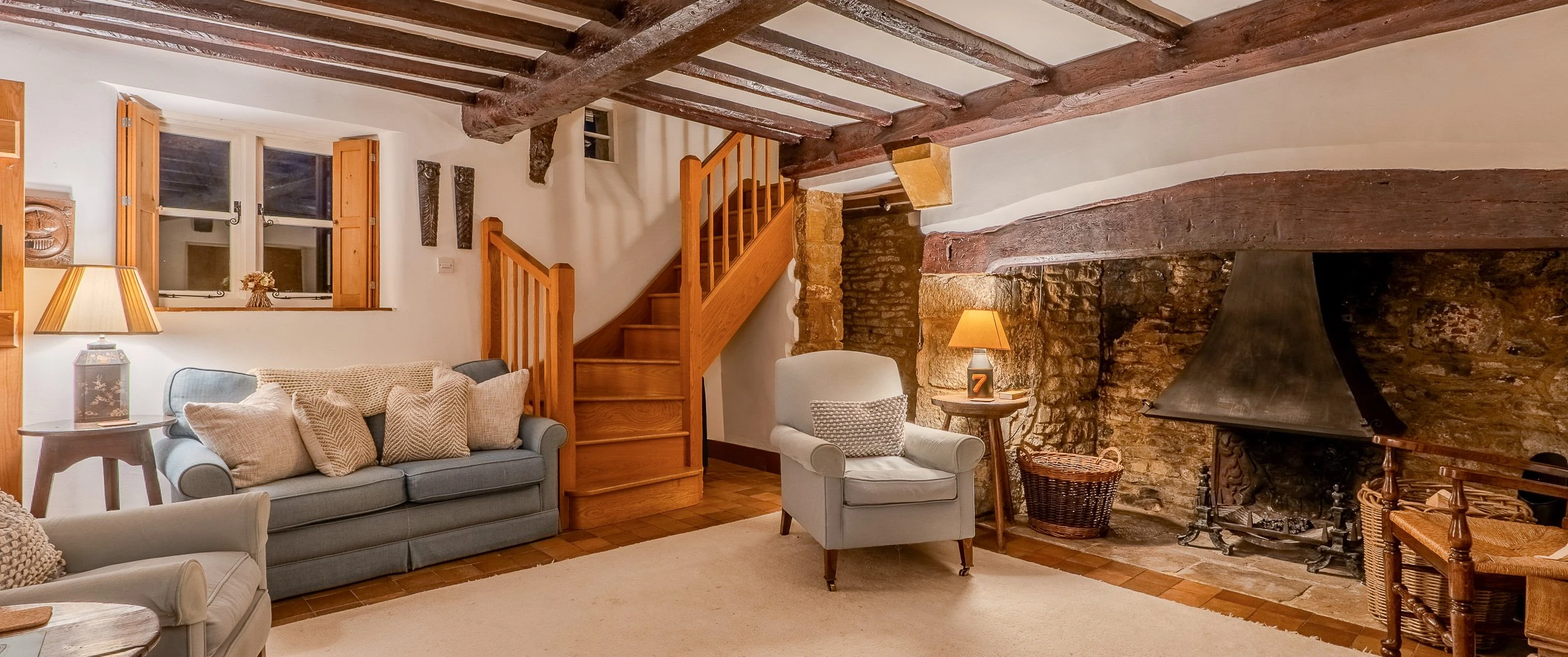
The staircase was shaped as a piece of furniture rather than a piece of engineering, its housed treads and square balusters set beneath a handrail that sits comfortably in the palm. Beneath the pitch we tucked book storage and a neat cupboard for boots and baskets — the practical poetry of a working country house.
Generous without swagger
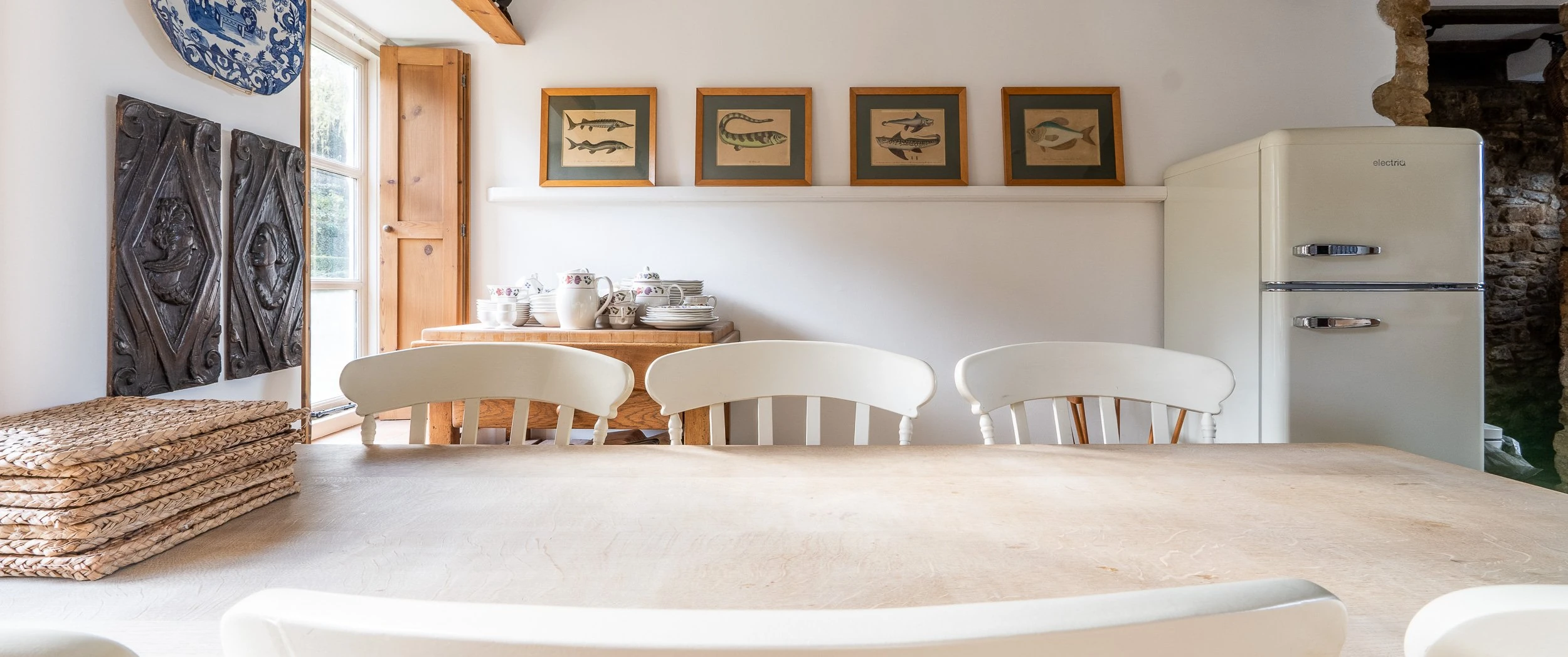
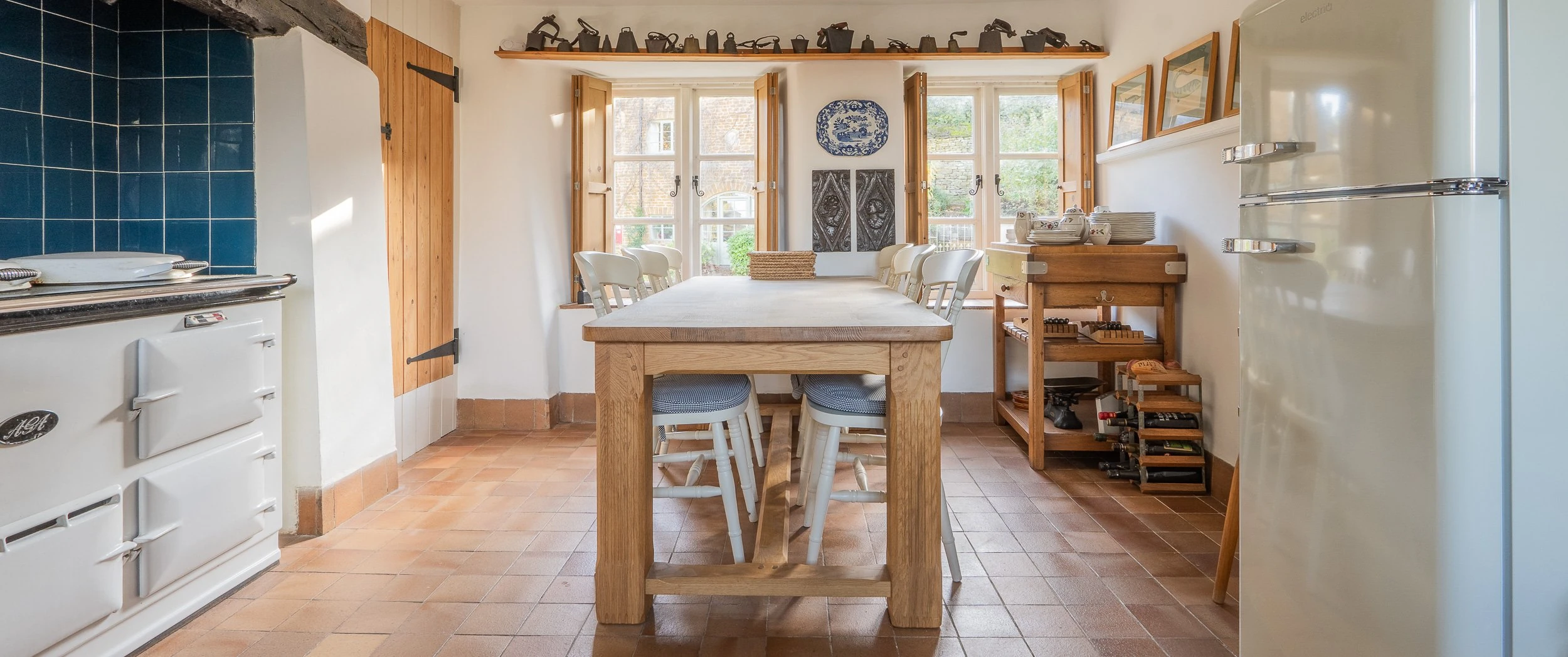
At the centre of family life sits a dining table in American white oak, generous without swagger. Breadboard ends keep the top true; through‑tenons are wedged tight, a small nod to vernacular craft that rewards a second glance. Every arris is eased so sleeves glide and elbows rest, the whole finished in hard‑wax oil that will take on a mellow sheen with years of suppers, maps, pencils and candlelight.
Counterpoints to stone and timber
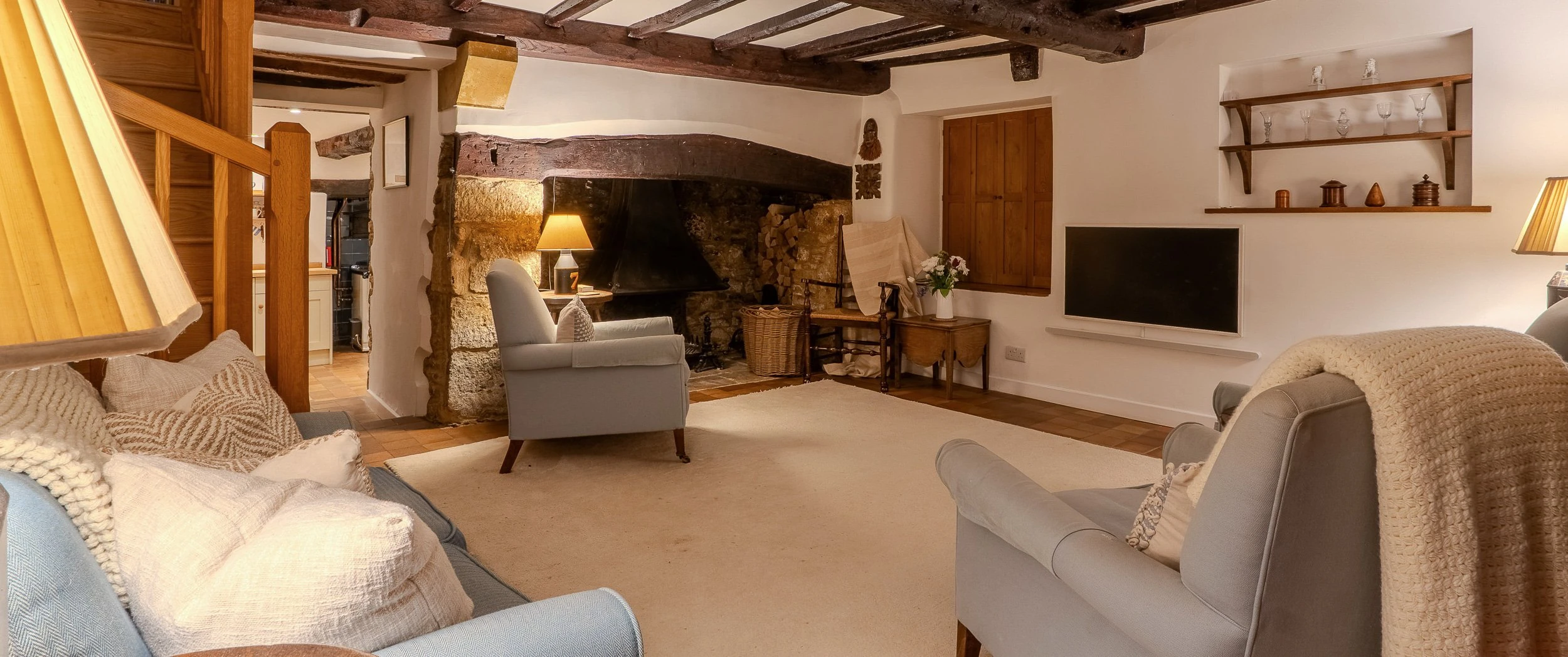
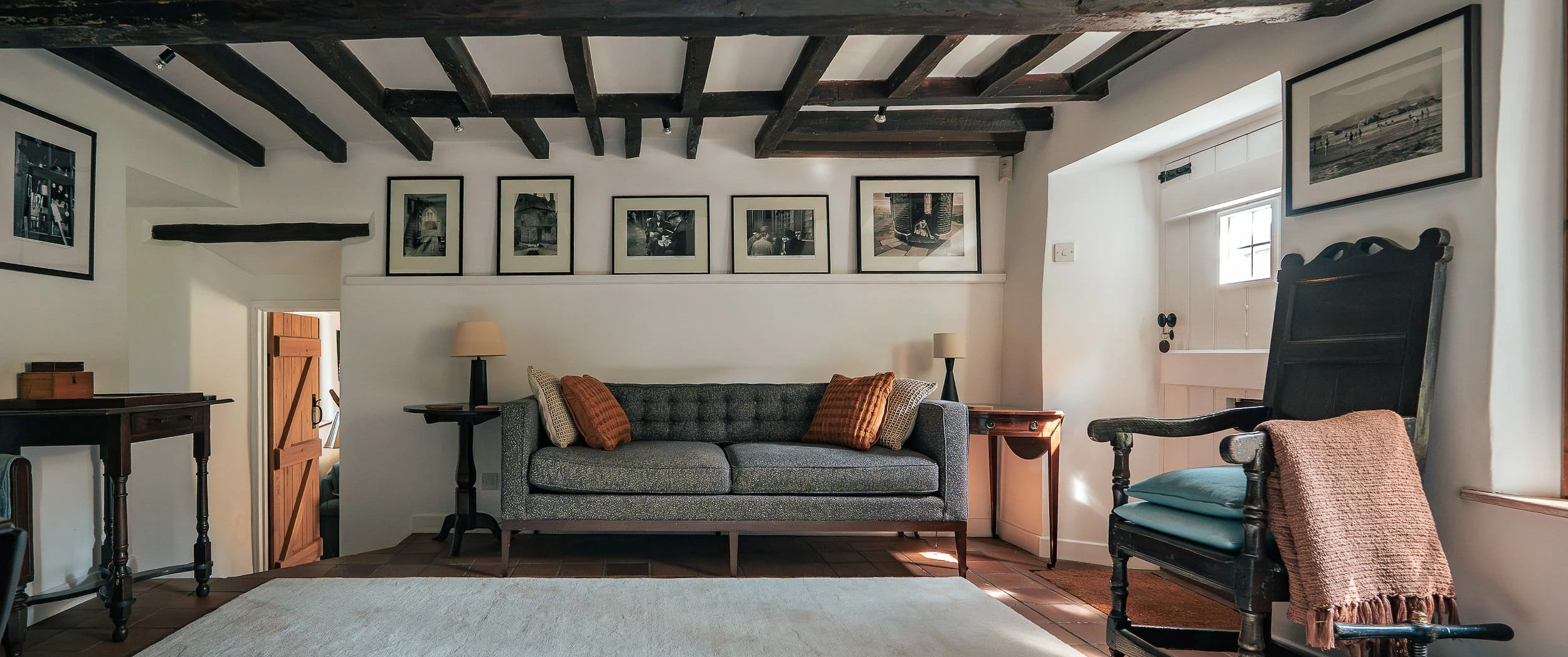
Stone and timber can feel wonderfully honest, but they need soft counterpoints. In the snug we set a low‑back sofa scaled to the beam line, upholstered in a natural linen‑cotton that looks handsome in daylight and richer by the fire. In the sitting room two generous lounge chairs face the inglenook, their turned legs and saddle arms recalling country pieces without slipping into pastiche.
Fabrics across the house are textured and robust, chosen to wear in rather than out, while window dressings frame the depth of the reveals and allow the walls’ gentle undulation to remain legible. Underfoot, layered natural fibres temper the acoustics and warmth without smothering old flags and boards.
Patina that reads like memory
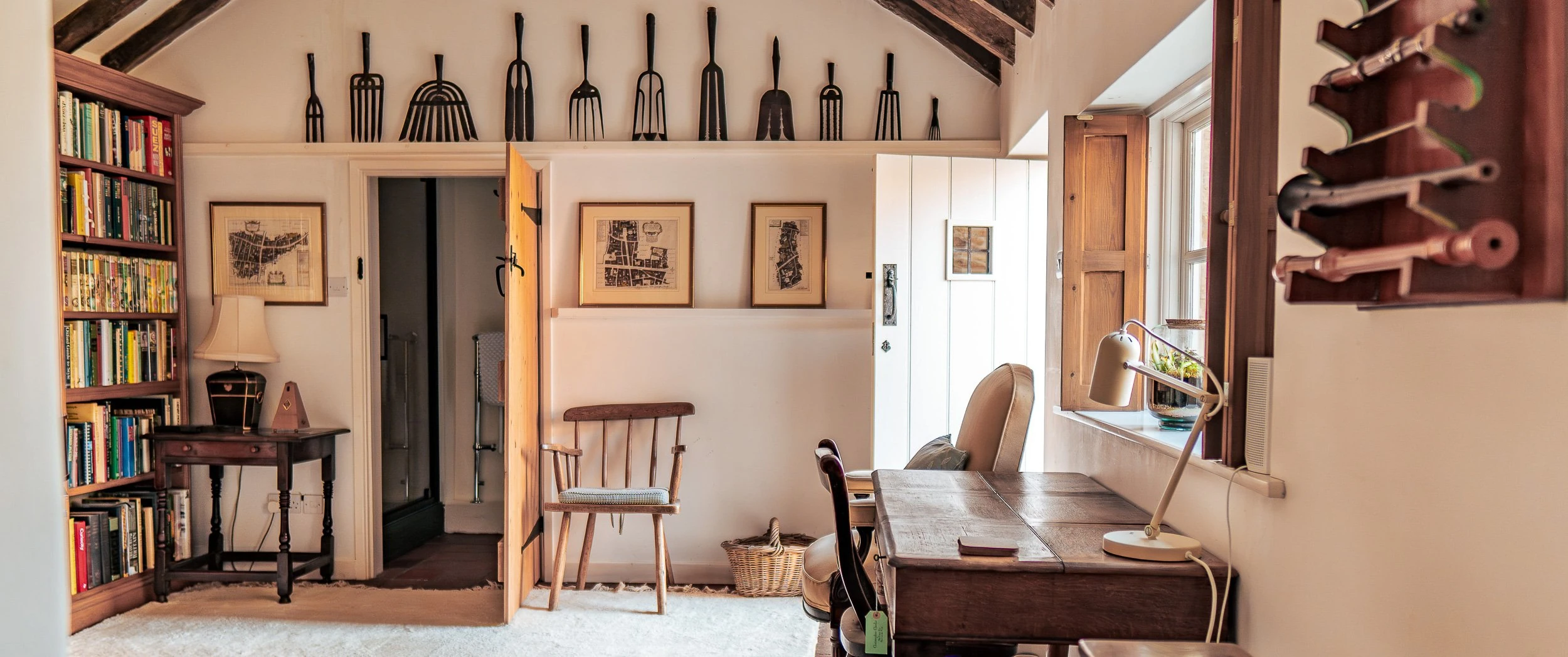
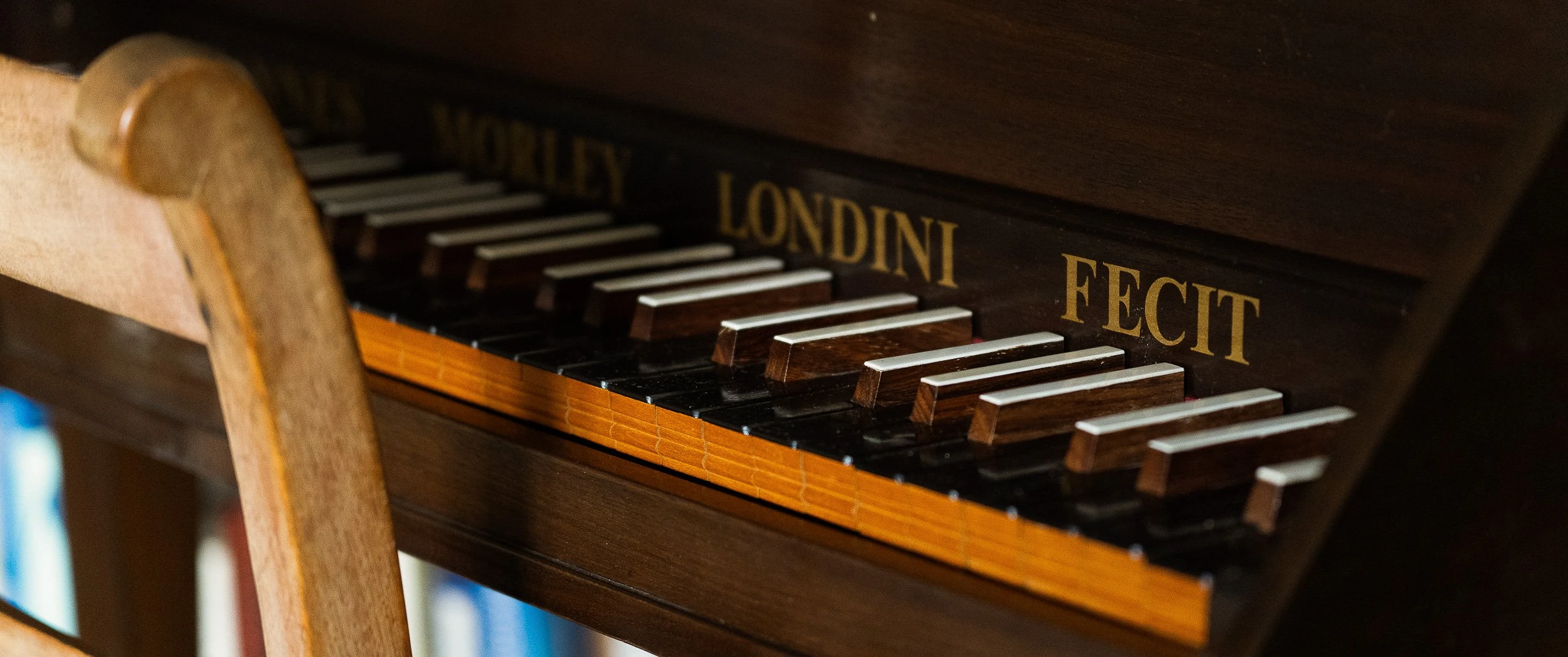
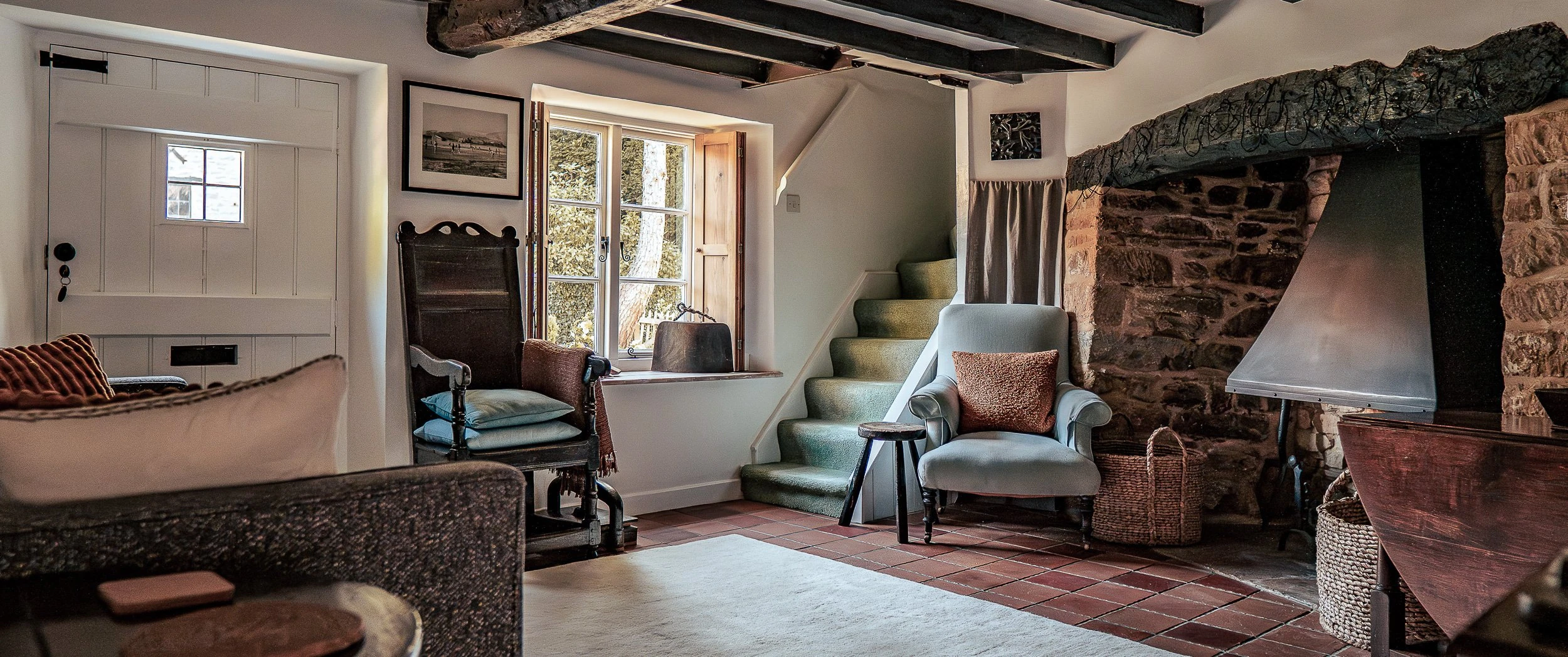
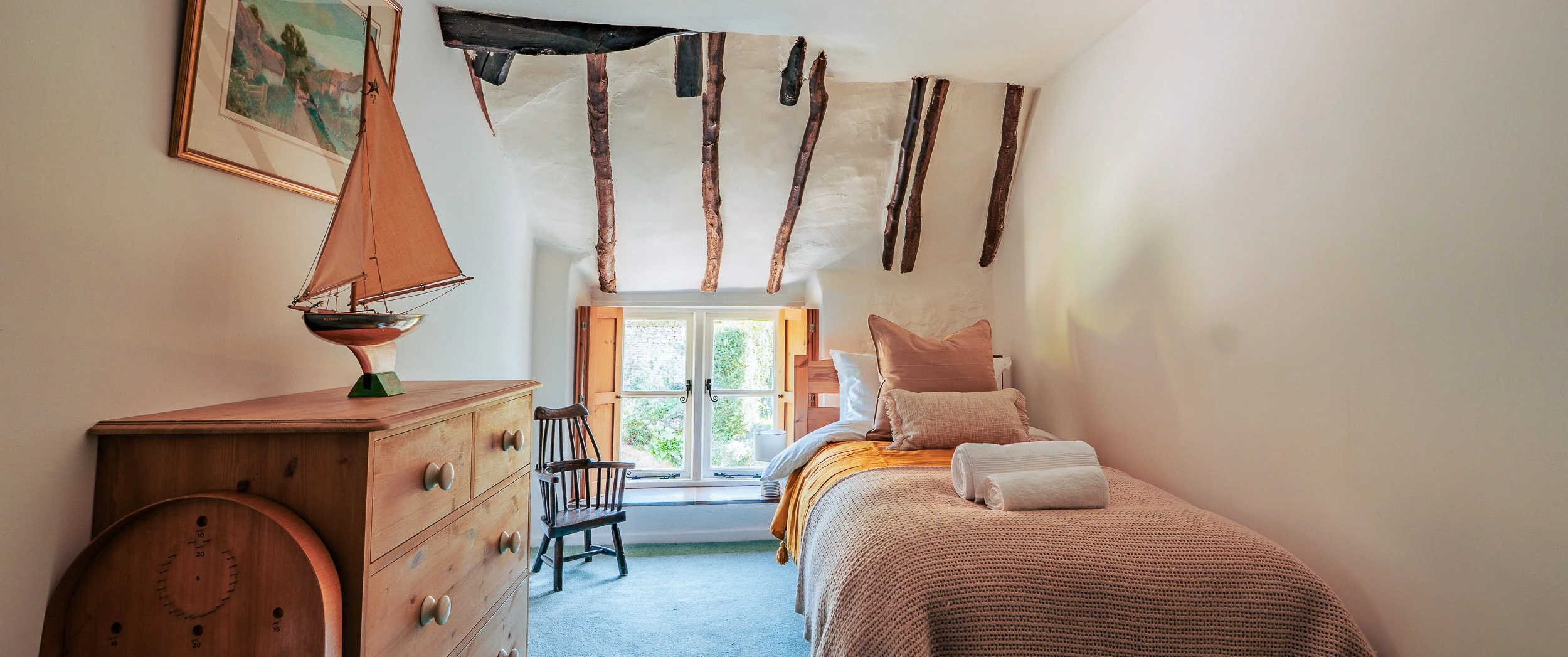
Antique furniture anchors the rooms with a sense of continuity — pieces gathered slowly rather than bought in a hurry. A Georgian chest with the gentlest bow to its front, a pair of well‑mannered Windsor chairs, a writing table with ink‑softened corners: each has been chosen for honesty of line and the kind of patina that reads like memory. Nothing is precious; everything is useful.
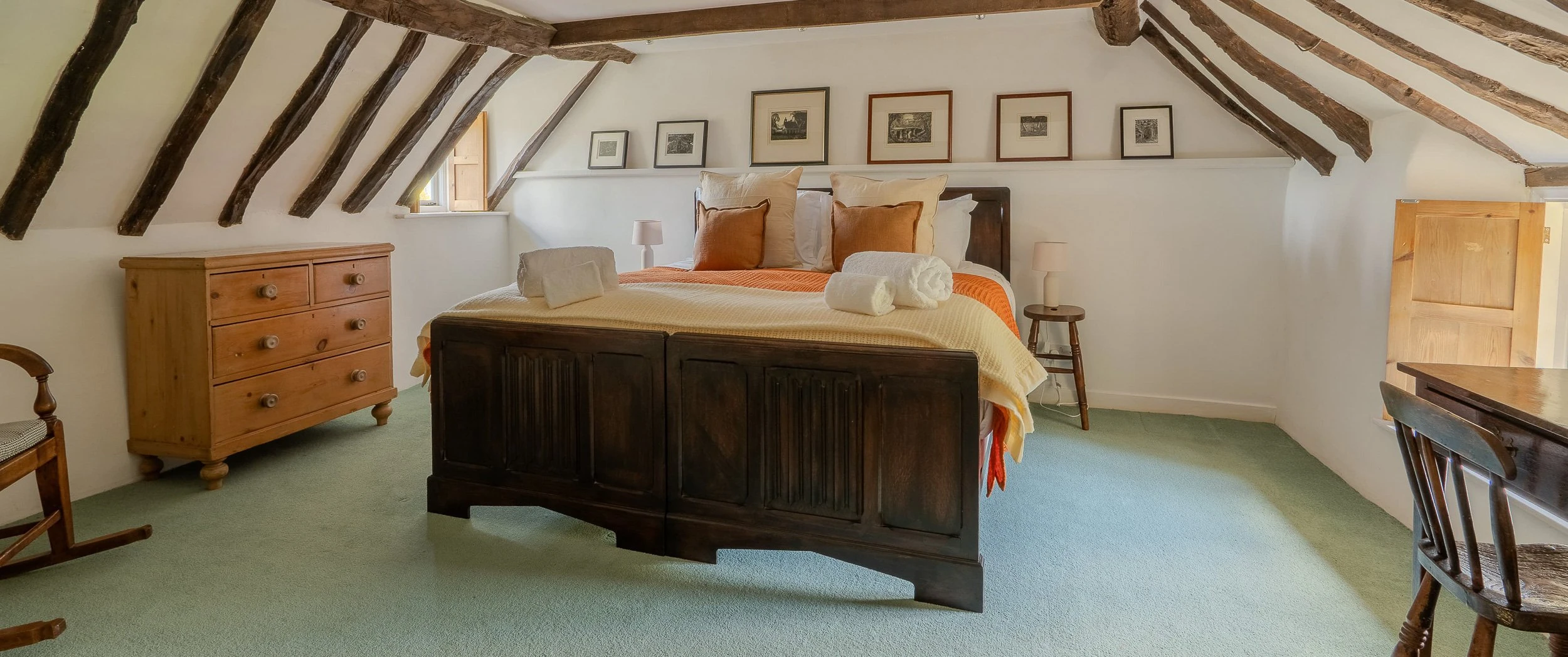
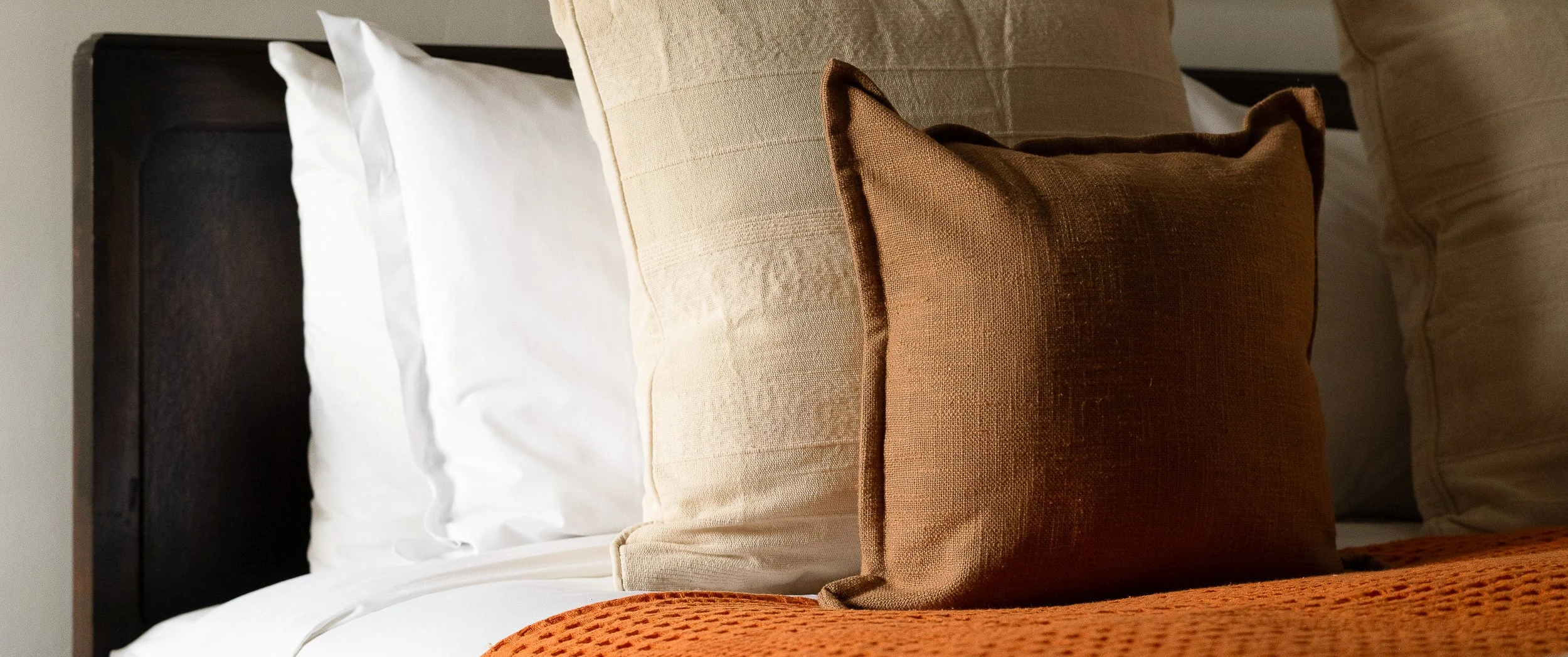
In the snug, the mood turns playful. The room doubles as a gaming den when needed — a cocoon for rainy afternoons and late‑night tournaments — yet it keeps its composure thanks to the weight of the old bookcase and a battered trunk that hides controllers and cables. Bedroom Four takes a grander tone: an antique king‑size bed, stately without pomposity, dressed in crisp linen and washed wool, gives the space a faintly regal air.
Quietly done, without fanfare
Modern comforts arrive without fanfare. The central heating is now controlled by Wi‑Fi, quietly efficient and easy to set from town or train. A faster, mesh‑based internet hums away discreetly, tested room by room to reach through thick stone so that working mornings or a film by the fire are as effortless as they are in the city. The plaster has been repainted in mineral, breathable finishes, keeping the building hygroscopic and healthy.
Entertainment tucks neatly into this discretion. A smart TV is paired with a sound bar and a compact sub‑woofer, all cable‑managed and colour‑matched so they recede into the panelling when not in use. Evenings shift easily from board games to cinema, from conversation to music, without the machinery of it all interrupting the room.
The noisy spring of Ledwell
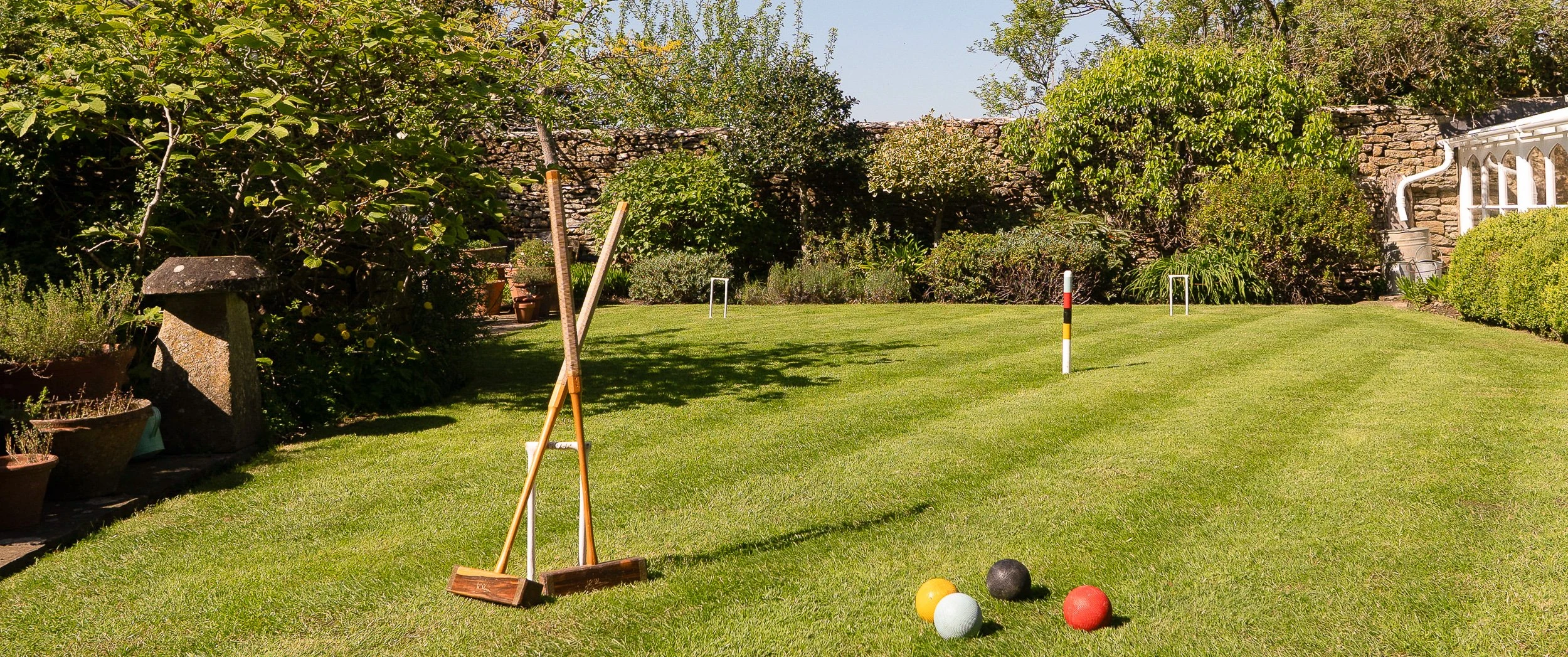
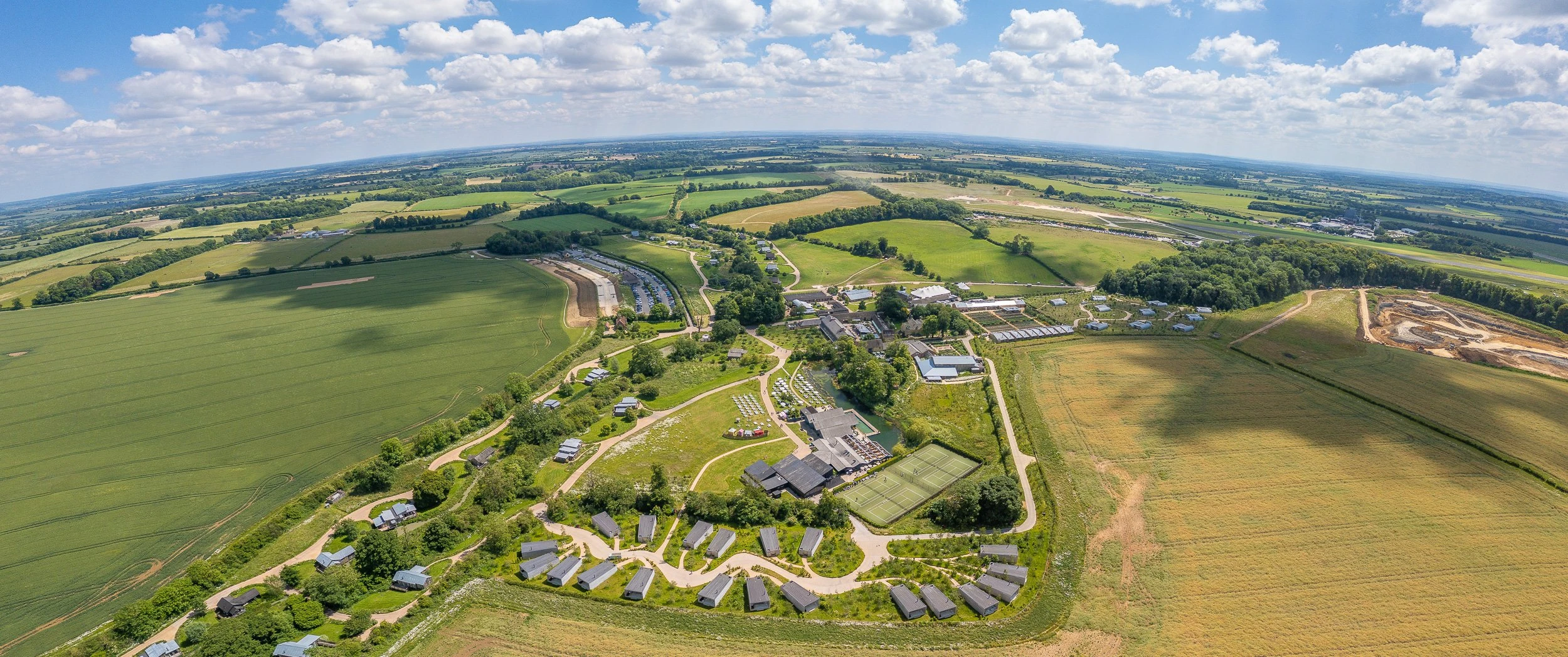
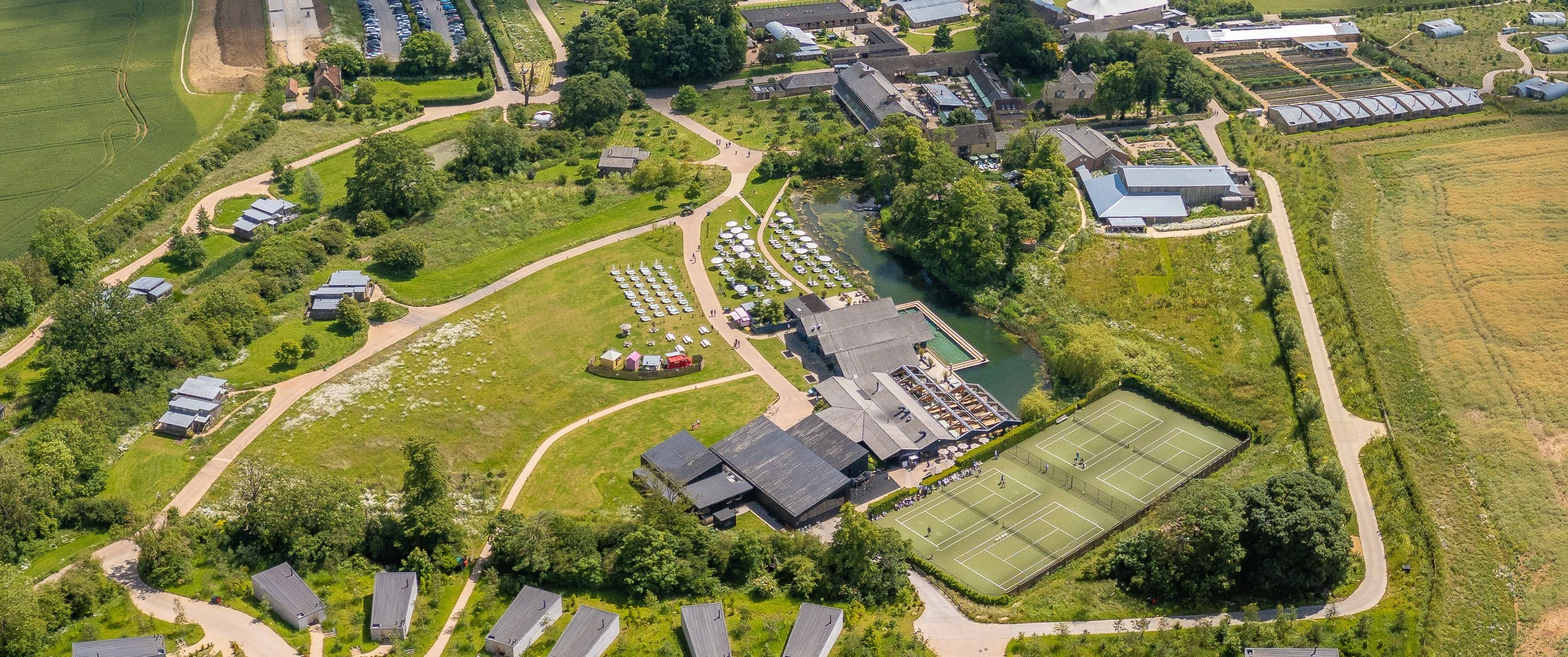
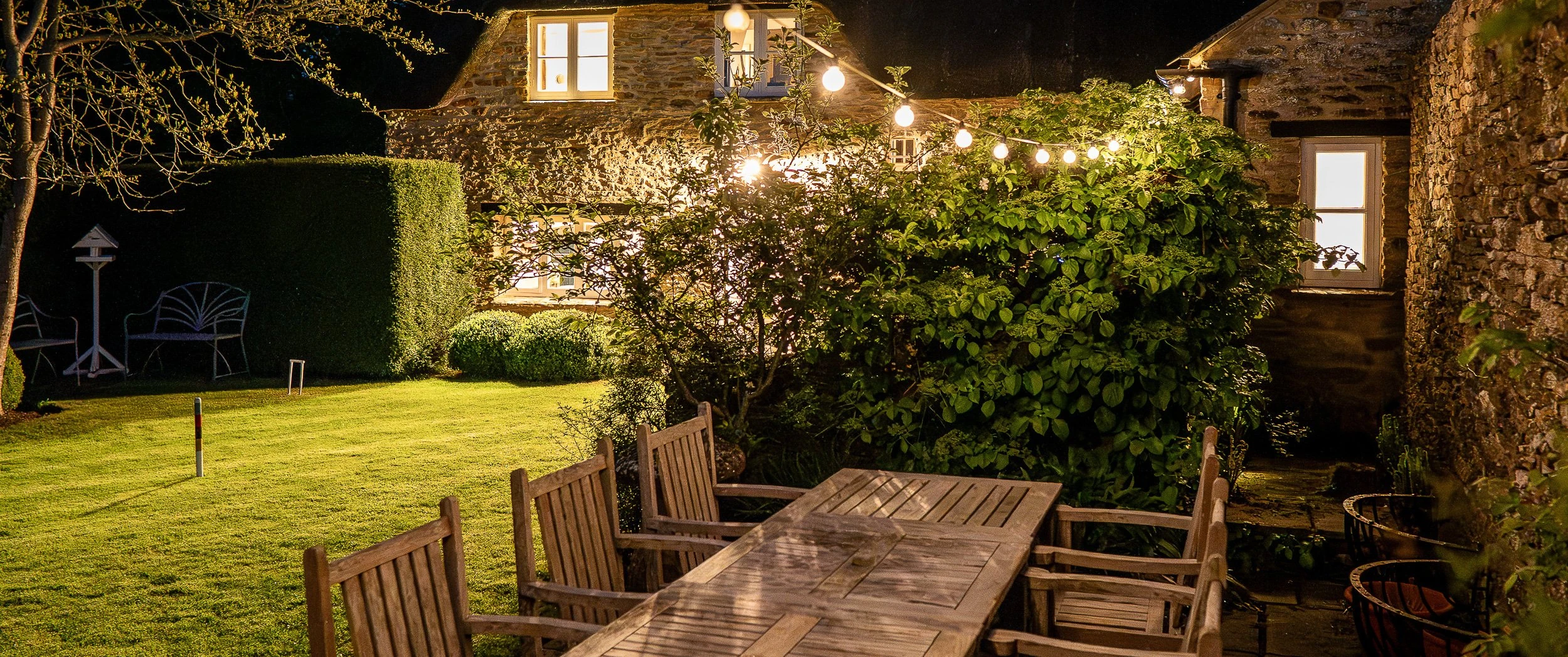
Step outside and the garden reads as an extension of the house. A small greenhouse and herb beds serve the Aga with fresh pickings, the lawn lies level for a game of croquet on late summer evenings, and the terrace gathers family and friends beneath a soft wash of light. It feels secluded yet connected — Great Tew and its lively neighbours are close by — and the gentle buzz brought by Soho Farmhouse has added a new energy to the surrounding landscape: livelier inns, better coffee, more conversation, none of it intruding on the cottage’s hush.
The quiet here belongs to Ledwell, whose name comes from the Old English hlŷde welle, the ‘noisy spring’. The lanes, hedgerows and field‑patterns still carry that memory, and the cottage sits comfortably among them, another note in a long, gentle song.
Sized for conversation, not display
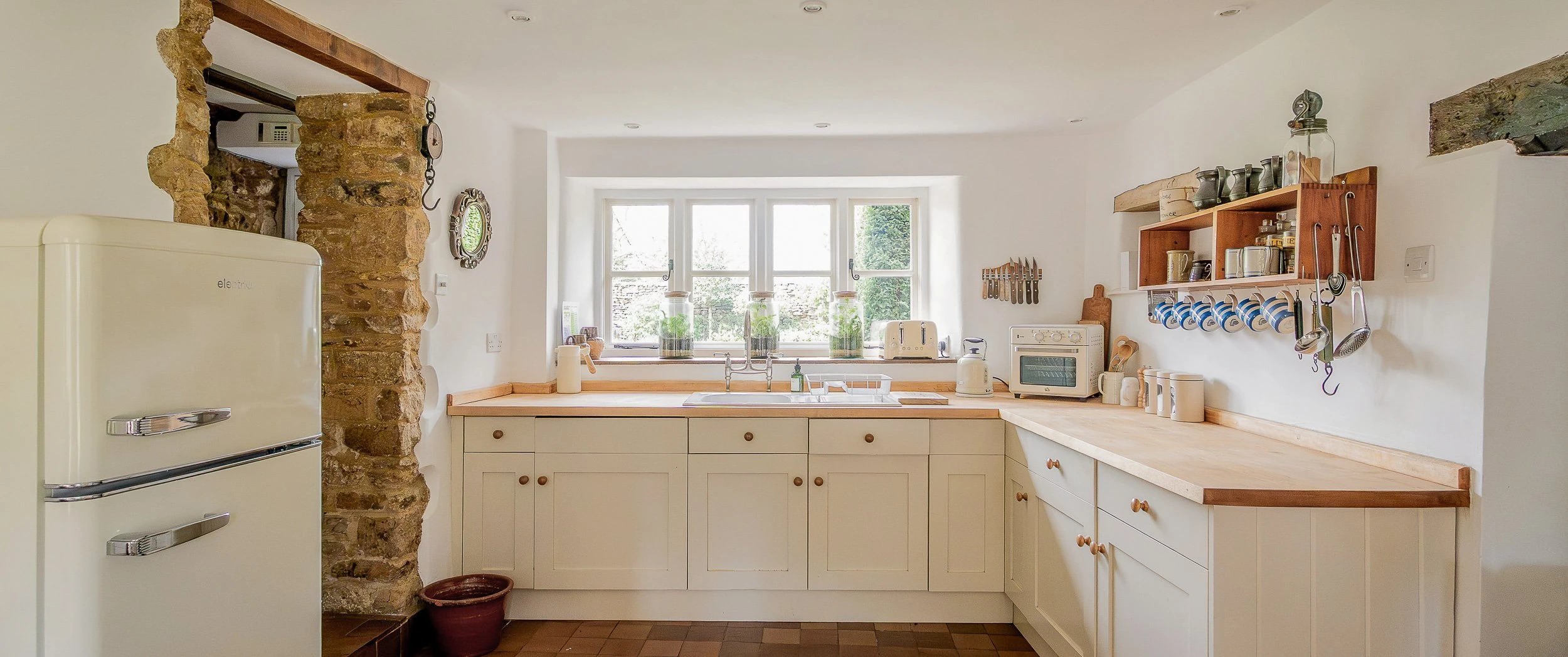
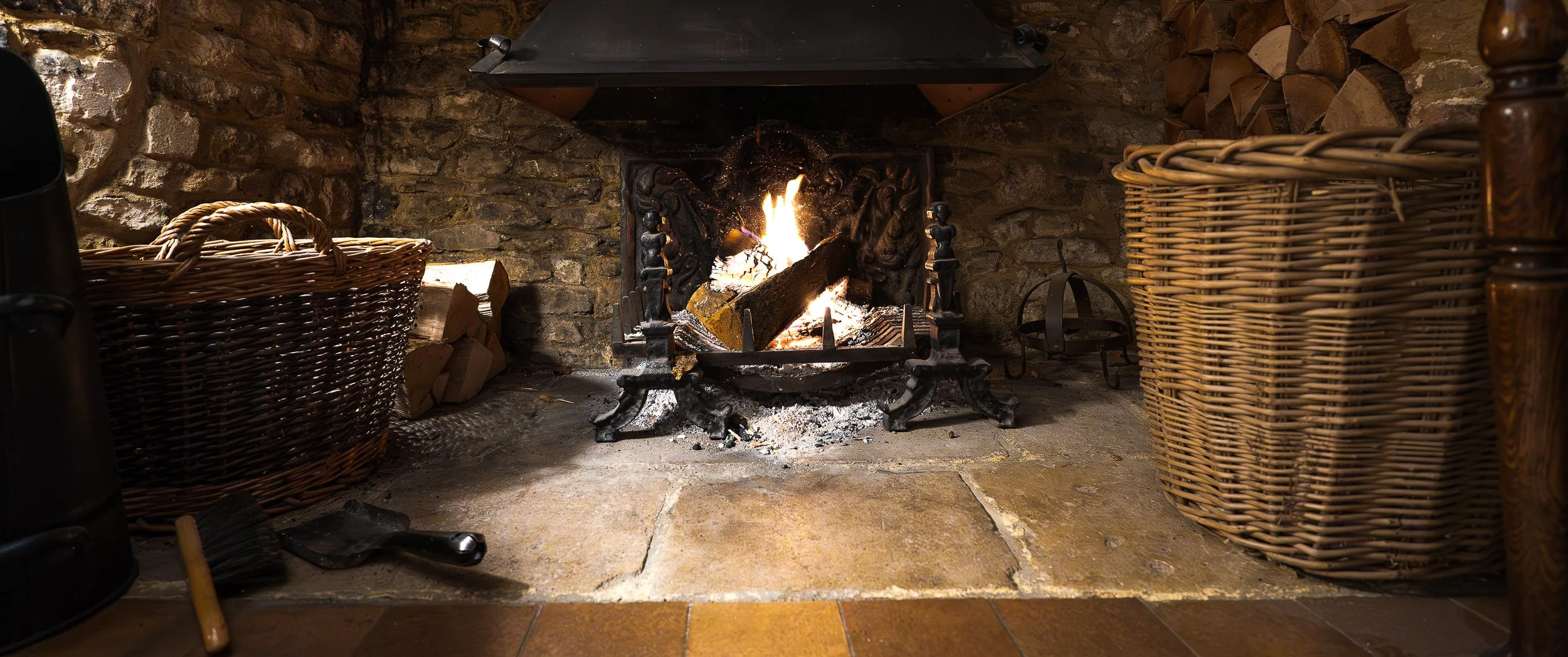
Four bedrooms sleep seven, two inglenook fireplaces anchor the downstairs rooms, and the Aga keeps the kitchen honest. Everything is sized for conversation rather than display; everything is easy to live with. For designers seeking an authentic Cotswolds language — and for anyone craving a deep breath away from city life — the lesson is straightforward: let the old house speak first. Add what it needs, remove what it doesn’t, and make the new work so quietly that it becomes part of the everyday.
Brought gently into focus
Today, Well Cottage feels exactly as a Cotswold home should: modest and generous, storied and comfortable, ready for family weekends and holiday stays alike. We have not dressed it up so much as brought it gently into focus, a place to put down your bag, strike a match, and feel the week loosen its grip.