Bespoke marquetry panels for a Boston waterfront apartment
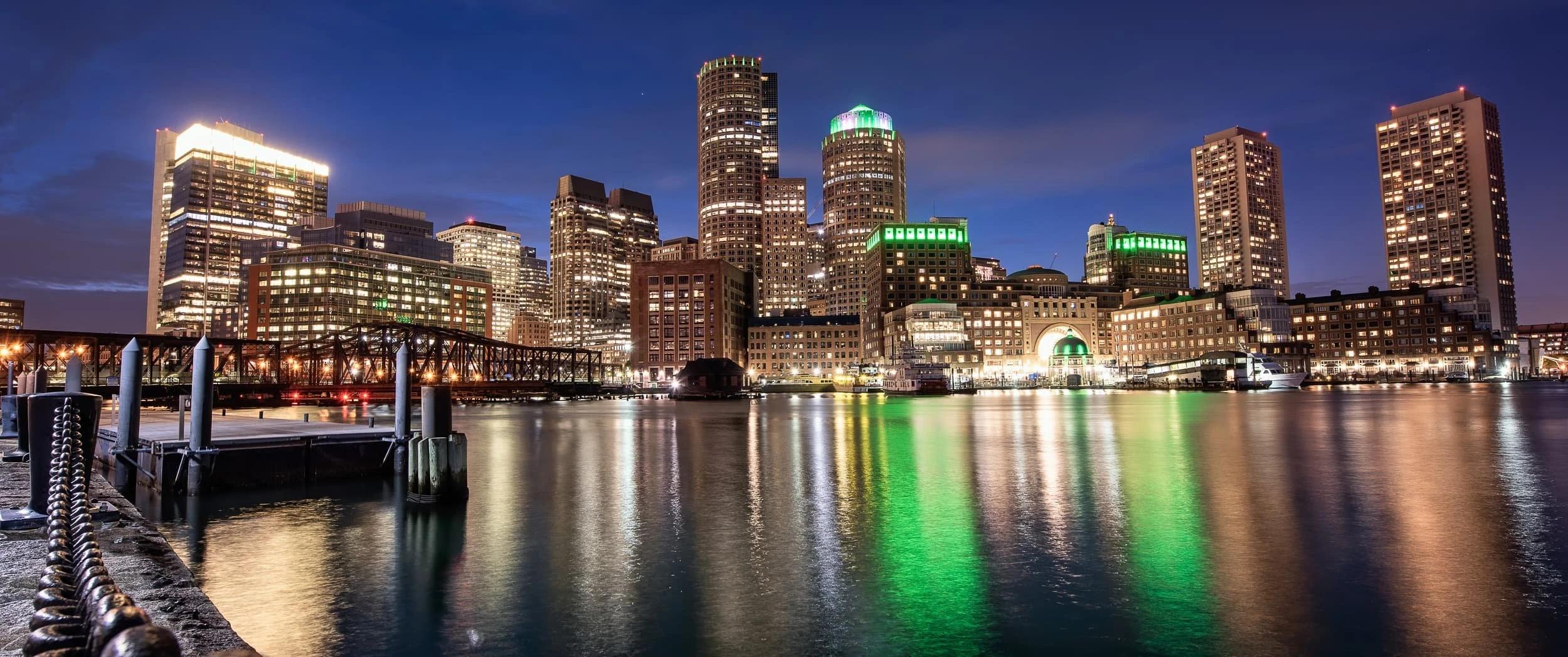
At Rowes Wharf in Boston, we were invited to take part in a very special apartment project alongside New York–based interior designer Anthony Baratta. Known for his bold use of pattern, colour and classical references, Baratta’s interiors feel both grand and deeply personal — and this waterfront home is no exception. Our role was to translate a key element of his vision into reality: a series of bespoke marquetry panels that would sit at the heart of the apartment’s joinery and set the tone for the entire space.
Pattern, presence and a quietly theatrical harbour home
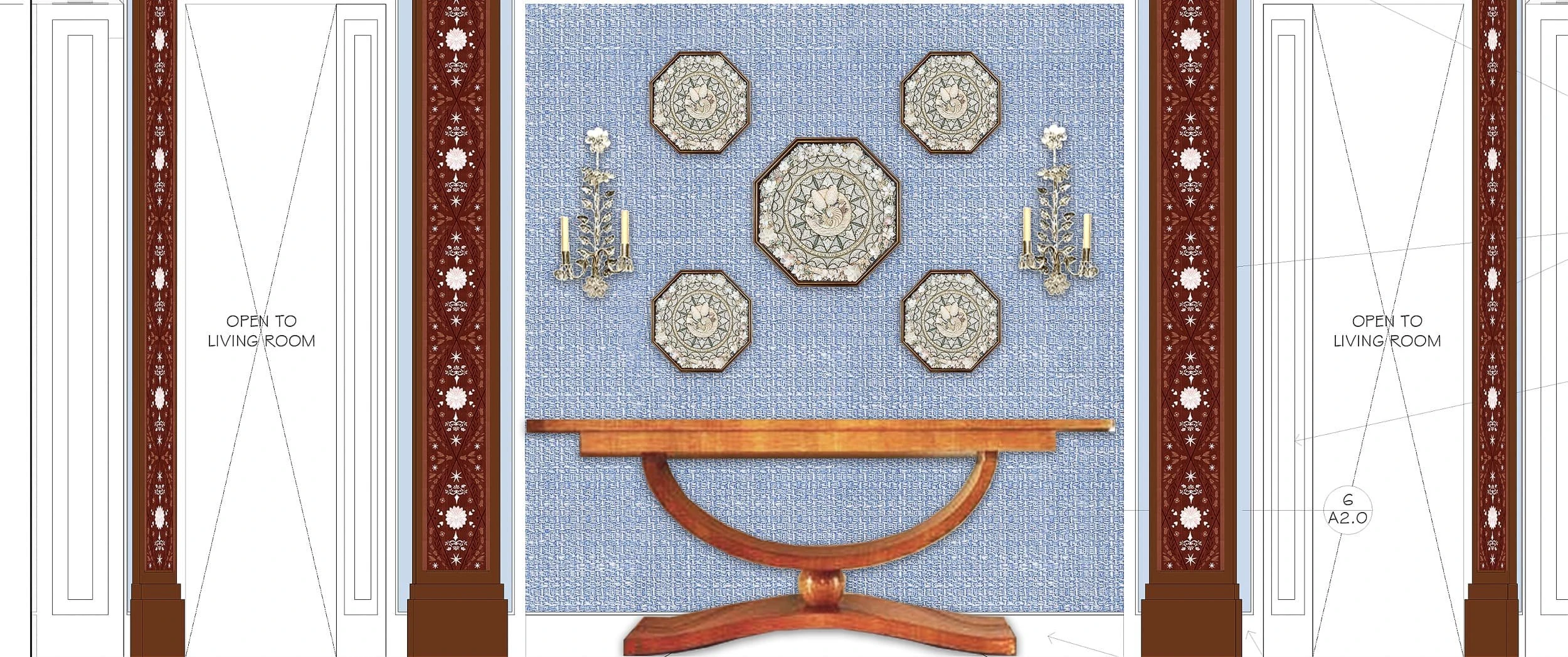
Rowes Wharf is an iconic location, and the apartment needed to feel as though it truly belongs to the harbour — elegant, polished and quietly theatrical. Baratta’s design language leans into this sense of occasion, with strong motifs and a classical structure underpinning the scheme. Our marquetry work was conceived not as simple decoration, but as a series of statement pieces that would anchor the room and give the joinery a distinct, almost jewellery-like quality.
Pommele Sapele, Satinwood and New Zealand mother of pearl
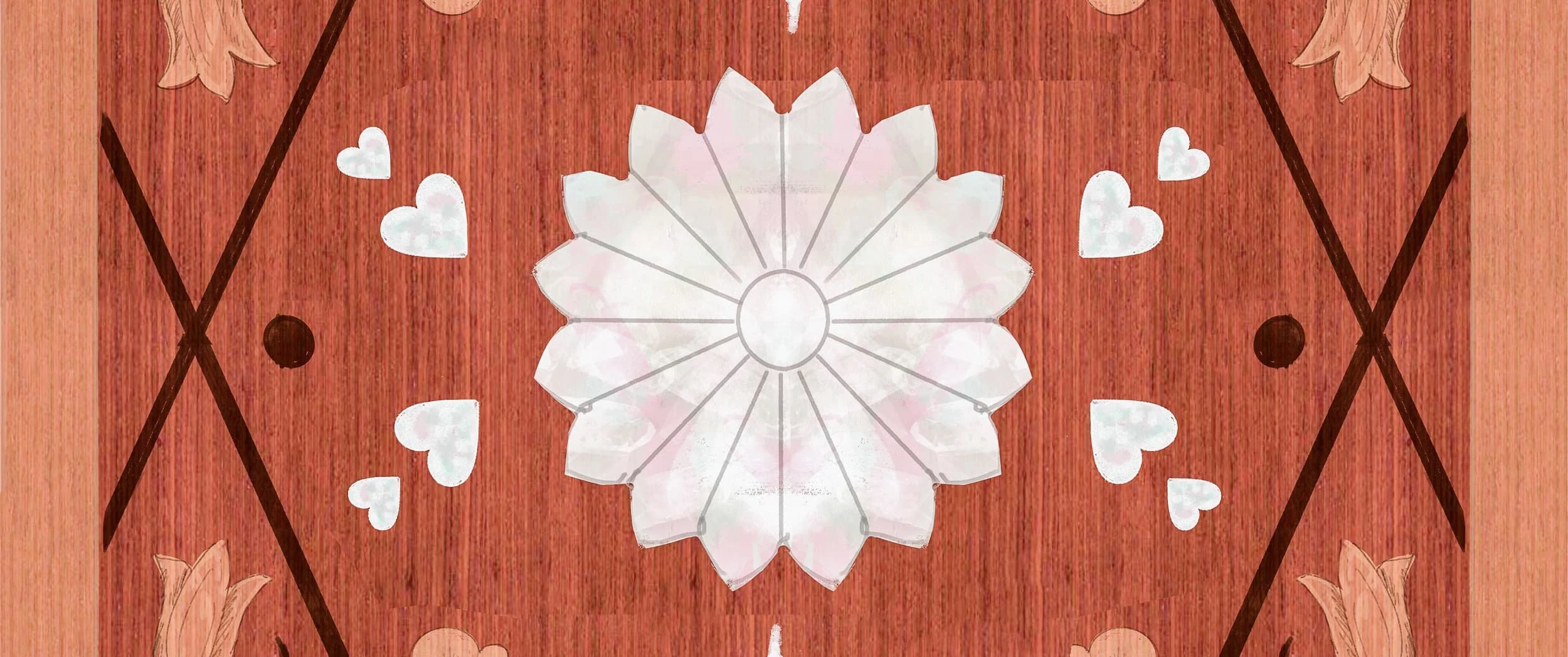
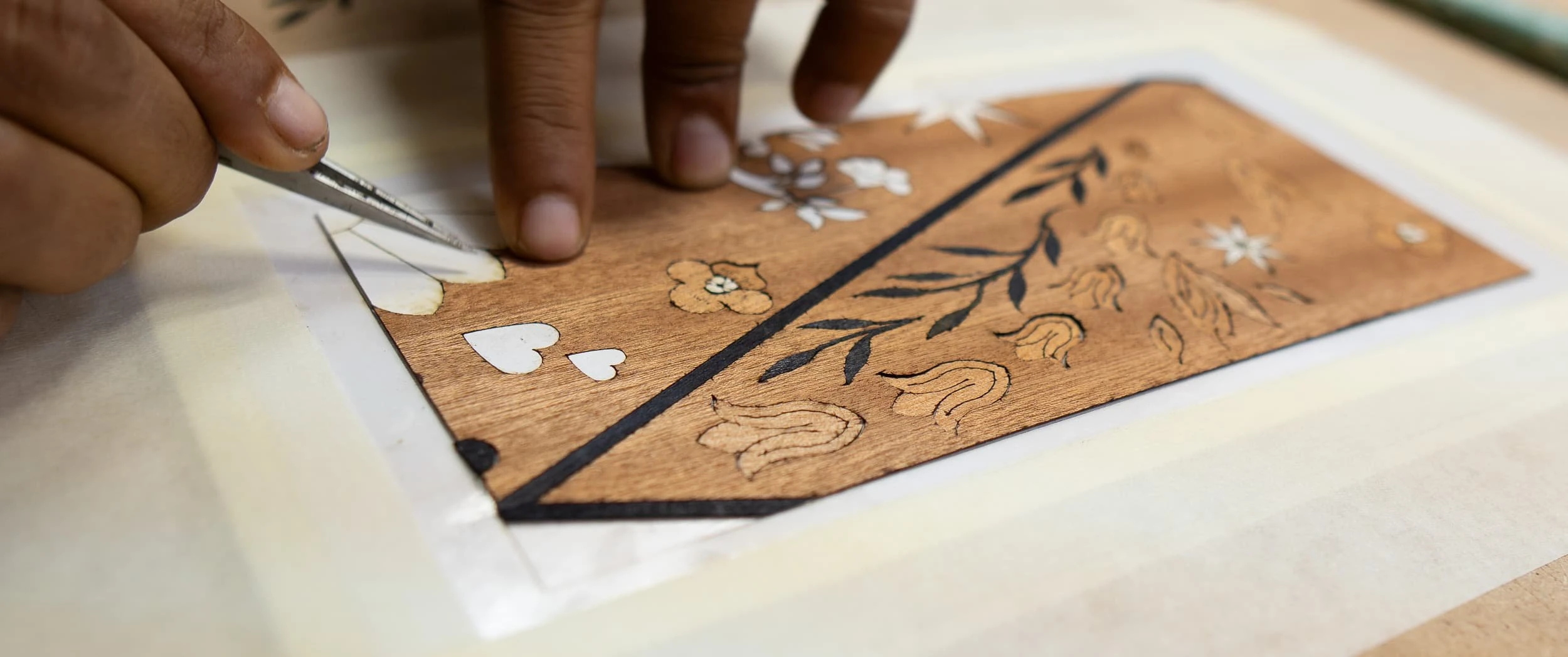
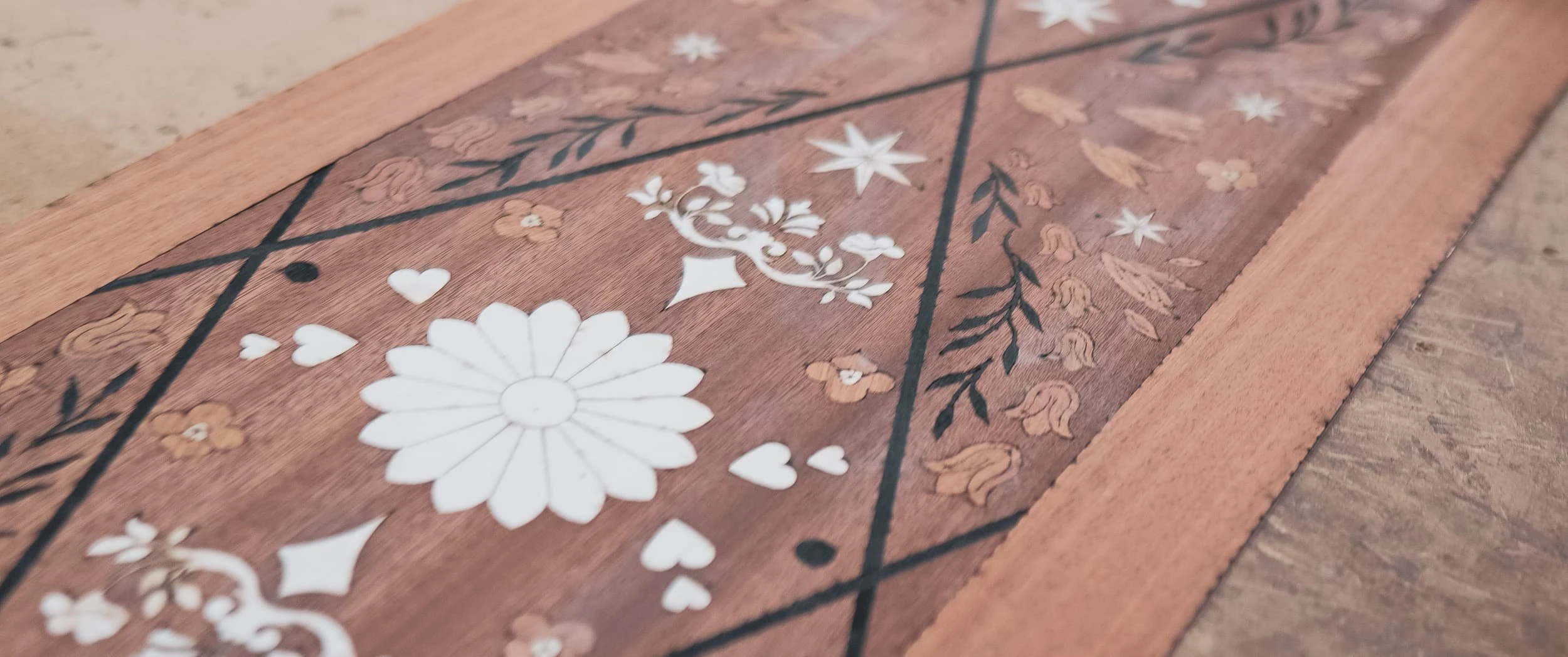
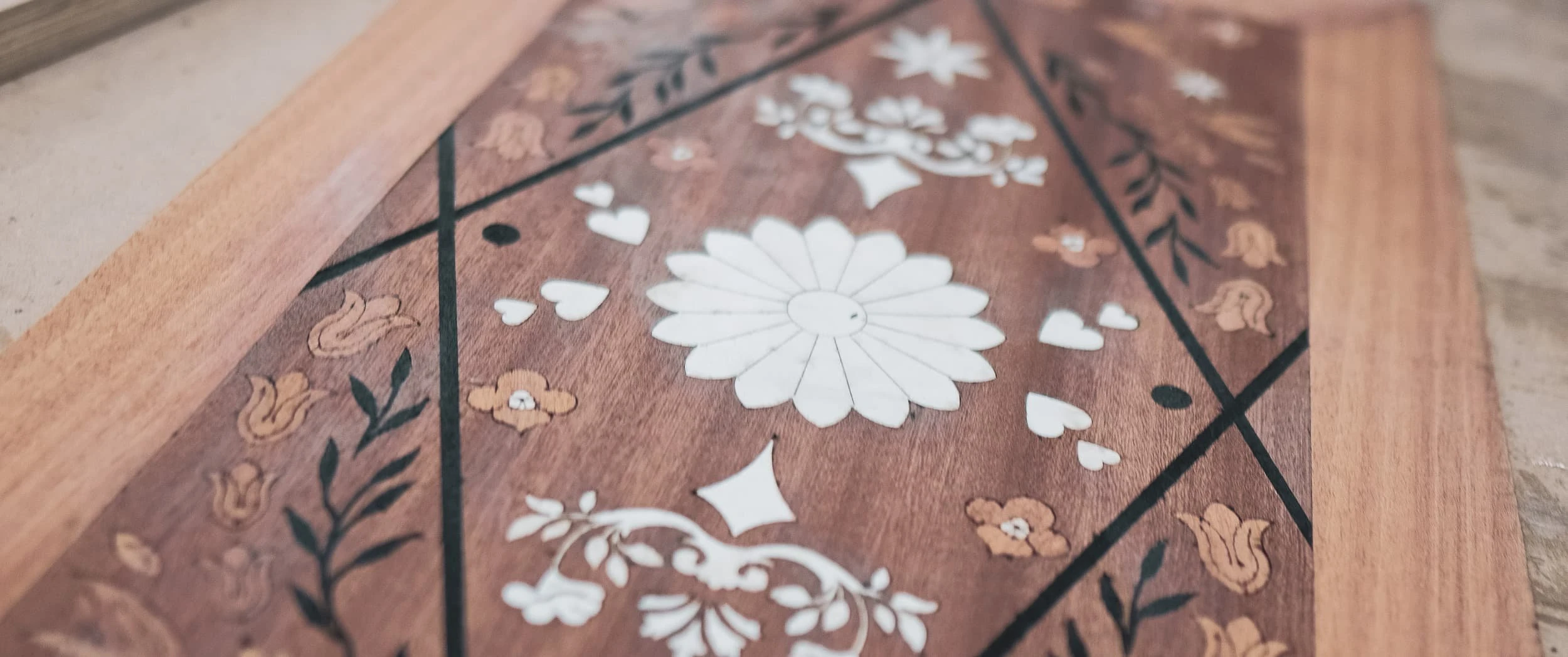
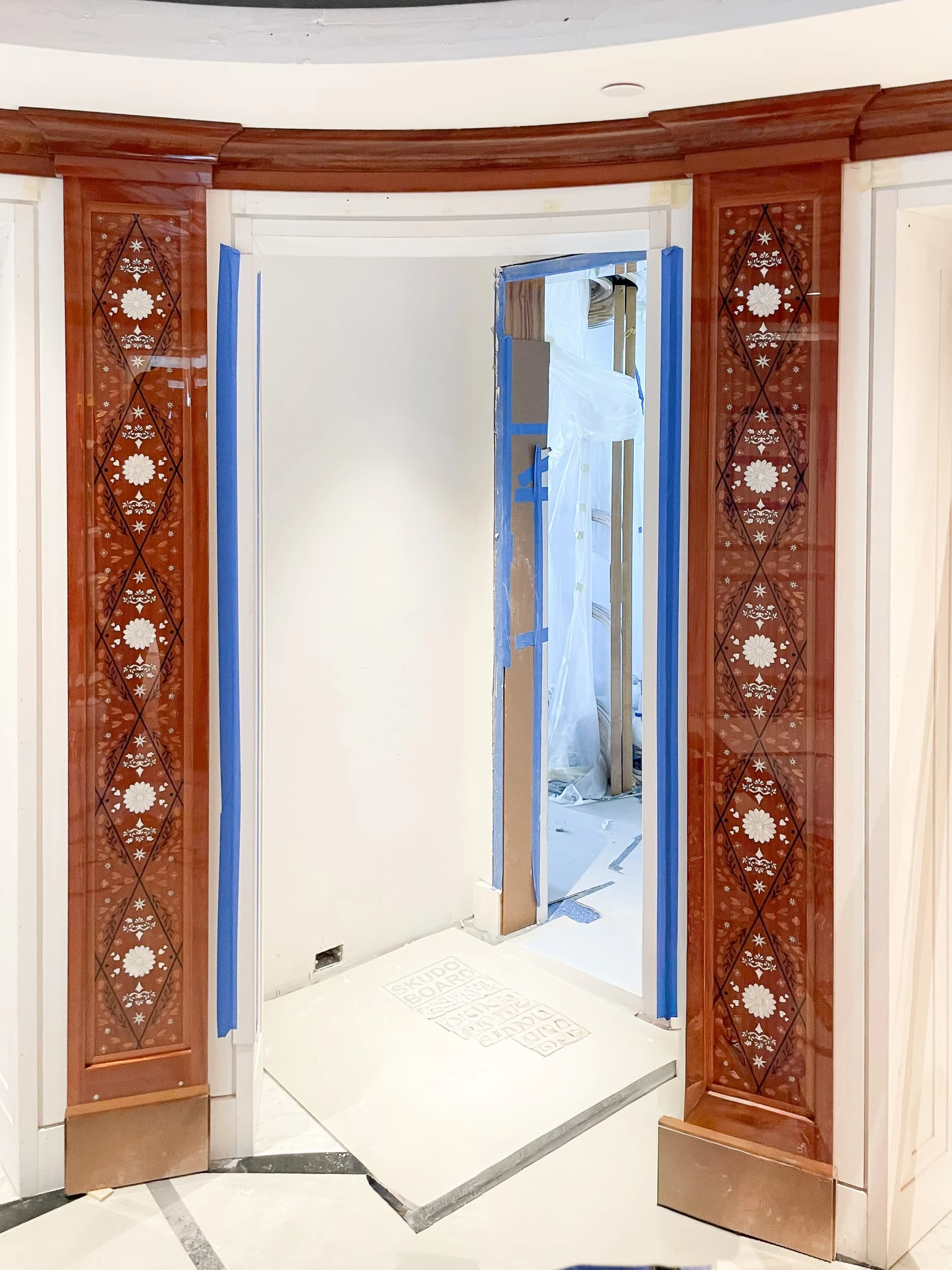
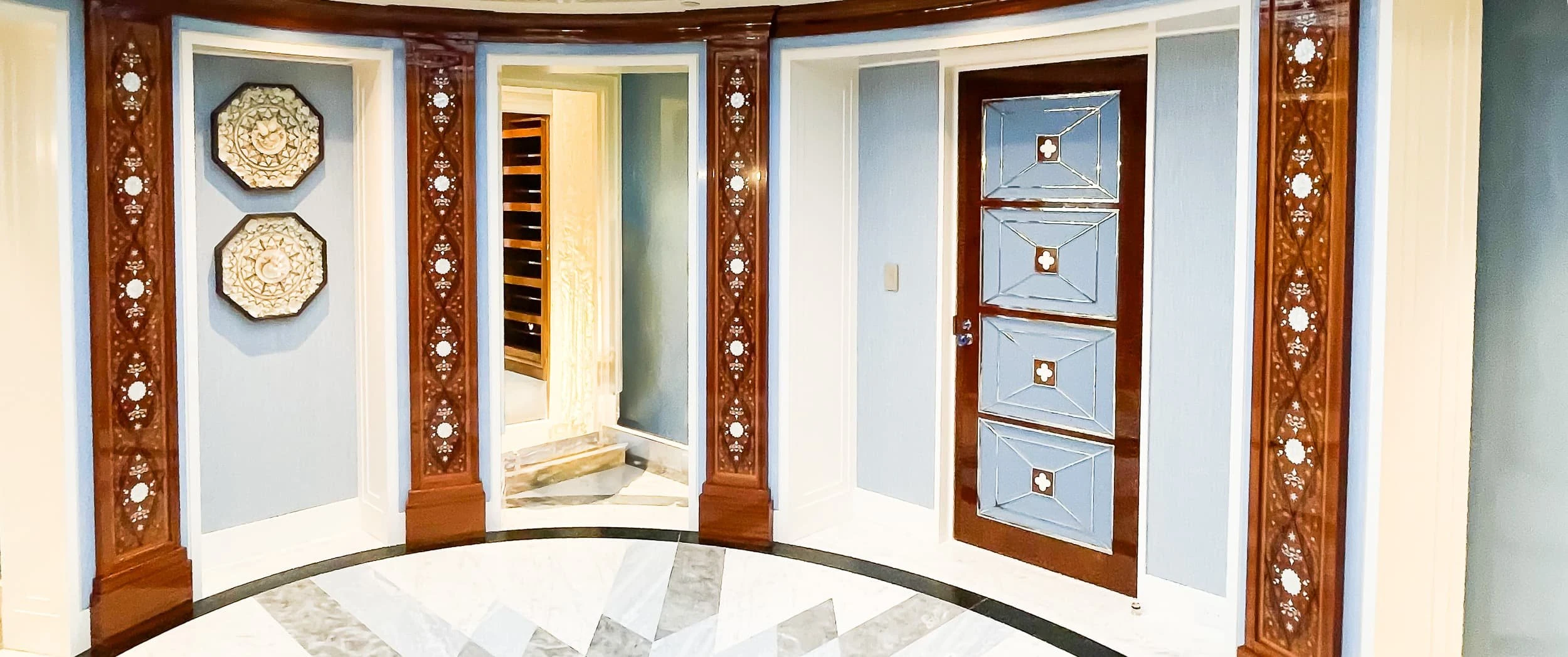
The focal point of our contribution is a set of marquetry panels crafted from Pommele Sapele and Satinwood veneer. Pommele Sapele brings a rich, figured grain with a subtle movement across the surface, while Satinwood introduces a lighter, glowing contrast. Together, they create a luxurious base palette that feels both timeless and glamorous.
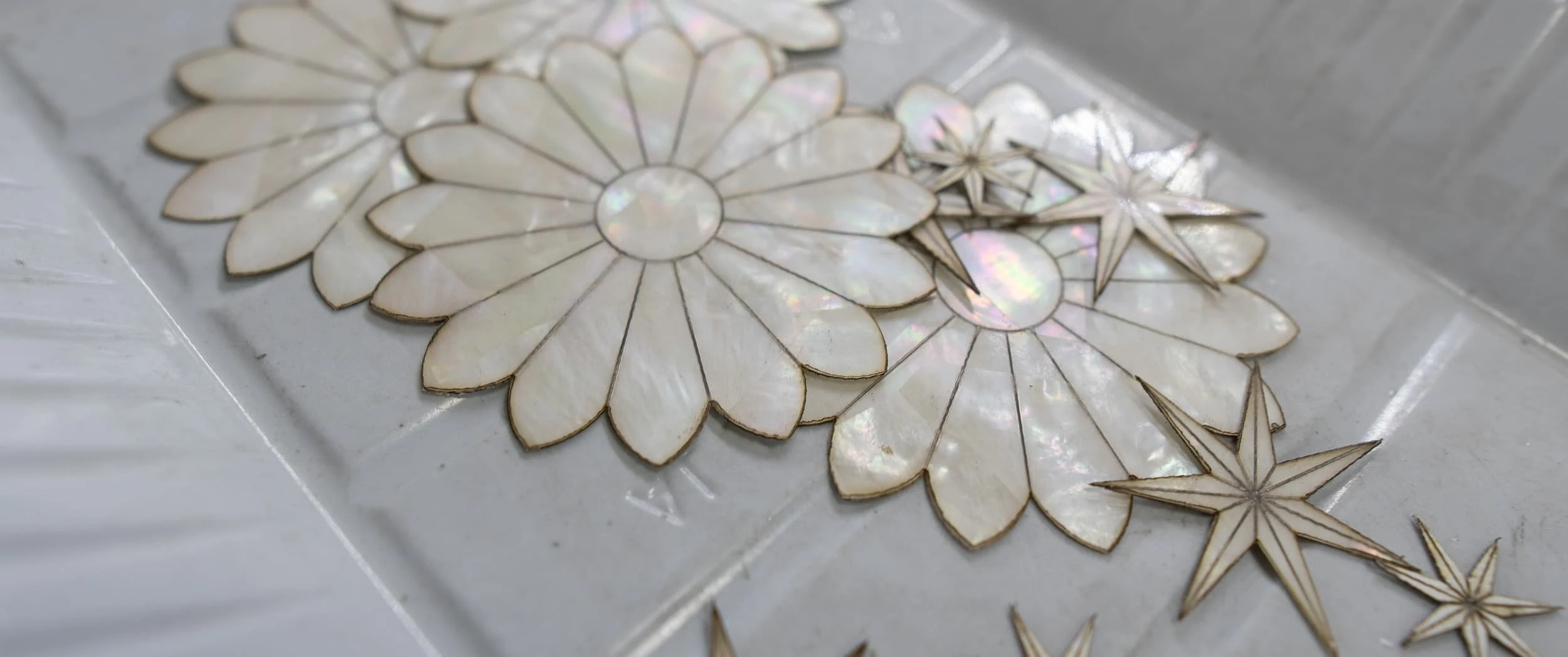
To heighten the sense of opulence, sustainably sourced mother of pearl from New Zealand was inlaid into the design. As the light moves across the room, the shell catches it and throws back a soft shimmer, giving the panels a dynamic quality that changes throughout the day and into the evening. The effect is quietly spectacular — all the more powerful because it is integrated into the fabric of the joinery rather than sitting on the surface as an applied detail.
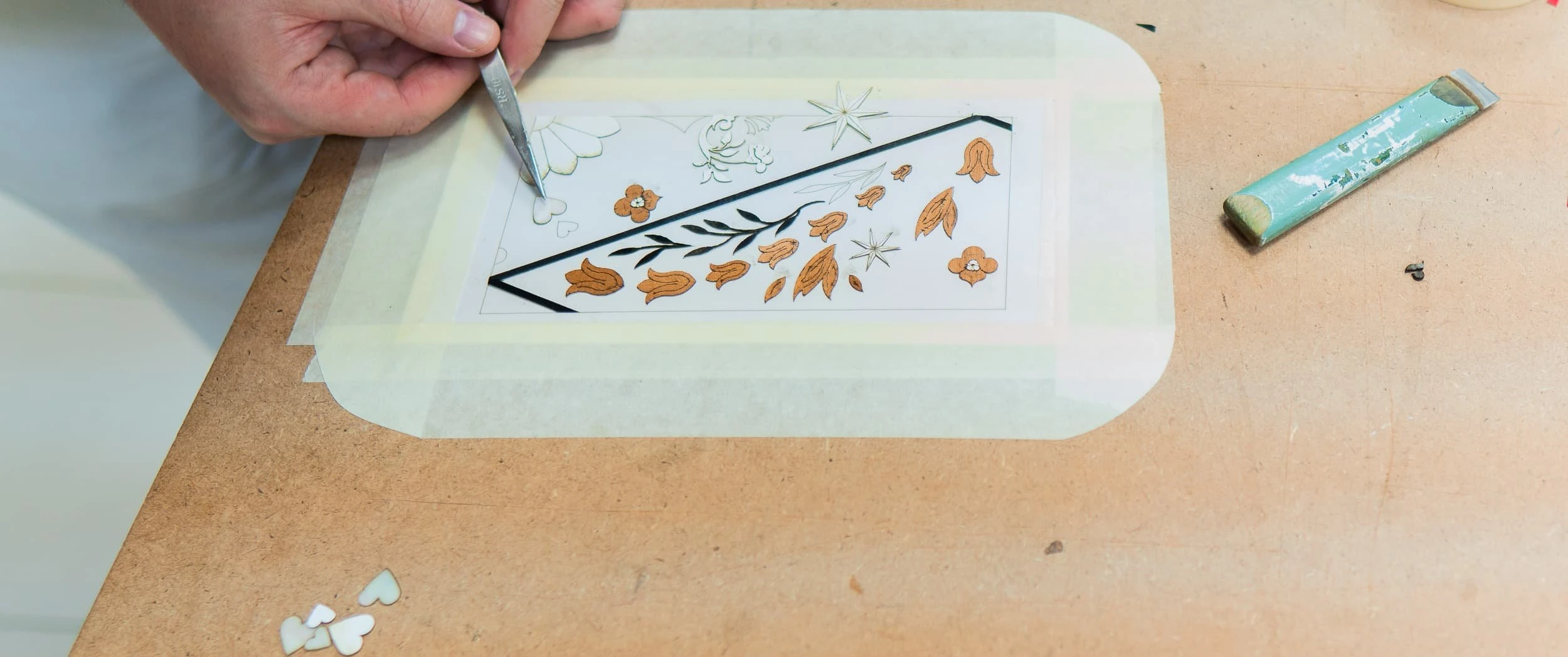
A classical quatrefoil, hand-drawn then vectorised
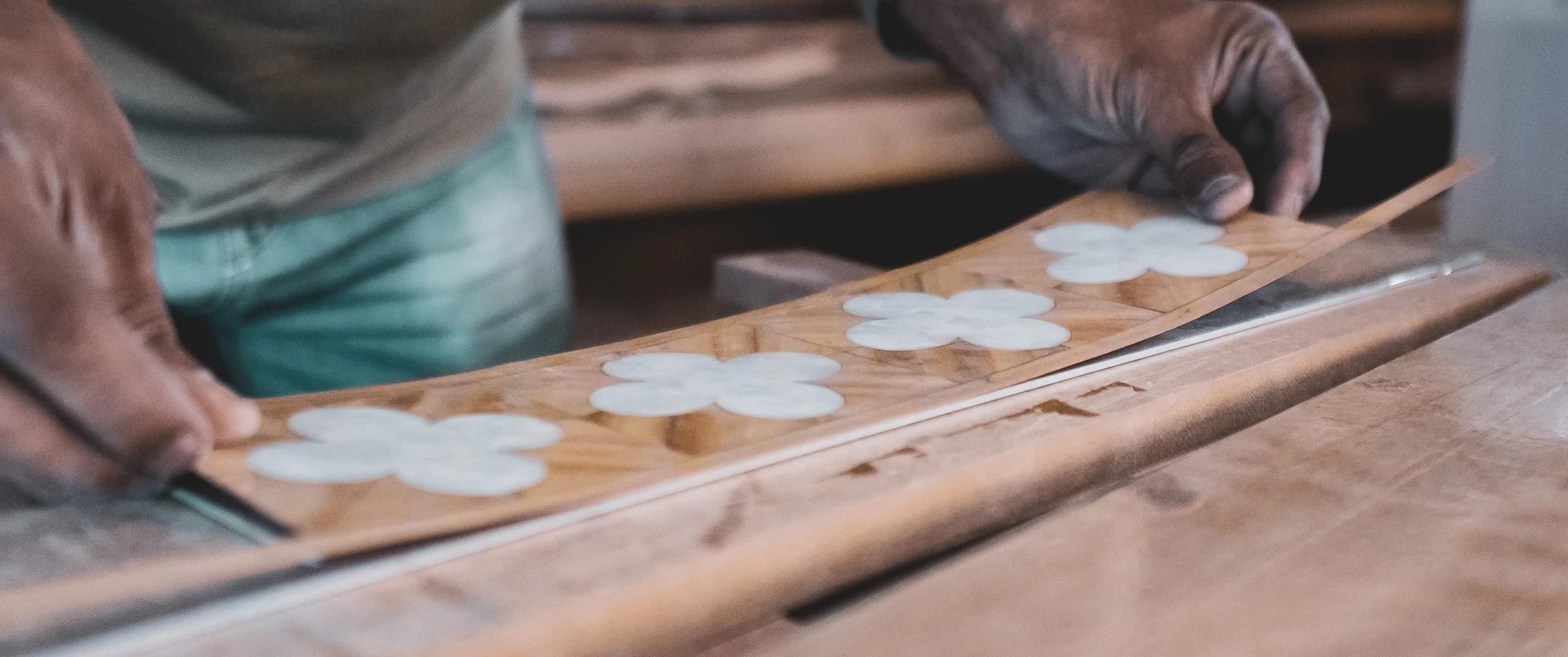
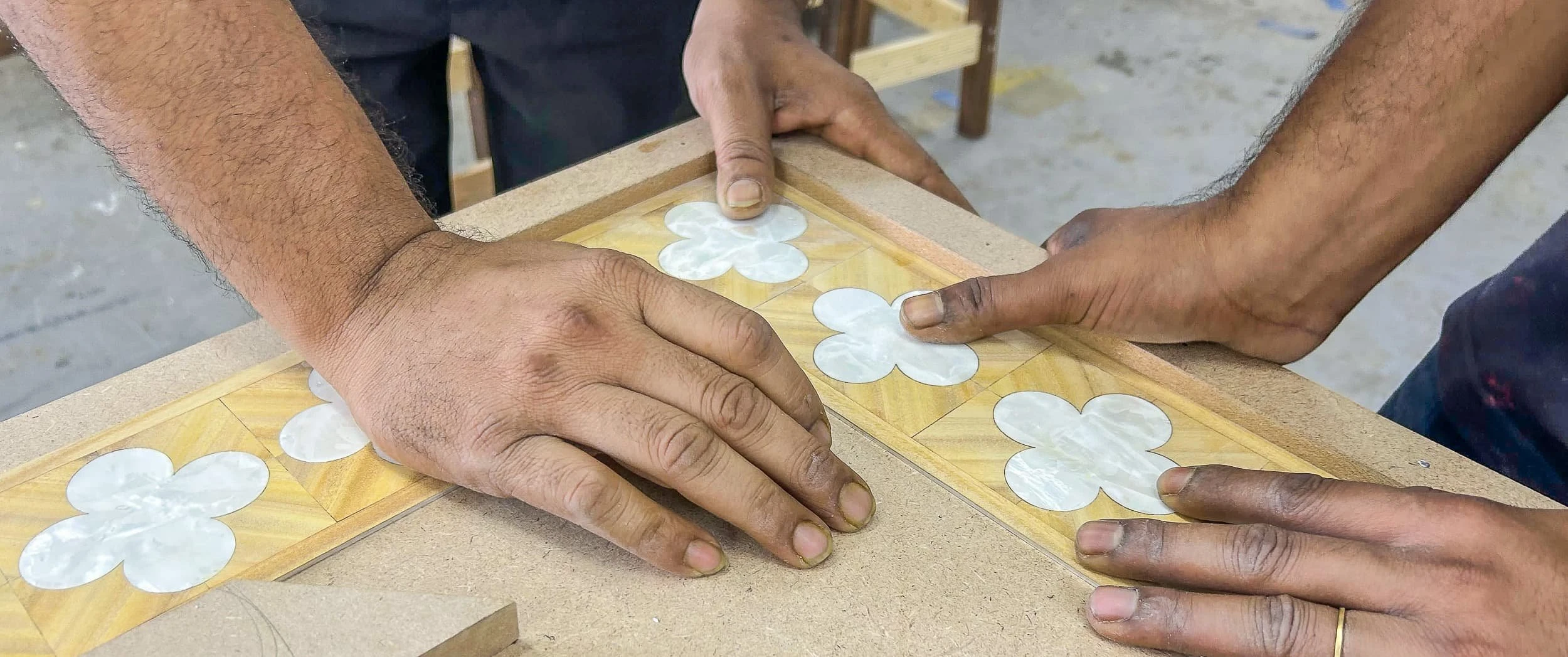
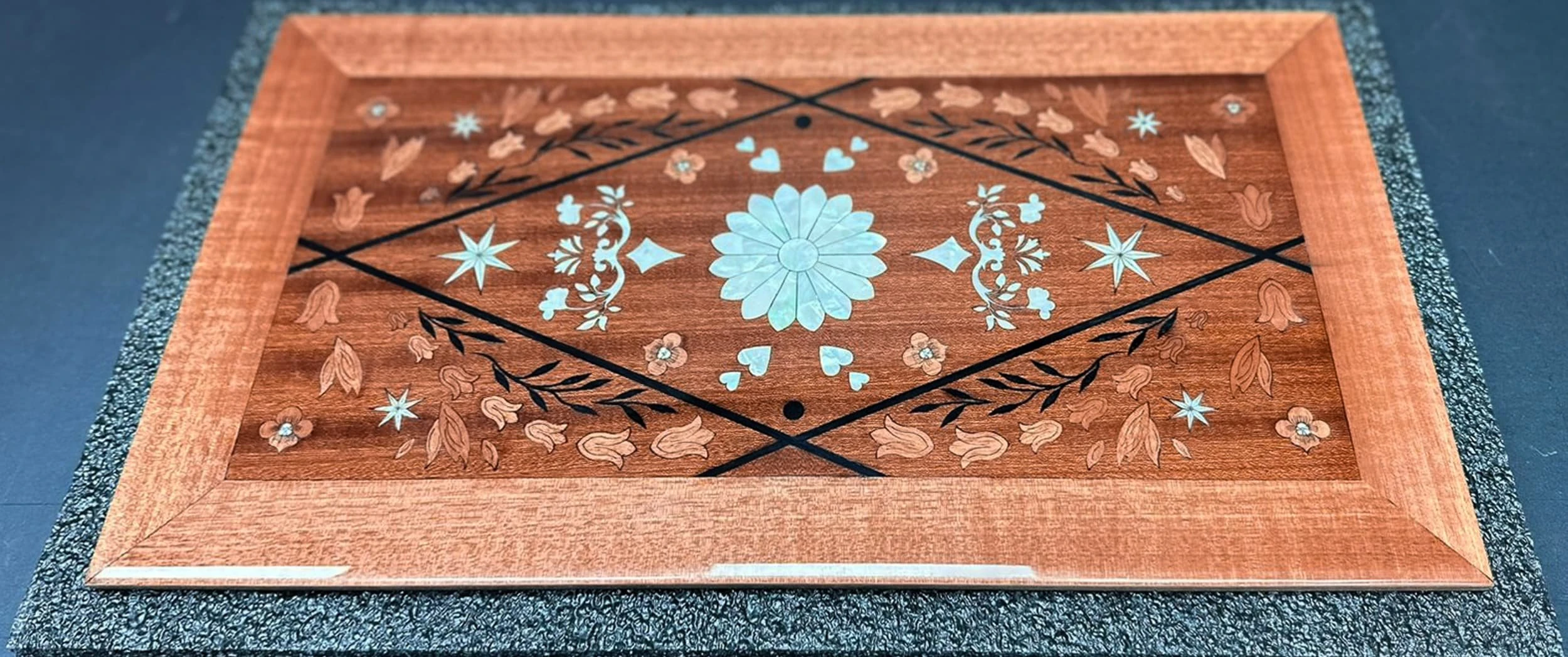
At the core of the design is a striking quatrefoil motif. This classical shape, frequently found in historic architecture and decorative arts, resonates strongly with Baratta’s love of traditional references reimagined for modern life. The motif repeats across the panels in a rhythm of curves and intersections, creating a sense of order and movement that sits beautifully within the larger architectural framework of the apartment.
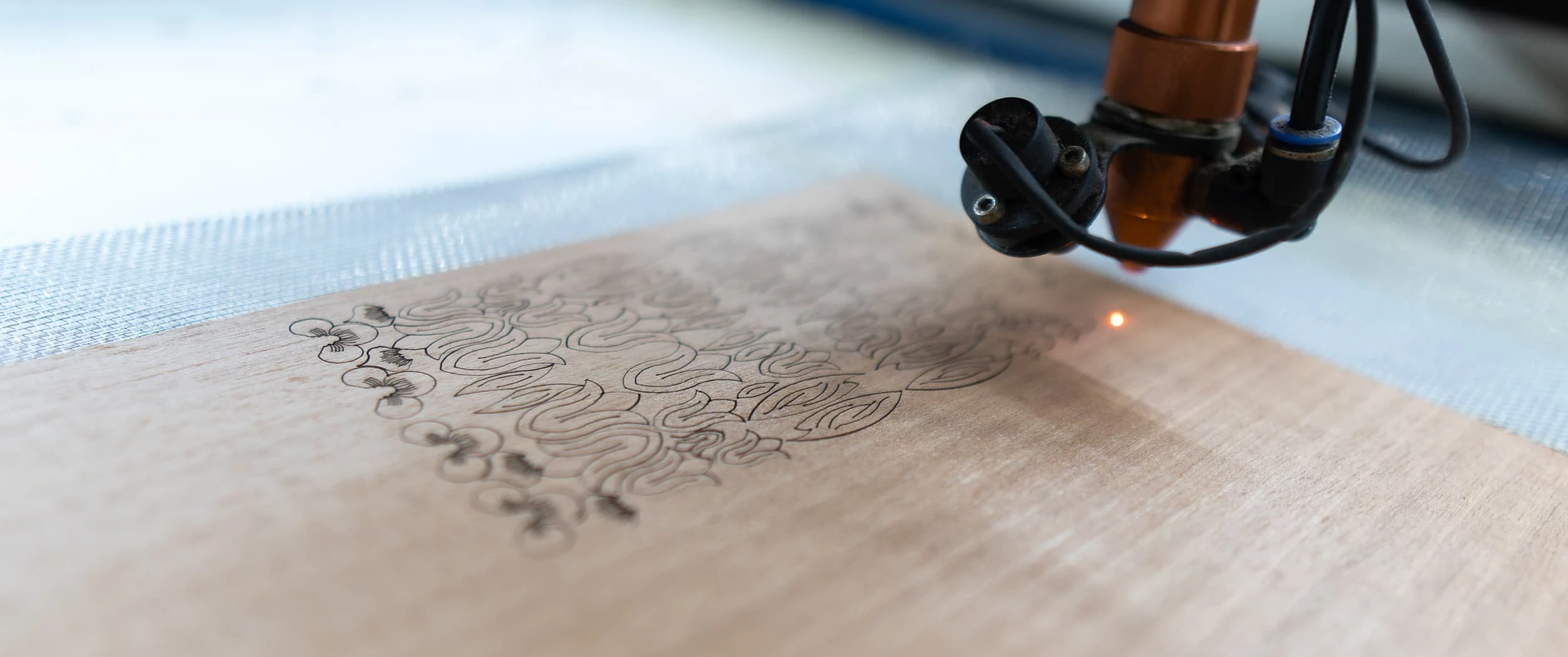
The pattern began as a series of hand-drawn sketches, working closely to capture Baratta’s vision and the precise flow of each line. These sketches were then carefully translated into vector files, ensuring absolute precision and consistency across every panel. This digital stage was critical: it allowed us to refine the geometry to the smallest detail, while still preserving the character and energy of the original hand-drawn artwork.
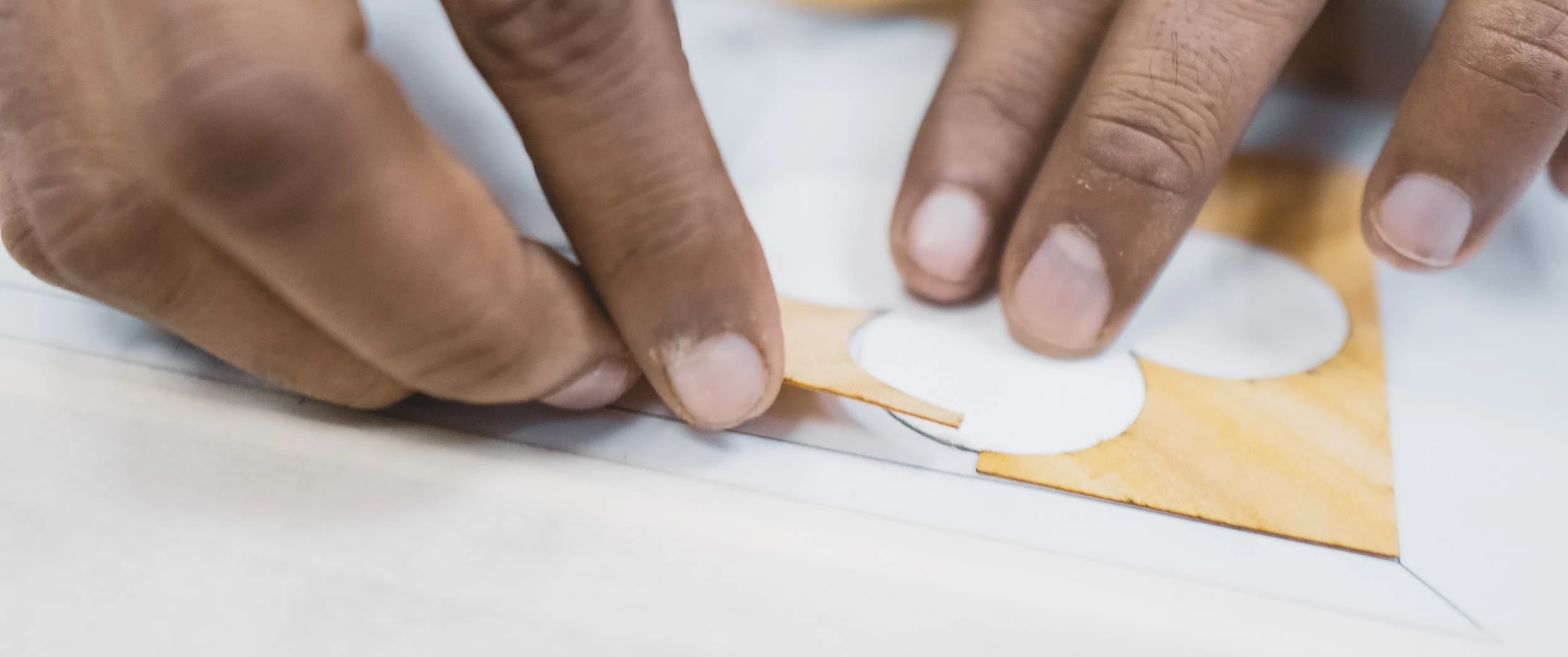
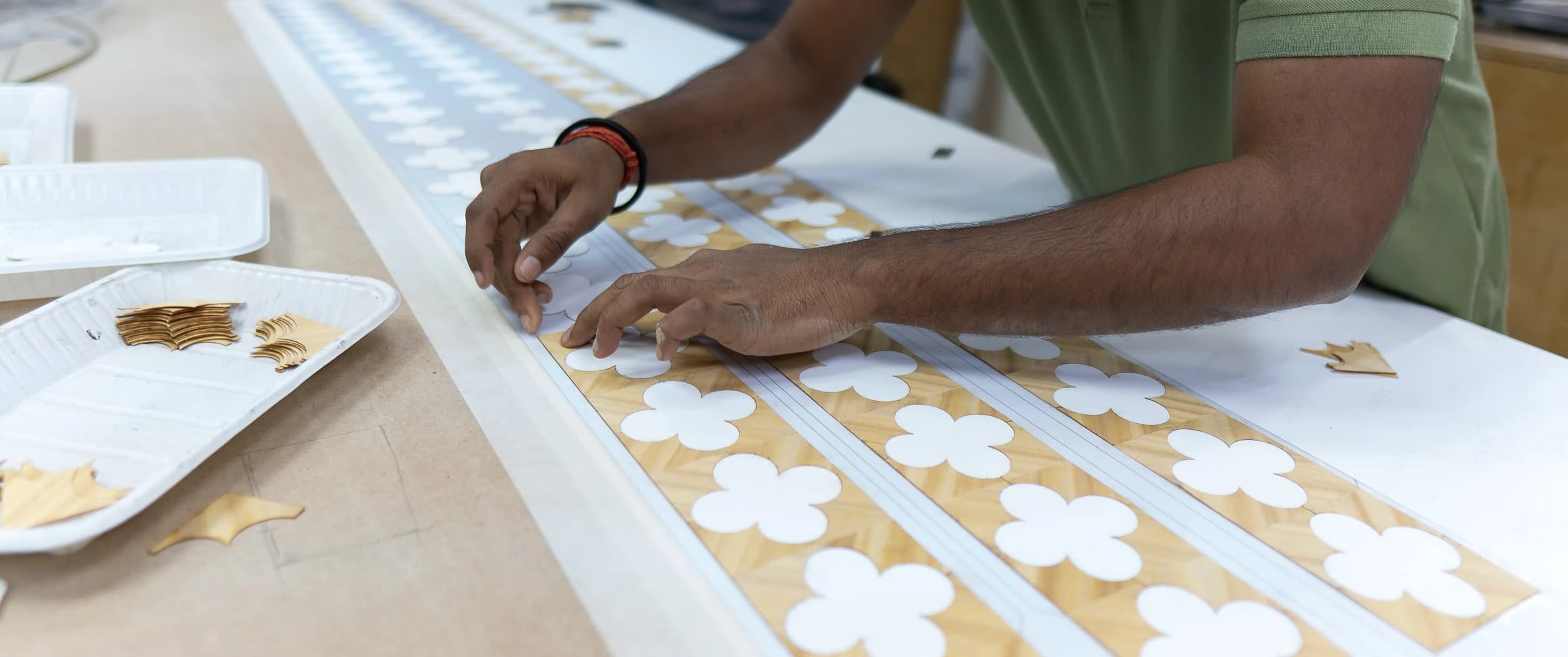
From artwork to aluminium
Once the designs were finalised, they were transferred to aluminium sheets, which serve as the structural base for the marquetry. Aluminium was chosen for its strength, stability and ability to support the complex inlay work without risk of movement or distortion over time. It creates a solid, dependable foundation for the delicate veneers and mother of pearl, allowing the decorative surface to remain immaculate in a demanding residential setting.
This combination of engineered substrate and fine materials is typical of how we like to work: balancing technical performance with the sensual, tactile quality that designers and clients respond to.
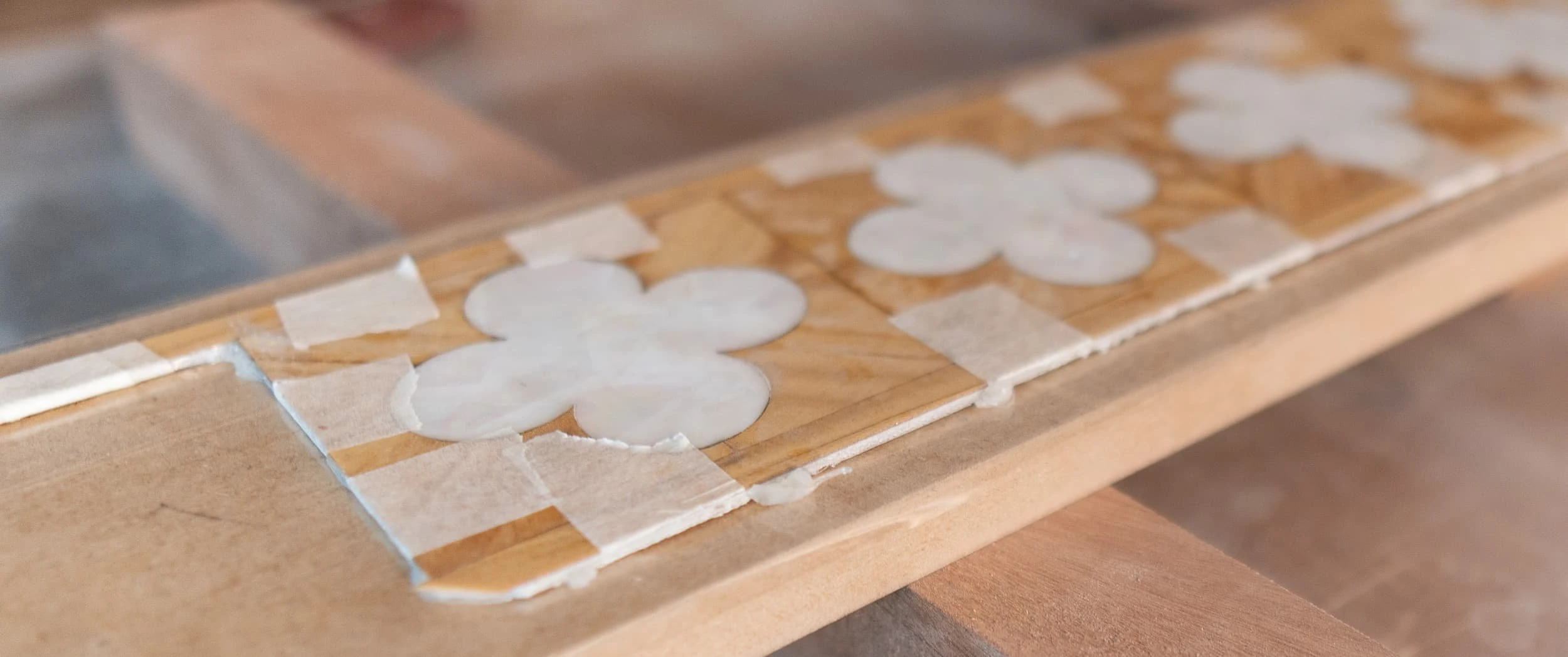
Laser-cut precision, hand-assembled craft
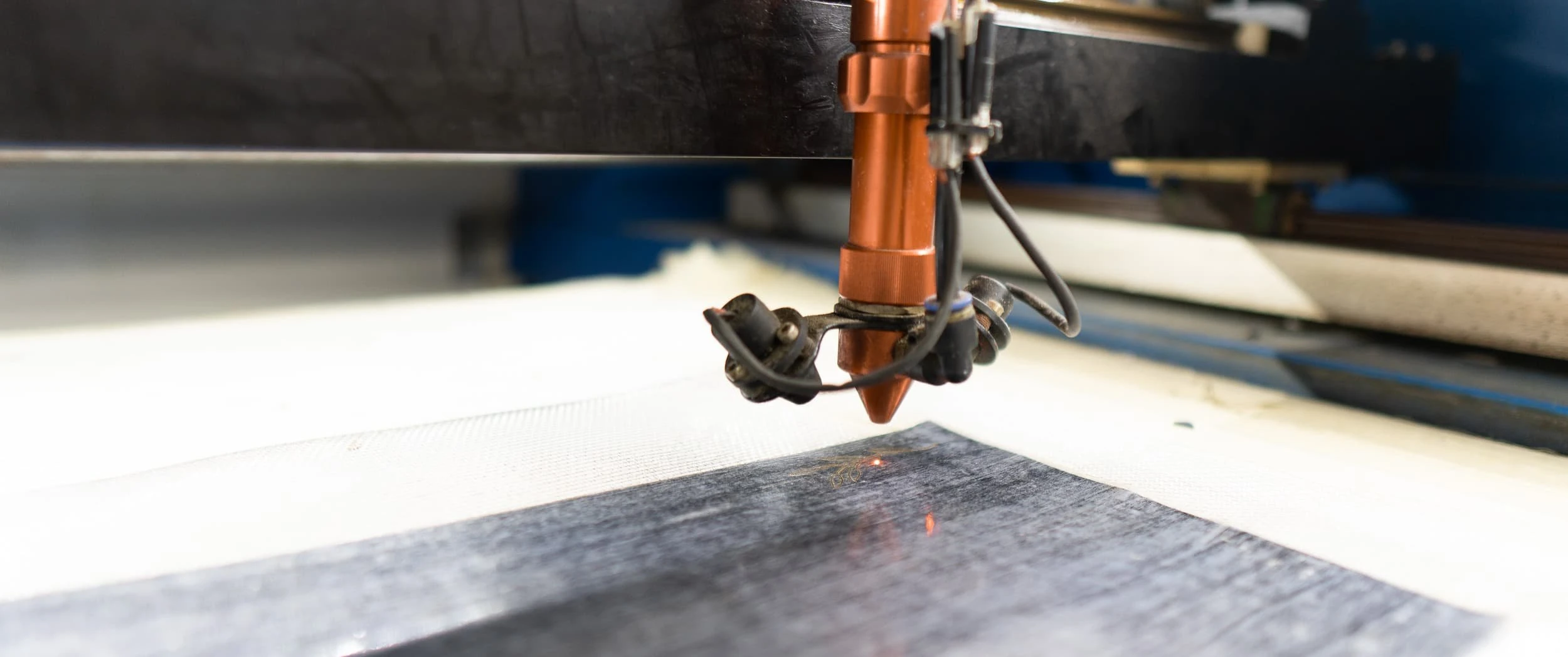
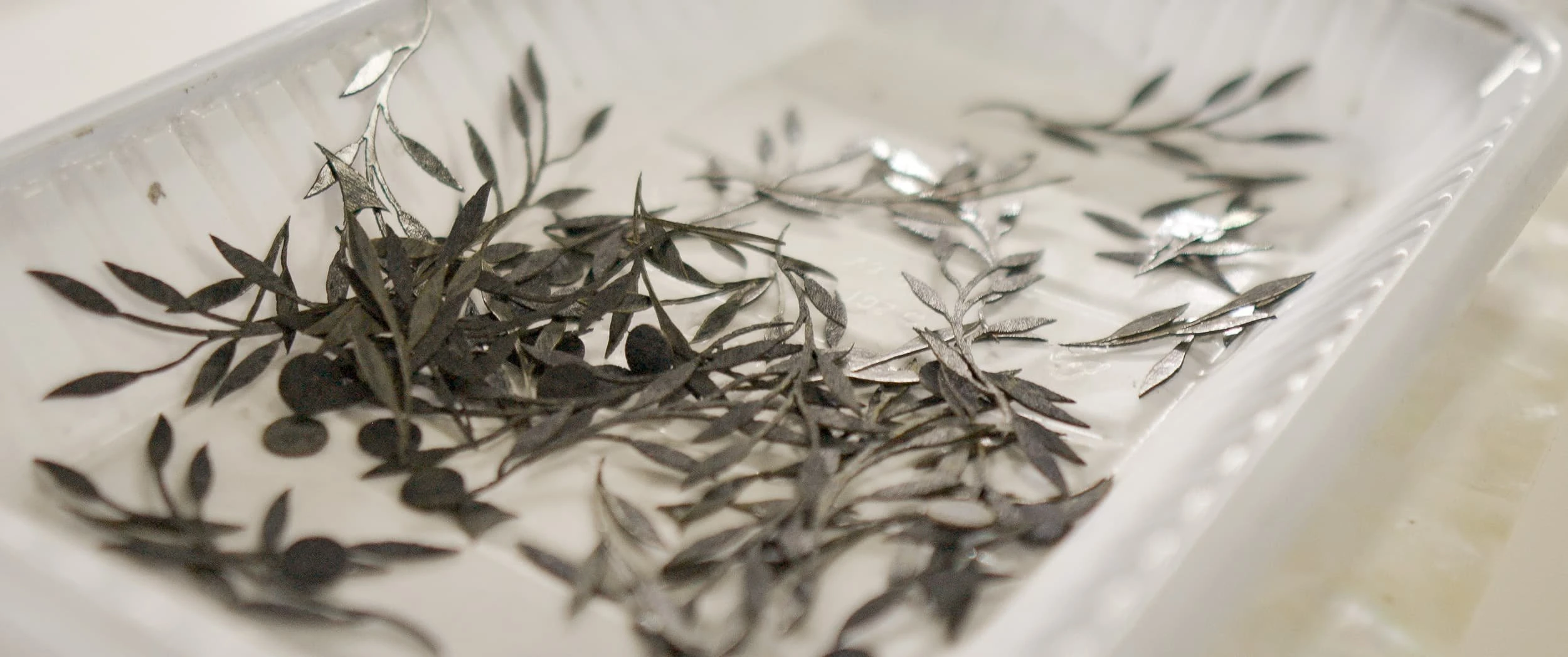
Production was a careful blend of advanced technology and hands-on craftsmanship. Each piece of Pommele Sapele, Satinwood veneer and mother of pearl was laser cut using state-of-the-art equipment to follow the complex curves of the quatrefoil pattern. The laser allowed us to achieve razor-sharp accuracy, ensuring that every element would slot perfectly into place with clean, crisp joints and minimal tolerance for error.
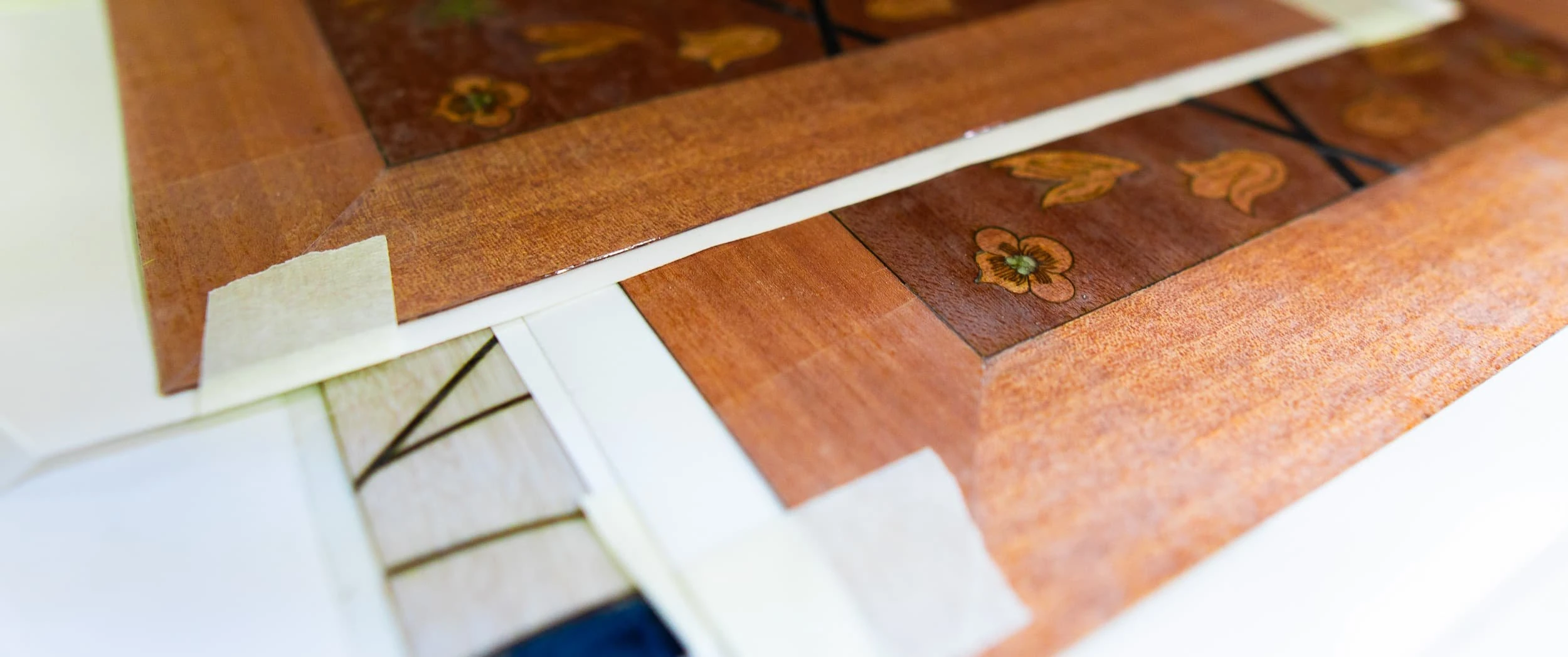
But the true character of the panels comes from the hand assembly. Each tiny component was placed individually by our team, working methodically to bring the pattern to life. This process demands a deep understanding of how the materials behave — the way veneer responds to humidity, the brittleness of mother of pearl, the subtle variations in colour and grain that need to be balanced across the surface so the finished panel feels harmonious rather than busy.
A high-gloss, mirror-like surface
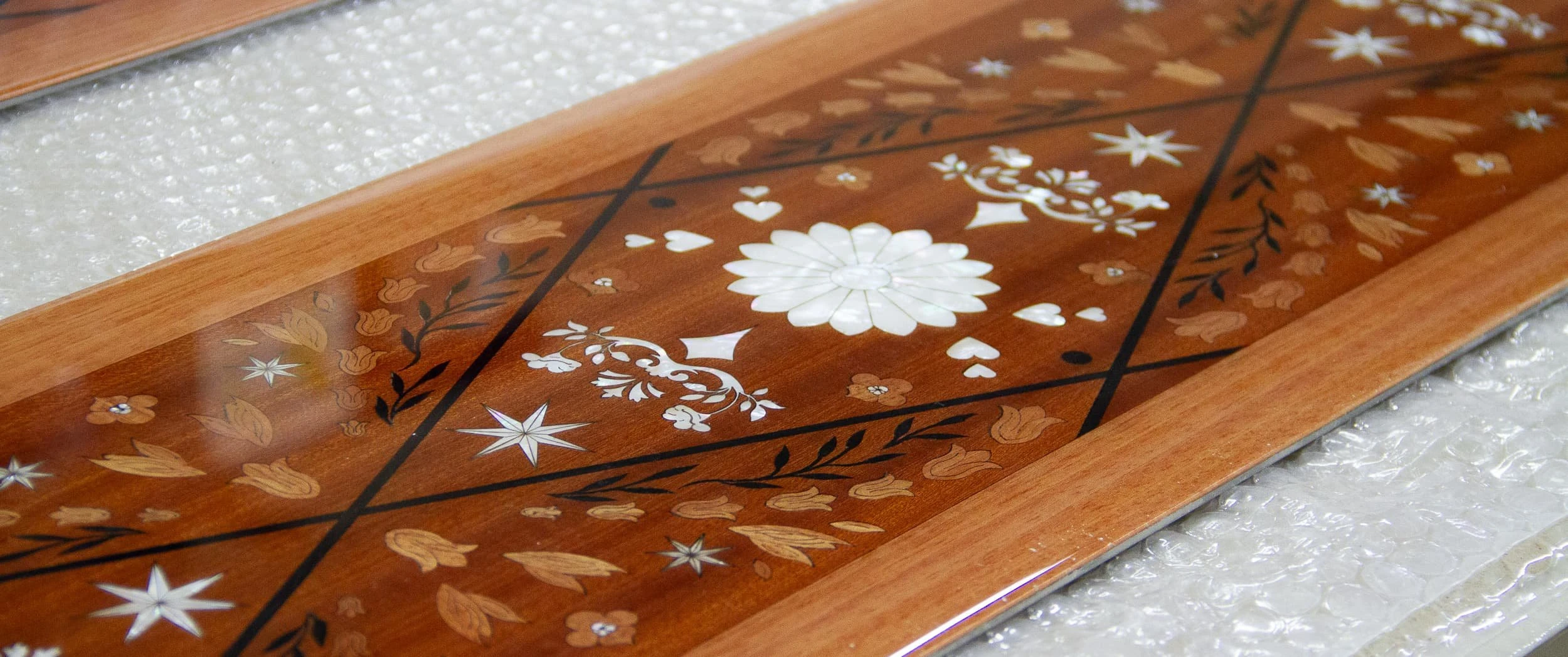
Once fully assembled, the panels were lacquered with a high gloss finish. This final stage is both protective and aesthetic. The lacquer seals the natural materials, making them suitable for daily use within a busy apartment, while also enhancing the depth and richness of the wood and the iridescence of the mother of pearl. The glossy surface catches reflections from the water and the room beyond, adding a sense of drama and movement that suits the waterfront setting.
Part of the architecture, not art on a wall
When complete, the marquetry panels were shipped to PGS Millwork, our trusted joinery partner on this project. Their team integrated the panels into the wider joinery package within the apartment, ensuring perfect alignment with doors, frames and surrounding timberwork. This stage is where all the collaborative effort comes together — the designer’s vision, our marquetry, and PGS Millwork’s cabinetry all combining to form a cohesive architectural language.
For the interior designer, this kind of integration is key. The panels are not treated as art hung on the wall, but as an integral part of the millwork — part of the architecture of the room. This gives the space a sense of permanence and craftsmanship that is difficult to achieve with off-the-shelf solutions.
A celebration of collaborative craft
The Rowes Wharf apartment project is a clear example of what can be achieved when strong design thinking meets advanced making and careful collaboration. Working with Anthony Baratta allowed us to explore a distinctly decorative, pattern-driven approach to marquetry that still sits comfortably within a modern luxury interior.
For hospitality and residential designers, the project demonstrates how specialist techniques such as marquetry can be used to create identifiable focal points within a scheme — pieces that feel like heirloom objects but are robust enough for everyday life. It is this blend of artistry, engineering and partnership with likeminded makers and designers that continues to define our work at Rowes Wharf and beyond.
To learn more about the craft behind these panels, see our guide to bespoke marquetry.